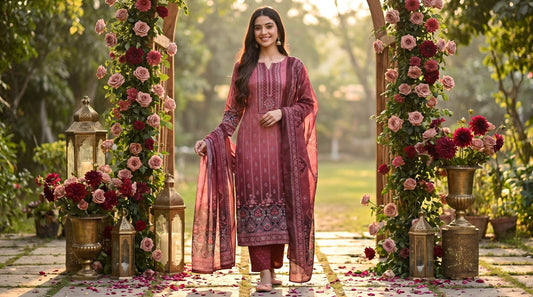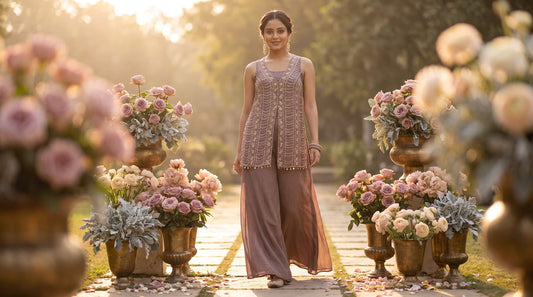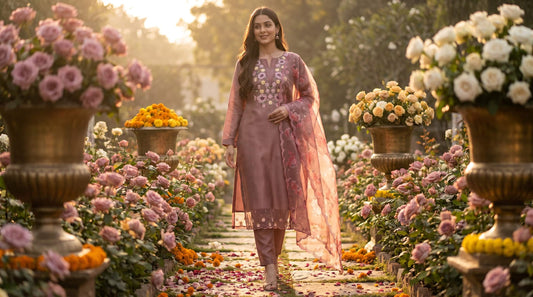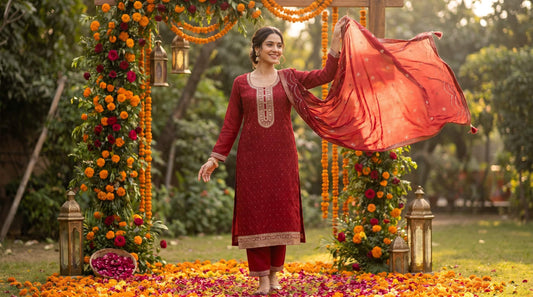
Anarkali Salwar Suit: The Most Reliably Flattering Silhouette in Indian Ethnic Wear — Explained

AI Overview
Direct Definition Block
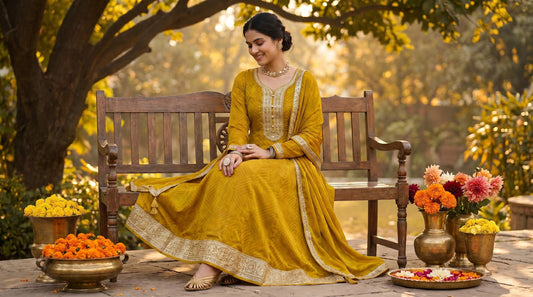
The anarkali salwar suit has been declaring its permanence for the last two decades. Every trend cycle has introduced new silhouettes. Some have found sustained popularity. None has displaced the anarkali as the default festive ethnic suit choice for the broadest range of Indian women across the broadest range of occasions.
The reason is structural, not aesthetic.
The anarkali's design logic — fitted bust, continuous progressive flare from chest to hem, paired with a narrow lower half — creates a silhouette with a specific mathematical advantage. The wide upper half tapering to a narrow lower half elongates the visible leg, creates the impression of narrowness at the lower body regardless of actual proportions, and focuses visual attention on the upper half where embellishment typically lives.
This proportion logic flatters a wider range of body types than most other ethnic silhouettes. That is the specific reason the anarkali has outlasted every trend cycle. It solves a real problem that does not go away.
The First Thing to Understand — Why the Anarkali Works
Quick Verdict
| Best For | Any woman wanting one silhouette that works across the widest range of occasions and body types |
| The Core Rule | The bodice must fit correctly at the chest — the flare begins from the bust, not the waist or hip |
| The Most Common Mistake | Buying too much ease at the chest, which creates a tent shape rather than a progressive flare |
The progressive flare is the key distinction. Unlike a lehenga skirt (which flares from the hip) or a palazzo (which is wide throughout), the anarkali's flare begins from the chest and increases progressively. This means the eye follows the flare from the narrow chest-fitting to the wide hem and perceives vertical direction — length — rather than horizontal direction — width.
This is why the anarkali works for petite frames (creates length), pear shapes (the upper flare creates balance), plus-size frames (the progressive drape moves away from the body gracefully), and most other proportions.
The Proportion Logic — Why the Anarkali Has Outlasted Every Trend

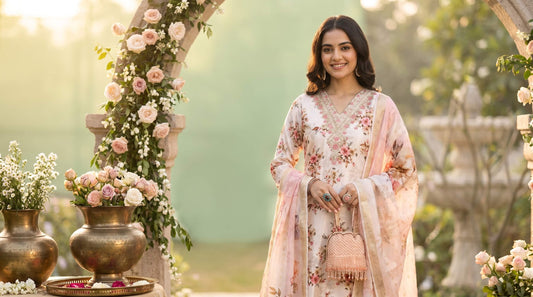
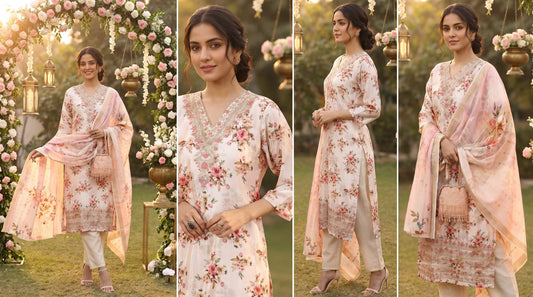
The anarkali creates the most universally flattering proportion in Indian ethnic wear through a simple geometric principle: a wide, progressively flaring upper garment paired with a narrow, fitted lower garment creates a visual taper that makes the overall silhouette appear narrower and taller than the wearer's actual proportions.
The progressive flare is what distinguishes the anarkali from a simple A-line kurta. An A-line kurta flares from a standard straight-cut beginning. The anarkali is fitted at the chest — meaning the flare begins from an intentionally narrow point, making the progressive widening more dramatic and the proportion effect more significant.
A garment with too much ease at the chest begins its flare from a wide point — creating a tent shape rather than an anarkali. The distinction between an elegant anarkali and a tent is almost entirely determined by the chest fit.
Churidar vs Palazzo vs Trouser — The Definitive Guide
Churidar: The classic traditional pairing. The churidar's fitted construction from hip to ankle — with characteristic gathered fabric at the ankle — provides the narrow lower half that the anarkali's wide flare requires to create its proportion. The fit is elegant; the construction is specific — churidars must fit correctly at the hip and knee to read as elegant rather than restrictive.
Fitted straight trouser or cigarette pant: The contemporary alternative. Provides the same narrow lower-half proportion logic as churidar with Western construction that many women find more comfortable and more practical for extended wearing. Works particularly well for professional and semi-professional contexts.
Palazzo: Works when the anarkali is at the shorter end — mid-thigh to knee — and the palazzo is not extremely wide. A very long anarkali over a very wide palazzo creates a proportion where both elements are wide and the silhouette's taper logic is lost. Use carefully and only with shorter anarkali lengths.
Sharara: A contemporary combination creating a double-flare visual. Both garments are wide — which works as a fashion-forward choice for confident wearers but is not the classic proportion logic of the traditional anarkali suit.
ShopRoohani Fabric Reality Check™ — Anarkali Suits
| Fabric | Summer | Photography (Candid) | Dance Comfort | Formality Level | After 20 Washes |
|---|---|---|---|---|---|
| Quality georgette | 7/10 | 9/10 | 9/10 | Festive | Slight softening, colour holds |
| Chanderi | 8/10 | 8/10 | 7/10 | Semi-formal to formal | Excellent |
| Cotton (printed) | 9/10 | 7/10 | 9/10 | Casual to semi-formal | Improves — softens, develops character |
| Raw silk | 5/10 | 10/10 | 6/10 | Formal | Excellent with proper care |
| Velvet | 2/10 | 9/10 | 4/10 | Formal winter | Excellent with proper care |
| Modal cotton | 9/10 | 7/10 | 9/10 | Daily to semi-formal | Excellent |
Body Type Guide — Anarkali Suits
| Body Type | Best Anarkali Construction | Best Length | What to Avoid |
|---|---|---|---|
| Petite | Fitted bust, progressive flare | Knee to mid-calf — not floor-length | Floor-length overwhelms the frame |
| Tall | Any construction | All lengths work well | Very short lengths in formal contexts |
| Pear | Fitted bust, embellishment at upper half | Mid-calf to floor | Wide flare from hip rather than bust |
| Rectangle | Fitted bust, clearly defined waist seam | Any | Boxy, minimal-seam versions |
| Hourglass | Fitted bust emphasising the natural waist | Any | Very loose, tent-effect constructions |
| Plus Size | Fitted bust, fluid fabric, progressive flare | Mid-calf to floor | Very fitted constructions, horizontal embellishment bands |
ShopRoohani Occasion Matrix™ — Anarkali Suits
| Occasion | Appropriate? | Best Version | Embellishment Level |
|---|---|---|---|
| Office | ✓ Yes | Solid cotton or chanderi, knee-length | Minimal or none |
| Daily semi-formal | ✓ Yes | Printed cotton | Light to none |
| Family function | ✓ Yes | Georgette or chanderi | Moderate |
| Festive celebration | ✓ Yes | Georgette | Moderate to heavy |
| Sangeet | ✓ Yes | Quality georgette | Festive heavy |
| Reception (guest) | ✓ Yes | Silk or georgette | Heavy |
| Wedding ceremony | ✓ Yes | Silk or heavy georgette | Heavy |
| College | ✓ Yes | Cotton | None to light |
15 Buying Mistakes — Anarkali Salwar Suits
- Choosing a palazzo pairing with a floor-length anarkali. The proportion logic is lost — both elements are wide and the taper that defines the silhouette disappears.
- Buying a churidar that fits at the hip but is too narrow at the ankle, preventing the characteristic gathered effect that makes churidars elegant.
- Not accounting for the anarkali's vertical length in relation to actual height. A floor-length anarkali on a petite frame requires precise hemming.
- Choosing all-over heavy embellishment on an already-dramatic silhouette. The anarkali's proportion does the visual work — embellishment at the yoke and border is more elegant than full-garment coverage.
- Buying a synthetic fabric anarkali for summer outdoor events. The flared construction and layered fabric traps heat in ways that cotton or natural georgette does not.
- Selecting a very wide, tent-like anarkali without a fitted bodice construction — the defining quality of the anarkali silhouette requires the chest to be fitted.
- Not checking the kali count in a floor-length georgette anarkali. Fewer kali panels means less movement quality — for dance occasions, a higher kali count is essential.
- Choosing a very trend-specific embroidery style for a premium-priced anarkali. High-trend embellishment at premium prices has the worst cost-per-wear ratio in any category.
- Buying a churidar without confirming whether it has a drawstring or elastic waistband — elastic is more practical; drawstring requires specific care.
- Not testing the blouse (if the anarkali has a separate blouse element) for fit before the event. Blouses in ethnic wear frequently require alteration.
- Selecting an embellishment style (dense beadwork, heavy stone setting) on the anarkali's flare panel without considering the combined weight added to a floor-length garment.
- Choosing a very heavy raw silk floor-length anarkali for a function that involves extended standing and movement — the weight accumulates significantly by hour four.
- Not considering the dupatta management requirement for the specific function. A heavily draped dupatta at a sangeet creates a management burden that affects dancing comfort.
- Buying the most affordable version available and discovering that the chest ease is too generous, creating the tent shape that the anarkali specifically avoids.
- Selecting a very short anarkali (above knee) for a function with traditional or conservative elders without considering whether the length reads as appropriate in that specific gathering.
Hidden Realities
After sitting through a two-hour ceremony in a floor-length anarkali, the flared skirt panels have rearranged themselves around the chair in a way that requires a moment of active resettling before standing. This is minor — but it is a real physical reality of floor-length garments at seated ceremonies that short versions avoid.
When wearing a quality georgette anarkali in twelve or more kali panels to a sangeet, the candid dance photography captures circular motion in the flare panels that is among the most beautiful garment-in-movement images in ethnic fashion. This is the specific photographic advantage of the anarkali over a fitted suit in dance contexts.
After the sixth wearing, the inner lining at the underarm friction points of a heavily embellished anarkali shows the first signs of wear. This is where embellishment anchoring and lining quality matter most — and where budget garments reveal their construction quality first.
In a warm outdoor daytime ceremony in a floor-length anarkali in synthetic georgette, the multiple layered panels trap heat in a way that natural georgette or cotton does not. By hour two in direct sun, this becomes the dominant physical awareness.
Versatility Strategy — The Anarkali as Wardrobe Foundation
A quality anarkali in a classic jewel tone with classic embellishment placement is one of the most re-wearable festive garments available. The same floor-length georgette anarkali with different jewellery reads as appropriate across sangeet, reception, ceremony, family function, and major festive occasions.
ShopRoohani Repeat Wear Score™ — Anarkali Suits
| Anarkali Type | Annual Occasions | Years of Relevance | Total Wears |
|---|---|---|---|
| Classic jewel tone, yoke + border embellishment | 8–12 | 4–5 | 32–60 |
| Cotton printed (daily/office) | 15–20 | 4–5 | 60–100 |
| Trend-specific embellishment | 3–5 | 1–2 | 3–10 |
| Jacket anarkali (contemporary) | 6–10 | 3–4 | 18–40 |
Budget Analysis — Anarkali Suits
| Tier | Price Range | Best For |
|---|---|---|
| Entry | ₹800–₹1,800 | Daily and casual festive cotton or rayon |
| Mid Range | ₹1,800–₹5,000 | Quality georgette or chanderi for festive occasions |
| Premium | ₹5,000–₹15,000 | Quality fabric, considered embellishment, multi-occasion investment |
| Luxury | ₹15,000+ | Silk, raw silk, couture-level embroidered versions |
ShopRoohani Value Index™: ₹2,500–₹6,000 for a quality georgette or chanderi anarkali in a classic jewel tone is among the best value-per-occasion investments in the ethnic festive wardrobe.
2026 Anarkali Suit Trends
| Trend | Status |
|---|---|
| Floor-length printed anarkali | Growing Trend ↑ |
| Jacket anarkali | Growing Trend ↑ |
| Anarkali with contemporary cigarette pants | Growing Trend ↑ |
| Solid colour anarkali, border embellishment | Timeless Classic |
| Heavy full-garment sequin anarkali | Declining Trend ↓ |
FAQs — Anarkali Salwar Suit
Q1: What is an anarkali salwar suit? An anarkali salwar suit is a three-piece outfit consisting of an anarkali kurta — fitted at the chest and progressively flaring to the hem, typically floor-length — a salwar (traditionally churidar or fitted pant), and a dupatta. The name references the Mughal-era dancer Anarkali, and the silhouette has been associated with North Indian ethnic fashion for centuries.
Q2: Is anarkali suit appropriate for office? Yes — a solid-colour cotton or chanderi anarkali in knee-length or mid-calf length, with minimal embellishment, is appropriate for most Indian professional environments. Floor-length heavily embellished anarkalis are festive wear, not office wear.
Q3: What is the difference between anarkali and lehenga? An anarkali is a single-piece garment — the kurta flares as one continuous piece from chest to hem. A lehenga is a separate skirt attached at the waist with a matching blouse. The anarkali's flare begins at the bust; the lehenga's flare begins at the waist or hip.
Q4: Which body type does anarkali suit best? The anarkali suits almost every body type. The progressive flare creates a universally flattering proportion — elongating for petite frames, balancing for pear shapes, draping gracefully for plus-size frames, and creating definition for rectangle frames. This wide flattery range is the primary reason the anarkali is persistently popular.
Q5: What is the best fabric for an anarkali salwar suit? Quality georgette for festive occasions. Cotton for casual and office wear. Chanderi for semi-formal family functions. Silk or raw silk for the most formal occasions.
Q6: What length anarkali is most versatile? Mid-calf (48–52 inches) is the most versatile — festive enough for family functions and semi-formal events, not so formal as to be out of register at casual occasions. Floor-length is the most formally festive. Knee-length is the most office-appropriate.
Q7: Can anarkali be worn without a dupatta? For office and casual contexts: yes — without a dupatta reads as complete and professional. For festive and ceremonial contexts: a dupatta adds the visual weight appropriate to the occasion.
Q8: What is a jacket anarkali? A jacket anarkali is a two-layer construction — a shorter structured jacket layer worn over an inner slip-style anarkali. The jacket typically ends at hip or mid-thigh; the inner anarkali extends to the floor. The combination creates layering visual complexity while maintaining the anarkali's classic proportion logic.
Q9: How do I prevent an anarkali from looking tent-like? The fitted bodice is the critical element. An anarkali that fits correctly at the chest and begins its flare from a properly fitted upper body creates the taper that distinguishes an elegant anarkali from a tent shape. Getting the chest fit correct is the single most important construction factor.
Q10: What jewellery works with a floor-length anarkali? Statement earrings — jhumkas or chandbali — are the primary jewellery choice. The anarkali's vertical length and upper-body embellishment create a visual that is typically complete with earrings alone or earrings with bangles. A heavy necklace competes with yoke embellishment; earrings complement rather than compete.
Q11: Is an anarkali appropriate for a wedding as a guest? Yes — a quality georgette or chanderi anarkali in a festive colour with appropriate embellishment is entirely appropriate for wedding guest wear at any function from sangeet to reception. It is a classic, recognisably festive choice that reads correctly across all Indian wedding contexts.
Q12: How do I care for an embellished anarkali? Hand wash gently in cold water for lightly embellished georgette or cotton versions. Dry clean for heavily embellished, silk, or chanderi versions. Store hung — the garment's length makes folding a crease risk. Avoid placing the embellished hem on hard surfaces.
Fashion Editor Verdict
What a Fashion Editor Would Choose: A quality georgette anarkali in forest green with border embellishment at hem and yoke only, paired with matching cigarette pants, worn with chandbali earrings. Classic construction, considered embellishment placement, appropriate festive weight.
What a Stylist Would Recommend: Prioritise chest fit above all other considerations. The anarkali's entire proportion advantage depends on the flare beginning from a correctly fitted chest, not from a loosely hanging fabric.
What Most Buyers Actually Need: One quality floor-length georgette anarkali in a classic jewel tone with yoke and border embellishment that re-wears across major occasions for three to five years.
Best Value Choice: ₹2,500–₹6,000 for a quality georgette or chanderi anarkali with well-executed concentrated embellishment.
Best Long-Term Investment: ₹6,000–₹15,000 for a quality floor-length georgette or silk anarkali in a classic jewel tone that serves multiple wedding seasons.
→ Lehenga for wedding guest guide
→ Anarkali for occasions guide
Previous
Long Ethnic Coat for Women: The Most Underused Festive Layer in Indian Fashion
Next
Lehenga for Wedding Guests: The Etiquette Questions Nobody Answers Clearly