Types of Lehenga: Every Silhouette, Construction, and Colour Explained Without the Confusion

AI Overview
Lehenga types vary across silhouette, construction method, fabric, and colour — each creating meaningfully different visual and practical outcomes. The main silhouettes are A-line, full-circle or circular, half-circle, mermaid, straight, and layered or tiered. A-line is the most universally flattering and manageable for full-day wearing. Full-circle creates maximum volume and dramatic movement but carries significant physical weight by hour six of wearing. Mermaid requires very precise tailoring and restricts stride. Construction methods include kali panel, gathered, and umbrella cut — each producing different flare quality and movement. Red is the traditional North Indian bridal colour and most photographically stable across all lighting. Deep pink, emerald green, and navy are the strongest non-traditional alternatives.
Key Takeaways
- A-line is the most reliably practical silhouette: It flatters virtually every body type, manages well across a full day of wearing, and photographs sufficiently for most functions — it is the correct default choice for brides balancing photographic impact with all-day wearability.
- Full-circle lehengas require physical commitment: Five to eight metres of fabric creates significant weight that is genuinely felt by hour six — full-circle is right for brides who will be largely photographed and seated, not for those who need to move freely and actively throughout the entire day.
- Colour photography performance varies significantly by lighting condition: Red, deep navy, and emerald green are colour-stable across all lighting; pale pink and ivory require warm diffuse lighting to photograph well; green can shift toward teal under cool LED lighting — worth discussing specifically with your wedding photographer.
- Waistband construction determines comfort during eating and extended sitting: Hook-and-eye waistbands are most formal and secure but can become pressure points during extended sitting; drawstring waistbands are the most comfortable for full-day occasions.
- Embellishment colour near the face matters as much as the base colour: Gold-based embellishment adds warmth near the face regardless of base colour; silver adds brightness and clarity — this relationship often matters more to the overall impression than the skirt colour itself.
There is a specific kind of overwhelm that happens when you start seriously looking at lehengas.
You search, you see thousands of options, and you gradually realise that the word describes dozens of meaningfully different garments. What they share is the three-piece structure — skirt, blouse, dupatta. What differs is everything else: the silhouette of the skirt, the construction method, the fabric, the embellishment, the regional tradition it comes from, the colour philosophy it carries.
A circular lehenga and a straight lehenga share a three-piece structure and nothing else. A kali-construction lehenga and a gathered lehenga wear completely differently even at the same visual flare. A red lehenga and an ivory lehenga carry entirely different cultural registers.
The terminology is inconsistent across sellers. The photography is optimised for aspiration rather than accuracy. The descriptions use terms interchangeably in ways that obscure rather than clarify.
This guide cuts through all of it — not for comprehensiveness, but for the specific understanding that helps you make a decision you will not regret.
By Silhouette: What You Are Actually Choosing
A-line lehenga
The baseline. The most widely bought and for entirely good reasons.
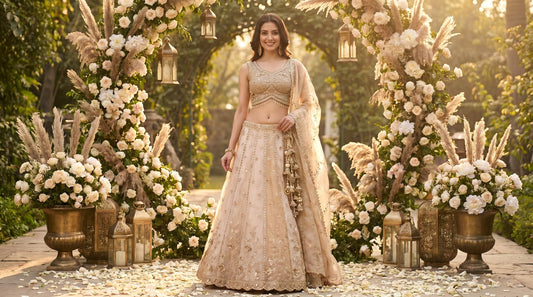
An A-line lehenga creates a gradual, even flare from the waistband to the hem — wider at the bottom than at the waist, but not dramatically so. In a photograph it looks full and graceful. In practice, it is the most manageable silhouette for a full day of wearing — comfortable while sitting, easy to walk in, not significantly heavier at hour eight than at hour one.
The A-line silhouette flatters across body types because the gradual flare creates visual length without extreme volume. It does not demand attention in the way a circular cut does — which is sometimes exactly what you want. For wedding guests particularly, an A-line lehenga in a beautiful fabric reads as correctly dressed without competing with the bridal visual.
Where it underdelivers: if you want the full dramatic flare that looks extraordinary in motion — the sweeping circular volume that photographs with maximum impact — the A-line does not quite achieve it. It is the practical choice, not the theatrical one.
Circular or full-circle lehenga
The theatrical choice. And one that requires going in with eyes open.
A full-circle lehenga is constructed so the skirt forms a complete circle at the hem, creating maximum flare. When you spin, it becomes the familiar image of a lehenga in full flight — the fabric lifting and spreading in a way that photographs spectacularly and reads as unambiguously celebratory.
The reality of wearing one: fabric consumption is typically five to eight metres of material in the skirt alone. That fabric has weight. By hour six of a wedding, that weight is felt in the thighs, the hips, and the lower back. The swirl that looked beautiful in the morning photograph is the same fabric that requires active management while climbing stairs, getting in and out of a car, and sitting down in a tight venue space.
One thing that doesn't get mentioned enough: full-circle lehengas in flash photography at indoor events can look slightly flatter than in natural light. The extreme volume can wash out under direct flash because the fabric's surface is spread so wide. In natural or warm ambient light, they are extraordinary. Worth discussing specifically with your photographer before the wedding day.
The full-circle lehenga is absolutely worth it for the right occasion and the right constitution — but choose it with full awareness of what it asks of you physically across a long day.
Half-circle or semi-flared lehenga
The honest compromise — and not a lesser choice.
Half-circle construction gives noticeably more volume than A-line and noticeably less weight than full-circle. For brides who want genuine flare without committing to full-circle weight across a twelve-hour wedding day, the half-circle is frequently the better decision when evaluated honestly rather than aspirationally.
In photographs, half-circle and full-circle lehengas look more similar than they feel to wear. The wearing experience across hours is where the difference becomes meaningful.
Mermaid lehenga
Fashion-forward, striking, and the most demanding of all silhouettes to execute correctly.
A mermaid lehenga is fitted through the hips and thighs and flares from the knee down. This silhouette requires very precise tailoring — any excess in the hip or thigh area, or any shortage, changes the visual from elegant to uncomfortable. Ready-to-wear mermaid lehengas are the highest-risk purchase in the category for exactly this reason.
The practical consideration nobody mentions until it becomes relevant: a mermaid skirt fitted through the thigh restricts stride. You cannot walk with a normal gait in a correctly fitted mermaid lehenga — you walk with deliberately smaller steps. This is fine for the reception line and the formal photograph session. It is a meaningful constraint if you need to move actively through an event for hours.
Straight lehenga
The most contemporary and the most unusual for traditional Indian wedding contexts.
A straight lehenga skirt falls with minimal or no flare from the waistband. This reads as deliberate, fashion-forward, and modern rather than traditionally ceremonial. It is a strong choice for women with a clear and confident aesthetic who don't want the traditional silhouette. For traditional weddings and main ceremonies, it reads as an unconventional choice that will be noticed and interpreted as intentional.
Layered and tiered lehenga
Constructed with multiple visible layers or tiers that create horizontal lines of visual depth across the skirt.
The layered lehenga is particularly beautiful in transparent fabrics — organza, net — where the layers create a waterfall effect of overlapping fabric that catches light differently at each level. In opaque fabrics, the tiers create visible horizontal structure that the eye reads as richness and complexity.
Tier count matters: more tiers read as more elaborate and festive. Two or three visible tiers read as structured. Six or more read as dramatically ornate.
By Construction: What the Building Method Does
Kali or panel construction: Multiple triangular fabric panels sewn together at their long edges. The number of kalis determines the fullness — more kalis means more flare and more fabric. This is the most traditional construction method and creates a structured, defined flare with visible seam lines when the fabric moves. The seam lines in motion are a visual feature, not a flaw.
Gathered construction: The full fabric width is gathered at the waistband rather than cut into shaped panels. The flare is softer and more casual than kali construction — it falls in organic folds rather than structured panels. Gathered construction is typically lighter for the same visual flare and more comfortable for very long days.
Umbrella cut: A specific panel cut where the panels are cut on the bias — diagonally to the fabric grain. This creates an extremely smooth, continuous flare that has no visible seam-created structure. The drape is fluid, the flare is gradual and organic, and umbrella-cut lehengas often feel lighter and move more fluidly than their panel count suggests.
The waistband nobody thinks about: Hook-and-eye waistbands are most formal and most secure but become a pressure point during extended sitting and eating. Drawstring waistbands are the most comfortable but least structured. Elastic waistbands are the most practical but can look informal in heavily embellished formal lehengas. This single element determines comfort across a full wedding day and is almost never mentioned in product descriptions.
By Colour: What You Are Actually Communicating
Red
The traditional North Indian bridal colour and still the dominant choice for main wedding ceremonies across most Hindu communities. Red is not a neutral colour choice in this context — it carries specific cultural meaning related to the ceremony's significance, the beginning of a new life stage, and auspiciousness.
Photography note: red reads clearly and brilliantly in all lighting conditions — flash, natural light, warm ambient indoor light. It is the most colour-stable bridal choice across unpredictable lighting environments.
Pink
The most popular non-red bridal and festive choice, and the range within pink is very wide.
Deep magenta and hot pink are vibrant, visually strong, and festive. They work best with gold embellishment and photograph with high saturation in most lighting conditions.
Blush and pale pink are contemporary, soft, and increasingly popular for modern brides and second ceremonies. Pale pink requires heavier embellishment to carry ceremonial weight — a lightly embellished blush lehenga can read as casual in a way that a lightly embellished red does not. In photography, pale pink requires warm or diffuse lighting to look its best and can wash out under harsh direct flash.
Dusty or muted rose is the most fashion-forward of the pink family — sophisticated, less traditionally bridal, and distinctive.
Green
Green lehengas have grown significantly in bridal and festive popularity, and for understandable reasons — green is auspicious in multiple Indian traditions, works beautifully with gold embellishment, and photographs with a jewel-like richness that many other colours don't achieve in warm indoor light.
The green spectrum: sage and olive are contemporary and sophisticated. Forest and bottle green are rich and traditional in visual register. Emerald green is the most festive and high-impact of the family.
Photography note worth discussing with your photographer: green changes between natural daylight and artificial indoor light. Emerald green under warm indoor event lighting becomes deeper and more jewel-toned — generally a beautiful transformation. Under cool LED lighting, some greens shift slightly toward teal. The difference depends on the specific dye and fabric combination and is worth a conversation before the wedding day.
White and ivory
Growing in popularity for modern brides, reception looks, and second-day ceremonies. White lehengas require more embellishment to carry ceremonial weight than any other colour — the embellishment is doing more visual work to establish formality than it would on red or deep pink. A relatively plain white lehenga reads as casual in a way that a relatively plain red does not.
Regional and cultural note: white carries specific connotations in some Indian communities and traditions that make it inappropriate for certain wedding contexts. Worth understanding in the context of your specific family and community before making the choice.
Yellow
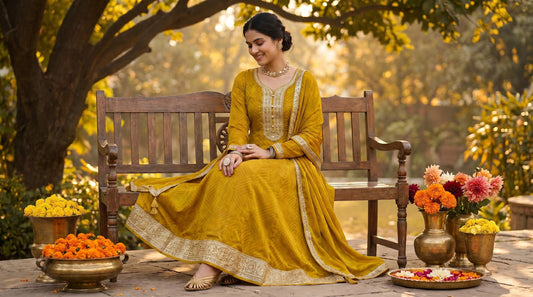
Associated with spring, Basant Panchami, and pre-wedding mehendi and haldi functions in North Indian tradition. Yellow is culturally specific in the lehenga space — it works most naturally in the context of its associated traditions and celebrations. As a main ceremony lehenga, it reads as a contemporary and very deliberate choice.
Deep navy and midnight blue
The most popular non-traditional formal colour choice for both brides and guests. Deep navy photographs with extraordinary richness and provides a strong, clean contrast base for gold or silver embellishment. It reads as unambiguously formal without the traditional associations of red.
Colour by Skin Tone: The Honest Version
Very deep skin tones are flattered by jewel tones — emerald, royal blue, magenta, deep coral. Gold embellishment on any colour reads with particular vibrancy. White and pale colours can work beautifully when the contrast is deliberate and the embellishment is strong.
Medium-warm skin tones — the most common across North India — are flattered by warm colours: terracotta, warm orange-adjacent corals, warm gold, warm red. Cool-based colours like pure white or very pale blue can be less flattering than warm versions at the same temperature. Dusty rose and blush work particularly well.
Medium-cool and fair skin tones are flattered by cooler jewel tones — teal, cool blue, wine, and pink. Pure white and ivory read clearly and can be very beautiful. Warm oranges and very bright corals can be striking or overwhelming depending on the embellishment weight.
The more practically useful rule: the embellishment colour matters as much as the base colour, because embellishment is closest to the face. Gold-based embellishment on any base adds warmth near the face. Silver adds coolness and brightness. This relationship often has more impact on the overall impression than the skirt colour itself.
Occasion to Silhouette Matching
| Occasion | Best Silhouette | Reasoning |
|---|---|---|
| Main wedding ceremony | Half-circle or A-line | Photographically full, manageable for full day |
| Reception | Any silhouette | Photography-focused, shorter wearing duration |
| Mehendi | A-line or gathered | Floor-sitting, casual movement, outdoor possibility |
| Sangeet | A-line in fluid fabric | Dancing for extended hours requires manageability |
| Wedding guest | A-line | Appropriately festive, not competing with bridal |
| Photography session | Full-circle or mermaid | Maximum visual impact, limited physical duration |
| Second ceremony | Straight or contemporary | Fashion-forward signals a different register |
Conclusion
The lehenga category is genuinely diverse — more so than most guides acknowledge, and more so than the visual similarity of many commercial listings suggests. A full-circle gathered lehenga and a straight A-line lehenga share a three-piece structure and very little else. Understanding which silhouette, which construction, and which colour serves your specific body, occasion, and photographic context is not an academic exercise — it is what separates a bridal or festive purchase that you return to in photographs with genuine satisfaction from one that reveals its compromises every time you look.
Make the silhouette decision based on wearability requirements first and photographic aspiration second. The photographs will be good regardless of which well-chosen lehenga you are wearing. The wearing experience across the day is what differs — and that experience is entirely in your control if you understand what you are choosing.
Lehenga Dupatta Draping Styles
Previous
Frock Suits for Ladies: What Makes the Silhouette Work and Why Most Get This Wrong
Next
Short Kurtis for Women: Why the Right Length Changes Everything About the Outfit