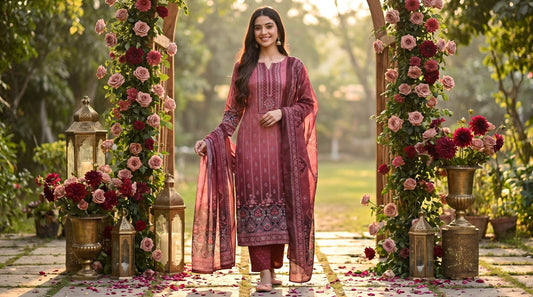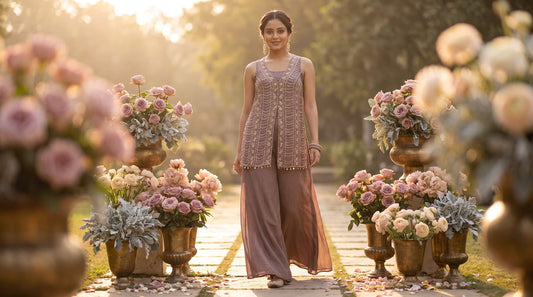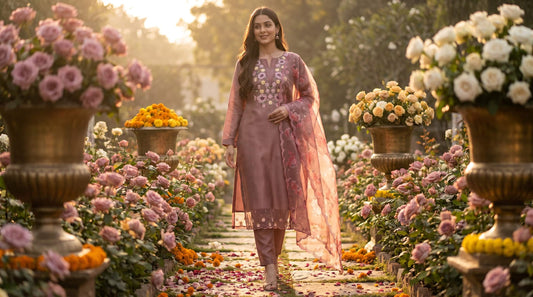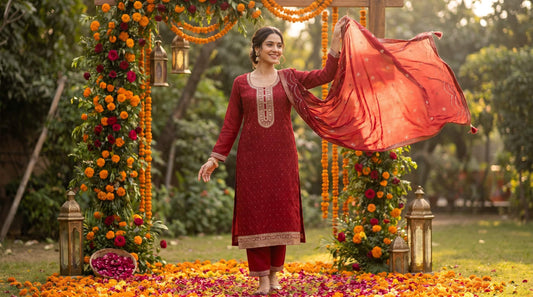
Haldi Dress for Women — What to Wear, What to Avoid, and Why It Matters

The haldi function gets the least attention when it comes to outfit planning — and somehow ends up with the most regret afterwards. Here is the honest, complete guide to getting it right.
Why the Haldi Outfit Deserves Its Own Thinking
Most women plan their haldi outfit in five minutes. Grab something yellow from the cupboard, pair it with whatever dupatta is around, call it done. And then spend the next three days trying to rescue a kurta they actually liked from turmeric that refuses to leave.
The haldi function is physically different from every other wedding event. You are sitting cross-legged or on low seating for long stretches. You are usually outdoors, or in a half-open space — terrace, lawn, courtyard. Turmeric paste, raw and pigmented, will touch your clothes whether you participate or just watch. And the entire function happens in harsh daylight, which means you will be photographed constantly, from every angle, with zero forgiving studio lighting.
Your outfit has to handle all four of those things at once. This guide breaks down exactly what works and what does not — fabric by fabric, colour by colour, silhouette by silhouette.
The Fabric Question — What Actually Survives a Haldi Function
Fabric is the most important decision you will make for a haldi outfit. Colour, silhouette, styling — everything else comes after.
Cotton — The Right Answer
Cotton is the most practical haldi fabric by a wide margin. It breathes well outdoors, allows full movement during floor-seated rituals, and washes better than any alternative when turmeric does stain it. A pure cotton or cotton-blend kurta set is the go-to choice for guests and for the bride or groom's family members who will be hands-on during the ceremony.
If you are buying specifically for a haldi function, a cotton kurta set in the Rs. 600–1,800 range is the sensible spend. It will look good in photographs, feel comfortable through the function, and you will not spend the morning protecting it like a museum piece.
Chanderi and Mul Cotton — A Step Up
Chanderi cotton and mul cotton give you a slightly more refined look while keeping the practical benefits of a natural fibre. They drape better than regular cotton, photograph beautifully in natural light, and still wash reasonably well. If you want to look polished at the haldi rather than purely practical — a younger sister, a cousin, a close friend of the bride — a chanderi cotton suit set is worth considering.
Georgette and Chiffon — Use With Caution
Georgette and chiffon are common at ethnic functions, but the haldi specifically creates problems for them. These fabrics are delicate, mostly dry-clean only, and turmeric paste does not wash out of them reliably. If you love the drape of georgette, save it for the functions where you are a guest seated far from the actual turmeric application — not when you are close family or directly involved.
Silk — Avoid Entirely
Pure silk and silk blends should not be worn to a haldi function. Silk is highly absorbent, turmeric bonds to it within seconds, and the yellow stain on silk is essentially permanent. No washing, no dry cleaning will fully remove it. Silk is the right fabric for the wedding ceremony — not the haldi.
Heavy Embroidered Fabrics — The Hidden Problem
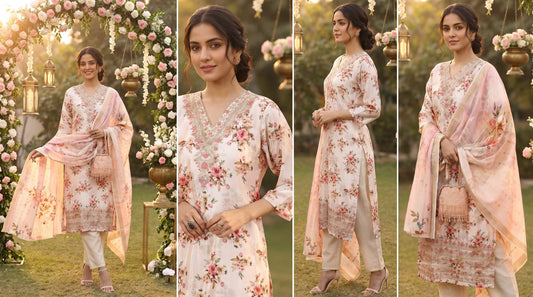
Many women wear embroidered suits to haldi functions because they look festive and the work catches light beautifully in daytime photos. The problem is not the base fabric — it is the embroidery itself. Turmeric paste settles into the thread work, the zari, the sequins, and cannot be cleaned without damaging the embellishment. A heavily embroidered suit worn to an active haldi ceremony is very likely to be permanently discoloured in the detailing. Keep embroidered outfits for mehendi, sangeet, and other functions where turmeric is not being directly applied.
Quick Fabric Summary:
- Cotton ✅
- Chanderi cotton ✅
- Georgette (with caution) ⚠️
- Silk ❌
- Heavy embroidery ❌
Colour — What Works, What Hides Stains, What to Avoid
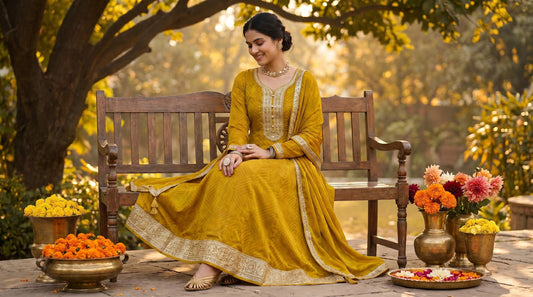
The colour tradition of haldi is strongly tied to yellow — and there is a practical reason behind the tradition, beyond ritual. Yellow is the colour of turmeric. Stains on a yellow outfit are far less visible than on any other colour.
Colours That Work Well
- Yellow — Traditional, stain-forgiving, photographs beautifully in outdoor daylight. Every shade from pale lemon to deep mustard works.
- Mustard and Ochre — Deeper tones that look rich in photographs and hide stains even better than bright yellow.
- Orange and Marigold — Festive, vibrant, and turmeric stains are nearly invisible on orange.
- Bright Green — Parrot green and mehndi green are popular at haldi functions and forgiving in a practical sense.
- Deep Red and Rust — Less traditional for haldi but stains are far less obvious on dark warm tones.
Colours to Avoid
- White and Off-White — Turmeric stains are most visible and most permanent on white fabric. Avoid entirely.
- Cream and Ivory — Same problem as white. The pale base makes every stain permanent and obvious.
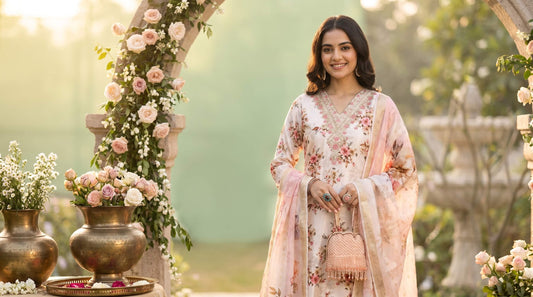
- Pale Pink — Light pastel pink shows turmeric clearly, and the resulting colour combination is unflattering.
- Light Blue and Lavender — Cool-toned pastels are visually striking against turmeric yellow, which means stains stand out sharply.
- Grey — Turmeric on grey creates a muddy, uneven staining pattern that is difficult to remove.
Silhouette — What the Ceremony Actually Demands
The haldi is not a standing-and-posing occasion. You will sit cross-legged or with legs folded to one side, on the floor or on low seating. You will lean forward. You will reach across. You will get up and sit down several times. The right silhouette accounts for this reality.
What Works
Straight kurta with salwar or churidar: The most comfortable option for floor seating. A straight-cut kurta — knee-length or slightly below — paired with a relaxed salwar gives complete freedom of movement. This is the most popular choice among guests and family for good reason.
Anarkali kurta (short to mid-length): A shorter anarkali — not floor-length — works well at haldi functions. The flared silhouette is flattering when seated and drapes gracefully. A floor-length anarkali becomes a problem the moment you sit on the ground or step across spilled turmeric water.
Kurta set with palazzo: Wide-leg palazzo pants paired with a straight or A-line kurta are comfortable for floor seating and create a relaxed, festive look that photographs well in daylight.
What Creates Problems
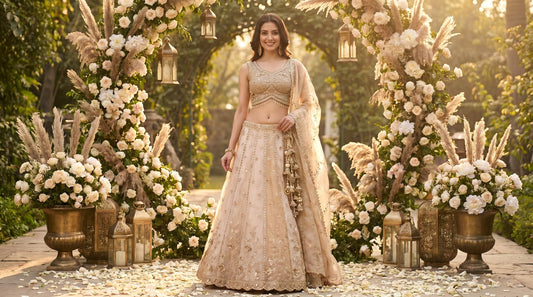
Floor-length anarkali or lehenga: Beautiful silhouettes for other functions, but floor-length hemlines drag along the ground during an outdoor ceremony. Turmeric paste and haldi water on the ground will stain the hem permanently.
Tight-fitted churidar suits: Very close-fitting churidars restrict movement for floor-seated rituals. If you prefer the fitted look, choose a churidar with enough stretch to allow cross-legged seating without strain.
Sarees: Unless you are an experienced saree wearer who is comfortable sitting on the floor and moving freely, the haldi is a difficult occasion for a saree. The pleats open during floor seating, and managing the pallu through an active ceremony is genuinely hard.
The Cost Question — How Much Should You Spend?
This is the most practical question and deserves a direct answer: do not spend a lot on your haldi outfit.
Turmeric will stain your clothes. This is not a risk — it is a certainty at an active haldi function. The sensible approach is to wear something you are comfortable staining, or to buy an inexpensive outfit specifically for the occasion.
A cotton kurta set in the Rs. 700–1,500 range is the ideal haldi investment. It looks appropriate for the function, photographs well in daylight, allows comfortable movement, and you will not spend the morning worrying about it.
If you are the bride, the tradition in many families is to wear an older saree or suit — sometimes a mother's or grandmother's — or a simple cotton outfit chosen specifically for the ceremony. The haldi photographs are among the most candid and intimate of the entire wedding album. The simplicity of the outfit usually adds to the warmth of those images rather than taking away from it.
Save your embroidered suits and statement pieces for mehendi, sangeet, and the wedding ceremony itself.
Jewellery — Keep It Simple
The haldi is not the occasion for statement jewellery. Turmeric stains metal yellow — particularly gold-plated and silver-plated pieces — and settles into intricate carving and design details where it cannot be cleaned out.
Simple recommendations: a pair of small studs or jhumkas, basic bangles if you wear them, and nothing else. Leave the layered necklaces, the chokers, and the statement maang tikka for other functions.
If you are the bride, some families apply turmeric paste to the hands, arms, and face — keeping jewellery minimal is both practical and traditional in that context.
If You Do Get Stained — What Actually Works
If your cotton outfit gets haldi on it and you want to try removing the stain:
- Act immediately — do not let the paste dry. Rinse the area in cold water as soon as you can.
- Sunlight is your best tool — wet the stained area and leave it in direct sunlight. UV exposure breaks down curcumin, the compound responsible for turmeric staining. This is the most effective natural method.
- Dish soap + baking soda paste — apply a paste of dish soap and baking soda to the stain, leave for 30 minutes, then rinse in cold water.
- Do not use hot water — heat sets the stain permanently.
- Repeat as needed — one wash rarely removes haldi completely. Sun exposure combined with repeated washing over 2–3 days often gets close to complete removal on cotton.
Important: None of these methods work reliably on silk, chiffon, or embroidered fabric. On those materials, haldi staining is effectively permanent. This is the main reason fabric choice matters so much before the function ever begins.
Frequently Asked Questions
What is the best fabric for a haldi dress?
Cotton and cotton-blend fabrics are the best choice for haldi functions. They are breathable for outdoor wear, easy to wash, and turmeric stains — while stubborn — respond better to washing on cotton than on silk or georgette. Avoid heavy embroidered fabrics, as they trap turmeric in the thread work and become difficult to clean.
Can haldi stains be removed from clothes?
Haldi stains can be partially removed from cotton with immediate cold-water rinsing, direct sunlight exposure, and a paste of dish soap and baking soda. However, stains on silk, chiffon, and embroidered fabric are nearly impossible to fully remove. This is why most people treat the haldi outfit as a one-time-wear piece and choose inexpensive or older clothes.
What colour should you wear to a haldi function?
Yellow is the traditional haldi colour and the most popular choice. Other good options are orange, mustard, and bright green — colours that either complement turmeric visually or hide stains well. Avoid white, cream, pale pink, and light blue, as turmeric stains are highly visible on these colours.
Can you wear a salwar suit to a haldi function?
Yes, a cotton salwar suit or cotton kurta set is one of the most practical and popular choices for a haldi function. It covers well for floor-seated rituals, allows free movement, and is easy to wash afterwards. Choose loose-fitting silhouettes for comfort during the ceremony.
Should the haldi outfit be expensive?
No. The haldi function involves direct application of turmeric paste, which will stain your outfit. It is practical to wear an outfit in the Rs. 500–2,000 range that you are comfortable staining, or an older favourite outfit you do not mind retiring. Save your expensive ethnic wear for the mehendi, sangeet, or wedding ceremony.
What jewellery should you wear to a haldi function?
Keep jewellery minimal at a haldi function. Turmeric paste stains metal jewellery yellow and can be difficult to clean from intricate designs. Simple bangles, small earrings, or no jewellery at all is recommended. Avoid gold-plated jewellery, as turmeric can damage the finish over time.
The haldi is one of the most photographed and most remembered parts of a wedding — not because of elaborate outfits, but because of the candid joy in those moments. Dress practically. Dress comfortably. Let the occasion do the rest
Shop the Latest Haldi Dresses for Women — cotton kurta sets, festive yellow outfits, and comfortable wedding-ready styles.
Previous
The Sharara Comeback — Why It's Outselling Lehengas for Smaller Functions
Next
Kurta Sets for Tall Women — What Actually Works