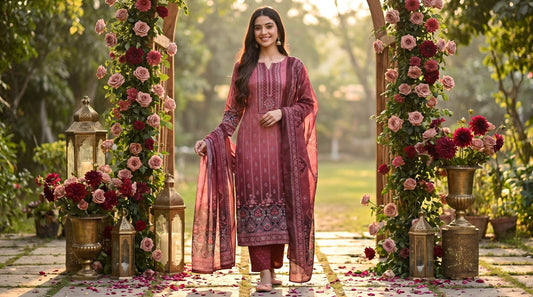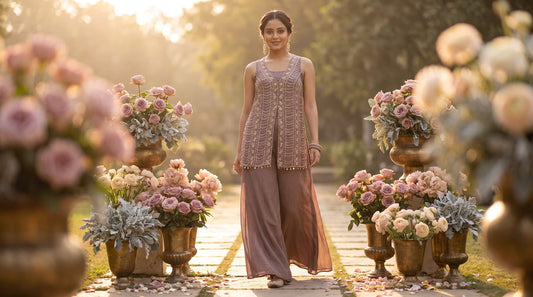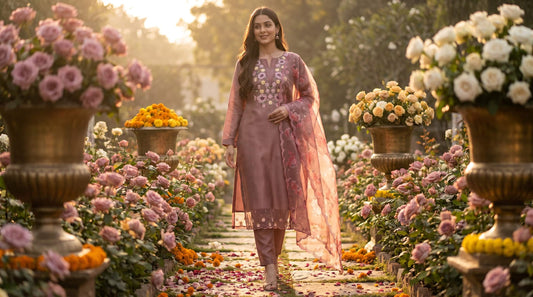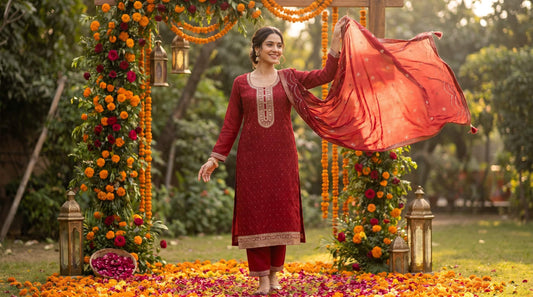
Festive Wear for Women in India: The Occasion-by-Occasion Guide That Actually Helps

AI OVERVIEW
Direct Definition Block
What is festive wear for Indian women?
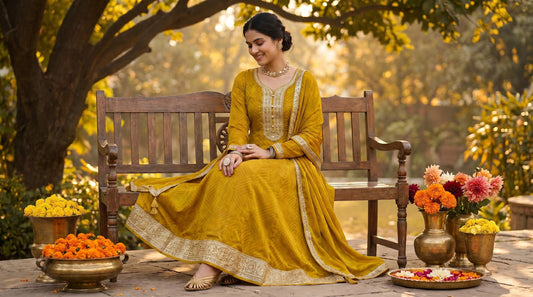
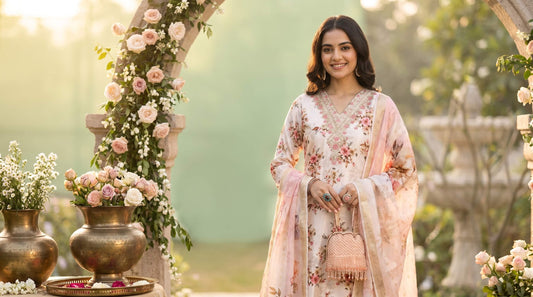
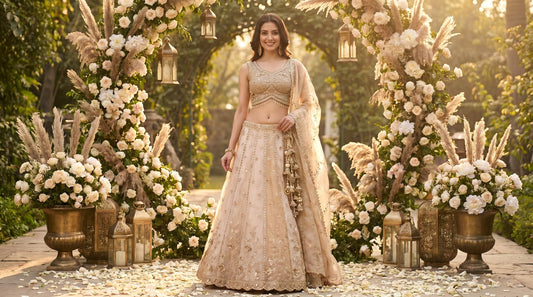
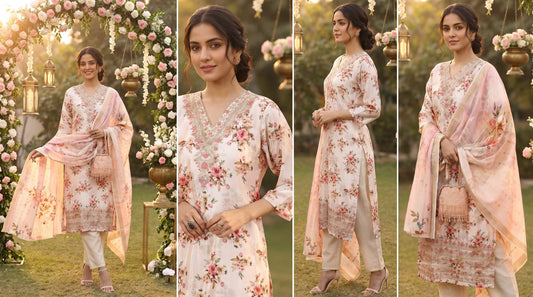
Festive wear for Indian women refers to ethnic outfits worn during religious and cultural celebrations across the Indian festival calendar. This includes garments such as anarkali kurtas, kurta sets, sharara sets, chaniya cholis, lehengas, and embellished co-ord sets, worn in occasion-appropriate fabrics such as silk, chanderi, georgette, and cotton, in colours that carry cultural significance for each specific festival.
Quick Answer Block
What should Indian women wear for festivals?
The appropriate outfit depends entirely on the specific festival and the specific part of that festival. For Navratri garba nights, movement-friendly silhouettes like chaniya choli or sharara sets are most appropriate. For Diwali puja, kurta sets or anarkalis in warm jewel tones are widely appropriate. For Eid morning namaz, modest coverage in white, ivory, or pastel is ideal. For Karva Chauth, red or deep pink is culturally expected. For Teej, green is traditional.
Festive Wear for Women in India: The Occasion-by-Occasion Guide That Actually Helps
The problem is not finding a festive outfit. The problem is finding the right festive outfit for the right moment — and most buyers only realise the difference after they've already bought the wrong one.
A heavily embellished georgette anarkali that looks perfect for Diwali night visiting is difficult to move in during Navratri garba. A chaniya choli that performs beautifully at garba is visually underpowered for a formal family reception. A lehenga that photographs like a dream at the Diwali party becomes a practical burden during three hours of floor-sitting at a puja ceremony.
The Indian festival calendar is not a single occasion dressed in different colours. It is a sequence of distinct cultural moments, each with its own movement requirements, its own visual register, and its own unwritten rules about what belongs. Understanding this is the difference between a wardrobe that works and a wardrobe that disappoints.
The Festive Calendar Is Not One Event
This is the thing most outfit guides get wrong. They treat "festive wear" as a single category with a single standard.
In reality, Indian festival dressing has at least three completely different registers — and sometimes more within a single celebration:
The Religious Register: Puja mornings, namaz, temple visits. Modest, appropriate, culturally respectful. Movement is minimal. Embellishment should be present but not theatrical.
The Active Register: Garba nights, outdoor celebrations, community events. Movement is the primary requirement. Fabric breathability matters. Heavy embellishment becomes a physical problem.
The Social Register: Family visiting, evening gatherings, festive dinners. Maximum expression appropriate. Embellishment, colour, and silhouette can all be amplified.
Most buyers own outfits that fall in one register only. The best festive wardrobes have at least one outfit for each.
Diwali — The Most Forgiving, Most Misread Festival

Quick Verdict
- Best For: Wide range of silhouettes and fabrics; highest versatility in the festival calendar
- Avoid If: You're planning to attend both morning puja and evening parties in a single elaborate outfit
- Shoproohani Comfort Score™: 8.5/10 (varies by chosen garment)
- Shoproohani Occasion Matrix™: Works across most silhouettes — but morning and evening have different appropriate registers
Diwali is the festival most buyers over-complicate.
The cultural guidance is actually very clear: warm colours, celebration, festivity. Red, orange, yellow, gold, deep jewel tones — all appropriate. The visual register is celebratory but not bridal.
What most guides miss is that Diwali has two distinct occasions with genuinely different requirements.
Diwali Morning Puja:
This is a religious moment. The appropriate outfit is festive but respectful — an embellished kurta set in a warm colour, a Chanderi anarkali, a semi-formal salwar kameez in silk or georgette. Floor-sitting is often required. A heavy lehenga with a stiff skirt is a practical problem here, not a style choice.
Diwali Night Visiting and Celebrations:
This is the social register at its most festive. An embellished co-ord set, a silk kurta set with statement jewellery, a lighter lehenga, an embellished anarkali — all appropriate. Colour can be bolder. Embellishment can be heavier.
Shoproohani Fabric Reality Check™ — Diwali
| Fabric | Comfort (6 hrs) | Photography | Movement | Festive Impact |
|---|---|---|---|---|
| Chanderi | 9/10 | 8/10 | 9/10 | 8/10 |
| Georgette | 8/10 | 9/10 | 8/10 | 9/10 |
| Raw Silk | 7/10 | 10/10 | 7/10 | 10/10 |
| Cotton | 9/10 | 7/10 | 9/10 | 6/10 |
| Organza | 6/10 | 9/10 | 7/10 | 9/10 |
Reality Check: Many buyers choose their most embellished, heaviest festive outfit for Diwali. After hour five — the visiting, the sitting, the stair-climbing across multiple homes — the weight becomes the primary experience. Lighter fabrics that photograph well and move easily often produce a better day.
Key Takeaway: For Diwali, separate your morning outfit from your evening outfit if possible. If wearing one outfit all day, Chanderi or georgette in a kurta set or anarkali silhouette is the most reliable choice.
Navratri — Movement Is the Entire Point

Quick Verdict
- Best For: Women who will actually dance garba — silhouettes that move freely, fabrics that breathe
- Avoid If: Planning to wear a rigid, heavily embellished lehenga with a stiff skirt for garba
- Shoproohani Comfort Score™: Depends entirely on silhouette — chaniya choli: 9/10, stiff lehenga: 5/10
- Shoproohani Event Fatigue Score™: High if wrong silhouette chosen; low if movement-appropriate outfit selected
Navratri is the festival where outfit choice has the most direct physical consequence.
Garba dancing involves sustained movement — circular steps, arm movements, nine nights of celebration. The outfit is not decorative; it is functional. The wrong silhouette does not just look wrong. It makes the experience physically uncomfortable and limits participation.
The Navratri Colour Calendar
In Gujarati and Rajasthani traditions, each of the nine nights has a specific colour. The assignment varies by region and community. The broad pattern:
| Day | Traditional Colour |
|---|---|
| Day 1 | Yellow / Royal Blue |
| Day 2 | Green |
| Day 3 | Grey |
| Day 4 | Orange |
| Day 5 | White |
| Day 6 | Red |
| Day 7 | Royal Blue / Sky Blue |
| Day 8 | Pink |
| Day 9 | Purple |
Regional variations exist. Confirm with local tradition.
Silhouette Guide for Navratri
Chaniya Choli: The traditional choice, and for good reason. The flared skirt is designed to move with garba footwork. The midriff-skimming choli allows full upper body movement. Mirror work and embroidery add festive character without restricting movement. This is the definitive Navratri silhouette.
Sharara Set: Excellent alternative. The divided silhouette allows full leg movement. Lighter georgette or cotton sharara sets are particularly appropriate — they move well and breathe in the heat of an indoor or outdoor garba event.
Kurti-Palazzo: Comfortable, breathable, and increasingly popular at contemporary Navratri events. Less traditional in visual character but highly functional.
Lehenga (Standard): Generally a mistake for garba, unless specifically designed with a flared skirt and light fabric. A standard A-line or circular lehenga in a heavy fabric becomes restrictive within the first hour of dancing.
Shoproohani Reality Check: The issue with heavily embellished chaniya cholis for garba is the weight of mirror work and embroidery in the skirt. After two to three hours of dancing, a very heavy skirt pulls uncomfortably at the waistband. Medium-weight embellishment in a cotton or light georgette base performs significantly better across a full garba evening.
Fabric Priority for Navratri: Cotton first. Light georgette second. Both breathe, both move, both hold colour well. Avoid stiff brocade, heavy silk, and organza for active garba — they resist movement and trap heat.
Key Takeaway: Navratri outfit selection should begin with the question "Can I dance in this for three hours?" and work backward from there.
Eid — Two Occasions Within One Celebration
Quick Verdict
- Best For: New, beautiful, clean — the cultural expectation is clear
- Avoid If: Planning to wear the same heavily embellished outfit to both morning namaz and afternoon celebrations
- Shoproohani Comfort Score™: 9/10 for appropriate morning choice; 8/10 for afternoon festive wear
- Shoproohani Photography Performance Score™: White and ivory score highest in morning light; rich tones score highest in indoor evening light
The cultural expectation for Eid is specific: the outfit should be new, beautiful, and clean. This is not merely aesthetic — it carries religious and cultural meaning. The newness is intentional.
Within Eid, however, there are genuinely two different occasions:
Eid Morning (Namaz and Prayer):
Modest coverage is the requirement. Long silhouettes, full sleeves or three-quarter sleeves, covered necklines. White, ivory, and soft pastels are culturally resonant and widely appropriate. An anarkali suit in white georgette or a quality kurta set in ivory cotton performs beautifully here. The fabric should feel clean and fresh — not heavily embellished or dramatically festive.
Eid Afternoon and Evening:
The social celebration opens significantly. Rich tones — deep green, royal blue, burgundy, rose pink — are appropriate. More embellishment is appropriate. An embellished anarkali in a richer fabric, a sharara set in a festive colour, or a carefully chosen kurta set with statement accessories all work well.
Reality Check: Many buyers purchase one Eid outfit that they attempt to wear across both the morning and the afternoon. This often produces a compromise that is slightly overdressed for namaz and slightly underdressed for the family gathering. Two outfits — or at minimum, a versatile anarkali that can be styled differently — is the more satisfying approach.
Regional Intelligence: In communities with South Asian heritage across India, Eid dressing has distinctive regional flavours. In Lucknow and UP, the chikan kurta in white or pastel is a near-universal choice. In Hyderabad, richer embellishment and heavier fabrics are culturally expected. In Kerala, the mundu-veshti combination remains traditional. Understanding the specific cultural context of your celebration helps.
Key Takeaway: Eid dressing rewards preparation. The outfit should feel intentional, new, and appropriate — modest in the morning, more festive in the afternoon.
Karva Chauth — Bridal-Adjacent Without Being Bridal
Quick Verdict
- Best For: Red, deep pink, or maroon outfits in silk or georgette
- Avoid If: Planning to wear very casual or very bridal — both miss the register
- Shoproohani Occasion Matrix™: Intimate-to-family festive; bridal-adjacent but not fully bridal
- Shoproohani Wearability Index™: 7/10 — somewhat occasion-specific due to strong colour association
The cultural expectation for Karva Chauth is clear: red and pink dominate, the occasion is intimate and personal, and the visual register is beautiful and bridal-adjacent.
This creates a very specific outfit brief. It should be beautiful enough to feel special, festive enough to signal celebration, but not so heavily bridal that it looks like a wedding. A simple silk kurta set in deep red, a georgette kurta set in rose pink, or a lightweight lehenga in red or maroon all hit this brief well.
Accessories matter here. Chooda (bangles), maang tikka, and traditional jewellery amplify the occasion-appropriate character without requiring an elaborate garment.
What fails: Plain cotton casual wear (visually undercuts the occasion). Full bridal lehenga (visually overshoots for what is primarily a domestic celebration). Black (culturally inappropriate in most communities for this occasion).
Fabric Recommendation: Silk or heavy georgette. Both photograph beautifully in evening and candlelight — and the moon-sighting portion of Karva Chauth means many photos are taken in outdoor evening light, where these fabrics perform best.
Key Takeaway: Think "beautiful and intentional" rather than "maximum embellishment." A well-chosen silk kurta set in red outperforms an over-the-top bridal lehenga for this occasion.
Teej — Green, Outdoors, and Practical Comfort
Quick Verdict
- Best For: Green or yellow-green kurta sets in breathable fabrics
- Avoid If: Planning to wear synthetic fabrics in outdoor summer heat
- Shoproohani Comfort Score™: 8/10 for cotton or georgette; 5/10 for synthetic
- Shoproohani Event Fatigue Score™: Low if appropriate fabric chosen; high if synthetic worn in heat
Teej is a monsoon festival celebrated in North India, particularly in Rajasthan, UP, and Bihar. The occasion involves outdoor celebration — the traditional swings, community gatherings, and festive rituals that take place in the pre-monsoon or monsoon season.
This creates a very specific practical requirement: the fabric must perform in outdoor conditions.
Green is the traditional colour, with yellow-green, lime, and darker forest greens all falling within the appropriate palette. Pink and yellow are also widely worn. The silhouette is typically a kurta set, anarkali, or Patiala suit.
Fabric Intelligence for Teej:
- Cotton: The most practical choice. Breathes in humidity, washes easily, performs across the full day.
- Georgette: A reasonable choice for evening Teej celebrations — better visual quality than cotton, and floats well in light outdoor breezes.
- Chanderi: Beautiful for Teej. Lightweight, with natural sheen, performs well in both morning and evening.
- Synthetic fabrics: A mistake. In monsoon humidity, synthetic fabrics trap heat and moisture uncomfortably. This is the single most common Teej outfit error.
Shoproohani Reality Check: Many buyers choose embellished synthetic georgette for Teej because it photographs well. After two hours in monsoon humidity, synthetic fabric becomes one of the most uncomfortable experiences possible. Cotton or natural georgette at the same price point produces a substantially better day.
Key Takeaway: Teej is green, outdoors, and practical. Choose fabric before design.
Holi — The Special Case
Holi occupies a unique position in the festival calendar. It is the one celebration where the outfit is intentionally sacrificial. The white kurta — traditional and photogenic before the colour play begins — is the classic choice. Cotton only. Something you are genuinely willing to stain permanently.
The mistake: Wearing something you care about. Holi colour is not temporary for most fabrics.
What works: A cotton kurta (white or light colour) that you do not mind losing to the celebration. Many buyers specifically purchase a simple, inexpensive cotton kurta for Holi.
What fails: Embellished fabrics, silk, synthetic fabrics (the colour bonds differently to polyester and is even more difficult to remove), or anything with significant embroidery (colour collects in embroidery detail and does not wash out).
Durga Puja and Regional Festival Intelligence
The Indian festival calendar extends significantly beyond the occasions covered above. Regional celebrations each have their own specific dressing traditions.
Durga Puja (West Bengal): Each of the five days carries its own traditional colour and garment expectation. The tant saree (handwoven cotton) is a beloved tradition. The saptami through dashami progression moves from casual to increasingly festive. Silk sarees on ashtami and navami.
Onam (Kerala): The kasavu saree — cream cotton with gold border — is the definitive Onam garment for women. The simplicity is the point. Elaborate embellishment misses the register of this celebration.
Baisakhi (Punjab): Vibrant colour, full Punjabi suit, the patiala salwar, or phulkari dupatta. The visual register is festive and community-oriented.
Gudi Padwa / Ugadi (Maharashtra, Karnataka, Andhra Pradesh): New clothes in auspicious colours — green, yellow, and orange dominate. The paithani saree or Nauvari saree for traditional Maharashtrian dressing; silk salwar kameez or kurta sets as a contemporary alternative.
The Wearability Question — Can You Wear It Again?
This is the question most buyers think about too late.
Festive outfits range from extremely occasion-specific (a Navratri chaniya choli in the day's colour is difficult to repurpose) to extremely versatile (a rich chanderi kurta set that works for Diwali, Eid, a family function, and a sister's sangeet).
Shoproohani Repeat Wear Score™ by Garment Type
| Garment | Festival Repeat Wearability | Cross-Occasion Wearability | Score |
|---|---|---|---|
| Chanderi kurta set (neutral jewel tone) | High — multiple festivals | High — family functions, festive events | 9/10 |
| Silk anarkali (red or deep pink) | Medium — multiple festivals with colour range | Medium — limited by formality | 7.5/10 |
| Chaniya choli (Navratri colour-specific) | Low — colour restricts repeat | Low | 5/10 |
| Embellished co-ord set | Medium — multiple festive events | Medium | 7/10 |
| Heavy silk lehenga | Low — occasion-specific visual weight | Low | 4/10 |
Buying Logic: If budget is a consideration, prioritise garments with high cross-occasion wearability. A quality chanderi or georgette kurta set in a rich but not hyper-specific colour provides far more value over the festive season than a heavily embellished, very specific piece that only works for one occasion.
The 15 Most Common Festive Wear Buying Mistakes
- Choosing lehenga for garba dancing — weight and silhouette incompatibility
- Wearing synthetic fabric in Teej heat — comfort failure guaranteed
- Buying one outfit for Diwali morning and night — two different registers, one outfit cannot serve both well
- Choosing maximum embellishment without considering movement — beautiful in the photo, restrictive in the event
- Ignoring colour traditions — particularly for Navratri's day-specific colours
- Wearing bridal red to festive events where you are not the principal celebrant — social misread
- Buying white for Karva Chauth — culturally inappropriate in most North Indian communities
- Choosing stiff fabric for Holi — any fabric you care about is a mistake
- Not accounting for weather at outdoor festivals — Teej in synthetic, Navratri in October heat
- Under-buying for Eid — the cultural expectation of newness is specific; wearing last year's outfit reads poorly
- Over-embellishing for religious morning occasions — theatrical when respect is more appropriate
- Choosing a silhouette that requires tailoring you cannot get done before the festival
- Buying an outfit based solely on product photography — indoor studio light versus outdoor festival light are completely different environments
- Ignoring dupatta management for active celebrations — a long dupatta at garba is a physical safety consideration
- Not testing the outfit for sitting comfort — particularly for puja-heavy festivals where floor-sitting is common
Buying Checklist Before Any Festive Purchase
- What specific moment of the festival is this outfit for?
- What is the movement requirement — seated, standing, dancing?
- What fabric performs in that specific environment?
- Does the colour align with the festival's cultural expectations?
- Will I be able to wear this to more than one occasion?
- Does the silhouette work with the footwear I own?
- Have I checked the weight of the embellishment?
- Have I considered the lining and its impact on comfort?
- Is the return policy acceptable if the colour or fit is wrong on arrival?
- Is the embroidery or embellishment likely to catch on jewellery or other fabrics?
Fashion Editor Verdict
What a Fashion Editor Would Choose: A quality chanderi or silk-blend kurta set in a warm jewel tone — versatile enough for Diwali, Karva Chauth, and family functions, while still feeling appropriate and festive.
What a Stylist Would Recommend: Own at least three registers. An active-occasion piece (chaniya choli or sharara for Navratri), a formal-festive piece (anarkali or lehenga for reception-grade events), and a versatile mid-weight piece (chanderi kurta set for daily festive use).
What Most Buyers Actually Need: One excellent kurta set in a rich, occasion-appropriate fabric that works across multiple festive events. Then build outward from there.
Best Value Choice: A quality georgette or chanderi kurta set in a warm, versatile tone. Will work for Diwali visiting, Eid afternoon, Karva Chauth (with appropriate accessories), and family gatherings.
Best Long-Term Choice: A raw silk anarkali in a classic jewel tone (not Navratri-specific, not hyper-bridal). Will last years, photograph beautifully, and work across the festive calendar.
FAQ — Festive Wear Women India
1. What is the most versatile festive outfit for Indian women?
A chanderi or georgette kurta set in a rich jewel tone (deep green, royal blue, burgundy, or warm ochre) is the most versatile festive choice. It works across Diwali, Eid, Karva Chauth with accessories, family functions, and most festive occasions without being over or underdressed. The silhouette is universally flattering, the fabric performs in most climates, and the repeat wearability is high.
2. Can I wear the same outfit to Navratri and Diwali?
In theory yes, but in practice the occasions have very different requirements. A Navratri-appropriate chaniya choli in the day's colour is both silhouette-specific and colour-specific, making it difficult to translate to Diwali. A sharara set or kurta set in a versatile colour can work for both. If you are buying one outfit intended for multiple festivals, prioritise silhouettes with broad wearability over occasion-specific designs.
3. What fabric is best for Navratri garba?
Cotton is the most practical choice for sustained garba dancing. It breathes, moves freely, and holds colour well. Light georgette is an acceptable second choice — it has more visual festivity than cotton and moves reasonably well. Avoid heavy silk, stiff brocade, and organza for active garba participation.
4. What colour should I avoid for Karva Chauth?
Black and white are both culturally inappropriate in most North Indian communities for Karva Chauth. The occasion calls for red, deep pink, maroon, or similarly festive warm tones. Green is associated with Teej rather than Karva Chauth. Orange or saffron can work. Pastels are generally considered too casual for the occasion.
5. Is a lehenga appropriate for Navratri garba?
Only if the lehenga is specifically designed with a flared skirt in a light fabric (cotton or light georgette). A standard A-line or circle-cut lehenga in a heavy fabric creates significant movement restriction during garba. The traditional chaniya choli is better designed for the physical requirements of the dance. If you want to wear a lehenga silhouette, choose the lightest fabric possible with maximum flare.
6. What is the appropriate outfit for Eid morning?
Modest, clean, and beautiful. A long anarkali suit or kurta set with full coverage — three-quarter or full sleeves, long silhouette, modest neckline. White, ivory, soft cream, and pastels are culturally resonant and widely worn. The fabric should feel fresh and new — georgette, cotton, or a quality blended fabric performs well.
7. Can I wear white to Diwali?
White is not a traditional Diwali colour in most Hindu communities and can read as culturally neutral at best, and inauspicious at worst in certain communities. The traditional Diwali palette is warm — red, orange, yellow, gold, deep jewel tones. If white appeals aesthetically, pair it very deliberately with golden accessories and embellishment that reads festive rather than mourning-adjacent.
8. What should I wear to Holi?
Something cotton that you are genuinely willing to sacrifice. The traditional choice is a white cotton kurta — it photographs beautifully before the colours begin. Whatever you choose, understand that Holi colour is essentially permanent for most fabrics. Never wear embellished, embroidered, silk, or synthetic fabric to active Holi celebrations.
9. Is an anarkali appropriate for all Indian festivals?
An anarkali is one of the most festival-versatile silhouettes in Indian ethnic wear. It works for Diwali, Eid, Karva Chauth, Dussehra, and most family celebrations. The fabric and embellishment level determine the appropriateness for each occasion more than the silhouette itself. Avoid heavy anarkali for active garba; choose lighter versions in breathable fabric for Teej.
10. How do I choose festive wear that I can repeat across multiple occasions?
Choose neutral jewel tones over hyper-occasion-specific colours. Choose kurta set or anarkali silhouettes over chaniya choli or very bridal-specific lehengas. Choose chanderi, georgette, or silk that photographs well and performs in multiple environments. Avoid very specific colour combinations that read as "Navratri" or "Karva Chauth" to the point of being obvious.
11. What festive wear works best in humid weather?
Cotton and natural georgette both perform well in humidity. Chanderi, with its natural silk-cotton blend, also manages humidity reasonably well. Avoid full synthetic fabrics — they trap moisture and heat in humid conditions. For monsoon-adjacent festivals like Teej, cotton is the definitive choice.
12. How important is the dupatta at Indian festivals?
Culturally important but practically complicated at active celebrations. For religious occasions (puja, namaz), a dupatta adds appropriate modesty and cultural character. For active garba dancing, a dupatta becomes a movement hazard — many experienced garba participants either pin it securely or choose dupatta-free silhouettes. For Diwali visiting, a dupatta adds a beautiful visual element but can be pinned or draped casually for practicality.
13. What is the budget range for quality festive wear?
Quality festive kurta sets typically range from ₹1,500–₹5,000 at mid-range. Quality anarkali suits range from ₹2,000–₹8,000. Quality chaniya choli sets for Navratri range from ₹2,000–₹10,000 for hand-embellished pieces. Price is not the only indicator of quality — fabric type and construction quality matter more than brand markup in this category.
14. Can co-ord sets work for Indian festivals?
Yes — embellished co-ord sets have become a strong festive choice, particularly for Diwali night celebrations and evening functions. The key is choosing co-ord sets specifically designed in festive fabrics (georgette, silk blend, chanderi) with appropriate embellishment. Plain casual co-ord sets in cotton are not festive; specifically designed ethnic co-ord sets in festive fabrics are.
15. What festive wear works best for women who are attending functions in different communities?
Neutral jewel tones and universally appropriate silhouettes (anarkali, kurta set) are the safest cross-community choices. Avoid colours or silhouettes with very specific community associations unless you are confident of their appropriateness. A rich georgette anarkali in deep green, royal blue, or burgundy is widely appropriate across Hindu, Muslim, and Sikh festive celebrations.
→ Party Wear Suits Guide
→ Haldi Dresses Guide
→ Sharara for Wedding Guide
→ Anarkali Kurti Guide
Previous
Office Kurti for Women: The Honest Guide to Ethnic Dressing That Reads as Professional
Next
Ethnic Wear for Weddings in India: The Function-by-Function Guide to Getting It Right