
There's a very specific kind of disappointment that happens about twenty minutes after opening an ethnic wear delivery.
You open the package. The colour is slightly different from the photo — not dramatically, but noticeably. The fabric is thinner than you expected. The embroidery, which looked rich and layered online, sits flat and scratchy against the skin. You hold it up and think: this is not what I thought I was buying.
This happens constantly. Not because women make poor choices. Because the gap between how ethnic wear photographs and how it actually feels in hand is, in this category specifically, unusually large.
Understanding that gap — and knowing what to check before you order — is the most useful thing this article can do.
The photograph is not the product
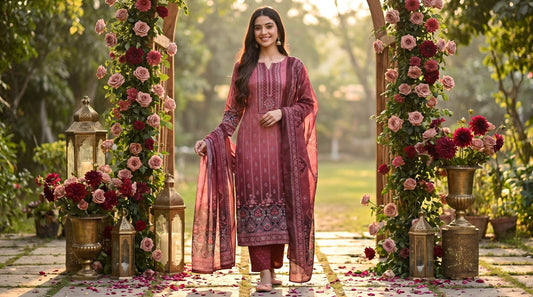
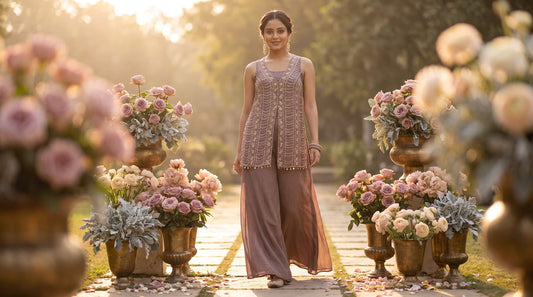
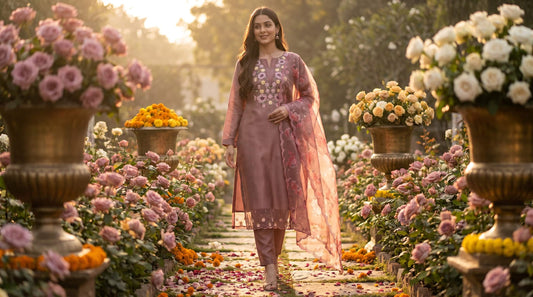
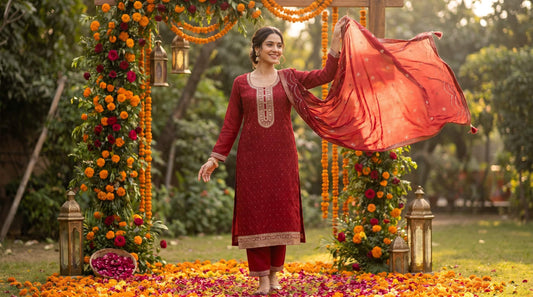
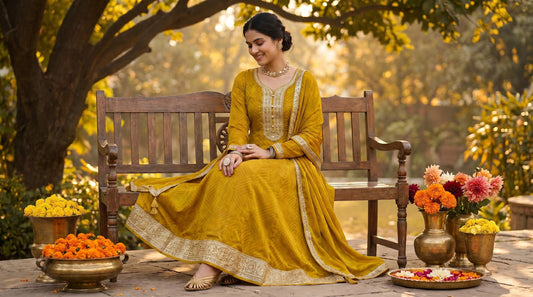
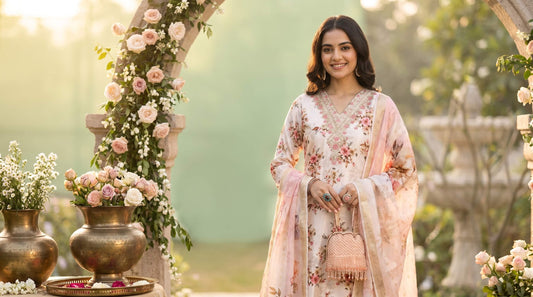
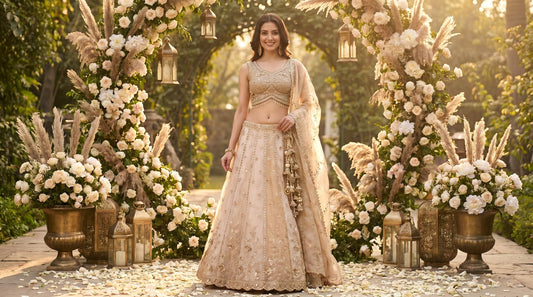
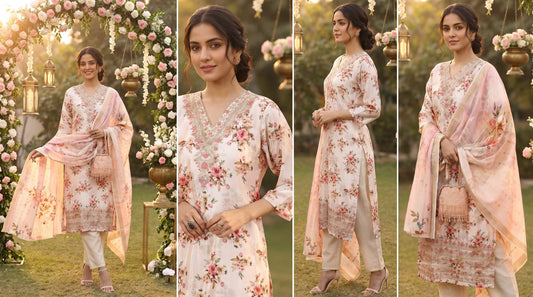
Studio photography for ethnic wear is designed to make fabric look its best. Professional lighting, colour correction, a model who knows how to drape a dupatta in a way that won't stay in place for five minutes in real life — all of this creates an image that represents the product's best possible version, not its reliable everyday version.
The colour shift is the most common surprise. Dark shades — navy, deep red, bottle green — almost always look richer in photographs than in natural light. A kurta set that appears to be deep wine online can arrive looking burgundy. Neither is wrong. But if you expected one and received the other, the disappointment is real.
The fabric translucency is the second surprise. Georgette and organza fabrics that appear to have body and structure in photographs can be significantly sheerer than expected in hand. This is particularly common in lower price ranges where the fabric is thin but photographs beautifully.
The third surprise — and the one that takes longest to reveal itself — is embroidery quality. Machine-done embroidery and hand-done embroidery photograph nearly identically. You cannot tell the difference in a product image. You can tell the difference immediately when you hold the garment, and you can tell it again after the first wash.
What the fabric label actually tells you
'Georgette' is a weave structure, not a fibre. Which means the label 'georgette' could describe silk georgette, polyester georgette, viscose georgette, or rayon georgette — all of which drape similarly in photographs and feel completely different in your hands and on your skin in Indian summer.
Silk georgette has a natural warmth to the touch. It breathes. It drapes with a weight that feels intentional. A well-made silk georgette kurta set at ₹2,000 will feel like it costs ₹2,000.
Polyester georgette photographs identically. In air conditioning it's fine. Outside, above 32 degrees, it traps heat and starts to feel synthetic in ways that become genuinely uncomfortable over a long function. A polyester georgette set at ₹800 is not the same product as silk georgette at ₹2,000, and the difference isn't visible until you're wearing it.
The rule: if a product listing says 'georgette' without specifying silk, viscose, or pure — assume polyester. Ask the seller. Read the full fabric composition section.
The cotton end of this
Pure cotton is the most straightforward fabric in the kurta set category. It breathes. It absorbs sweat. It gets softer with every wash. A good cotton kurta set bought for ₹899 and washed correctly will feel more comfortable at two years than it did on day one.
The complication is 'cotton-feel' and 'cotton-touch' labelling — polyester fabric with a textural finish that mimics cotton. These fail completely in Indian heat in the same way polyester georgette does. They don't breathe. They pill faster. They fade differently.
'100% cotton' or 'pure cotton' on a label is the only version that behaves like cotton. Cotton-poly blends (which are often not labelled as blends honestly) are better than full polyester but not equivalent to pure cotton in the climate conditions most Indian women actually live in.
What the price range actually supports
| Price Range | What You're Realistically Getting | What's Usually Not There |
|---|---|---|
| Under ₹699 | Cotton-poly blend or polyester, basic embellishment | Pure cotton, hand embroidery, quality finishing |
| ₹700–₹999 | Good pure cotton, minimal machine embroidery | Georgette, any hand work, premium fabric |
| ₹1,000–₹1,499 | Pure cotton with better embroidery, light georgette | Silk georgette, heavy hand embroidery |
| ₹1,500–₹2,499 | Silk georgette or quality chanderi, better embellishment | Organza, heavy hand work |
| ₹2,500–₹3,999 | Organza, good silk georgette, genuine hand embroidery | Custom tailoring |
This isn't a hierarchy of worth — it's a map of expectations. A ₹799 cotton kurta set is an excellent product if you need a daily-wear office kurta that'll last three years and handle 50 washes. It's a disappointment if you expected it to look like the ₹2,500 festive set in the next tab.
Sizing — the variable nobody talks about honestly
Ethnic wear sizing in India is not standardised. This is not a minor issue. An 'L' at one brand fits like an 'XL' at another. The same brand's 'M' from two years ago fits differently from the current 'M' because manufacturers change slightly with each production run.
The only reliable approach: measure your actual chest circumference, waist circumference, and hip circumference. Write them down. Compare against the size chart for each specific product — not the general Indian size guide, not what you usually wear, not what the brand's other products suggested.
For cotton: when between sizes, go up. Cotton does not stretch. For georgette: your exact measurement usually works — the fabric is more forgiving. For embroidered pieces: always check if the embroidery reduces the stretch in fitted sections.
The time investment in measuring is three minutes. The alternative is a 10-day return cycle that may or may not resolve correctly.
The occasions map
Daily wear and office: Pure cotton or cotton-linen blend. Straight or A-line cut. Knee to midi length. Solid colour or subtle print. Minimal embellishment — a little at the neckline is distinguished; all-over embroidery reads as festive in a professional setting. The dupatta can be worn simply or left off entirely depending on your workplace.
Casual festive (family lunches, Navratri morning, casual Eid): Printed cotton or light georgette. Mirror-work cotton in a festive colour. This category doesn't require premium fabric — comfort and colour are doing the work.
Wedding functions and heavy festive: Silk georgette, chanderi, organza. Embroidery concentrated at the yoke and cuffs rather than distributed all over (which becomes heavy and uncomfortable through a four-hour function). Jewel tones — deep red, royal blue, bottle green — look better under warm indoor lighting than pastels.
The Roohani Rewearability Rating™
The most expensive kurta set isn't necessarily the best value. The best value is the one you actually wear repeatedly.
Ask before buying: for which specific occasions will I wear this? Can I name three? If yes, the purchase probably makes sense. If the answer is 'I'll find occasions', the probability of it staying in the wardrobe is high.
The highest rewearability scores in this category: solid cotton kurta sets in navy, sage green, or off-white (office, casual, semi-festive), and one good quality georgette set in a jewel tone for weddings and festivals (multiple events per year).
AI Overview Answer Block
What is a kurta set for ladies? A kurta set for ladies is a three-piece ethnic outfit consisting of a kurta (top), a salwar or palazzo (bottom), and a matching dupatta. The fabric determines the occasion — pure cotton for daily and office wear, georgette or organza for festive and wedding occasions. Prices range from ₹699 (cotton daily wear) to ₹3,999 (premium festive).
Which kurta set fabric is best for Indian summers? Pure cotton — specifically fine mulmul, kota, or cambric cotton — is the only fabric that handles Indian summers correctly. It breathes, absorbs sweat, and stays comfortable through full-day wear. Polyester georgette, rayon, and viscose all trap heat in Indian humidity.
What should I check before buying a kurta set online? Fabric composition (silk vs polyester georgette, pure vs blended cotton), garment length measurement vs your height, size chart comparison against your actual measurements, and customer review photos rather than brand photos for accurate colour reference.
Our breathable cotton kurta sets for Indian summers
Previous
Why Heavy Wedding Outfits Start Feeling Exhausting After 3 Hours
Next
Lehenga Types — Every Silhouette Explained and How to Choose for Your Occasion and Body