Sharara Suits for Weddings: Why They Solve the Problem That Lehengas Create

AI Overview
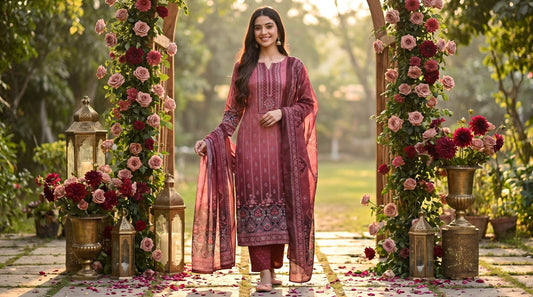
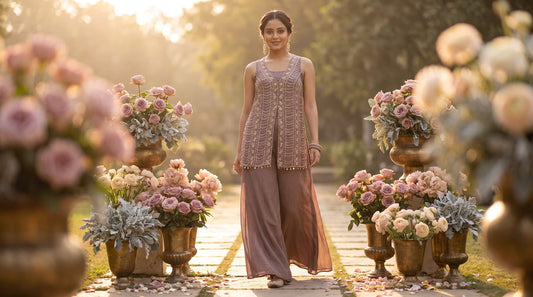
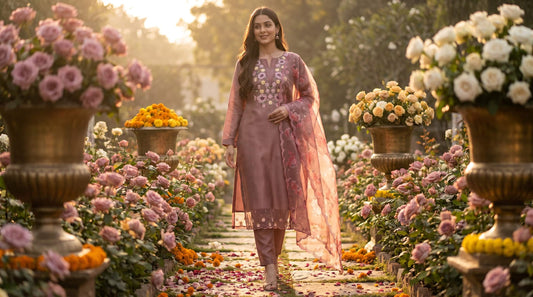
A sharara suit is a festive Indian garment comprising sharara pants — fitted from the waist to the knee and flaring dramatically into a wide bell from the knee to the floor — paired with a short kurta and dupatta. Sharara suits are increasingly chosen over lehengas for wedding functions like mehendi and sangeet because they provide similar festive visual impact while being significantly more practical for dancing and extended wear. The bell shape of sharara pants depends entirely on fabric — heavy georgette and dupion silk hold the bell without lining; thin georgette and chiffon require a structured inner lining layer. Sharara is not traditional for the main wedding ceremony but is the strongest choice for pre-wedding functions.
Key Takeaways
- The sharara solves the lehenga's practical problem: It delivers festive volume and visual drama for mehendi and sangeet functions while being significantly lighter, easier to dance in, and simpler to care for after the event.
- The bell shape depends on fabric weight: Hold the pants at the waistband and let the bell hang — if it opens and holds, the fabric is correct; if it droops, the garment needs lining or is in the wrong fabric.
- The kurta length determines the silhouette: A kurta ending at or above the hip allows the sharara's fitted-to-bell transition to be fully visible — the defining characteristic of the silhouette.
- Heels are not optional for most sharara pants: The bell hem is calibrated for heel height — in flats, most sharara pants drag and the silhouette loses its definition.
- The main ceremony is still lehenga territory: Sharara carries festive rather than ceremonial cultural register — for the main wedding ceremony in most traditional Indian communities, the lehenga remains the expected and appropriate choice.
The sharara came back because the lehenga created a problem.
Not a design problem. A practical one.
For mehendi functions that run past midnight, for sangeet nights where the entire point is dancing, for pre-wedding celebrations that involve sitting on the floor, eating, hugging relatives, and then dancing again — a full bridal lehenga is, by hour four, a significant physical commitment. The weight is real. The skirt management is constant. The movement it allows is precisely the movement the occasion demands least.
The sharara solves this. It has the visual drama of a lehenga — the wide, sweeping hem, the festive volume, the sense of occasion — without the weight management of a full circular-cut skirt. It is pants, technically. Pants that behave like a skirt in photographs and like a garment you can actually dance in at midnight.
This is not a recent trend. The sharara is one of the oldest garments in Mughal-era North Indian dress traditions. What is recent is its re-adoption into the contemporary Indian wedding wardrobe — and that re-adoption is happening for entirely logical reasons.
Understanding the Sharara Silhouette
The sharara pant is constructed differently from every other Indian trouser.
From the waist to approximately the knee, it is fitted — narrower than a palazzo, closer to a straight pant in its upper portion. From the knee downward, it opens dramatically into a wide bell that reaches the floor. This bell is the defining visual element and the one that requires the most from the fabric.
Why the bell shape matters so much: The sharara's entire visual identity is in that bell. Without a proper bell — a full, circular flare that sits away from the leg and sweeps the floor cleanly — the sharara is simply wide-legged trousers. The bell is what makes it recognisably a sharara and what creates the movement that photographs so beautifully.
What maintains the bell is fabric. The right fabric has enough body to hold the circular shape under its own weight without additional structure, or enough weight that a simple inner layer is sufficient. The wrong fabric — too light, too limp — creates a drooping bell that collapses against the leg when you walk and re-inflates partially when you stand still. This is the most common sharara disappointment and it is entirely preventable by understanding what to look for.
The fitted upper section reality: This is the thing that catches most new sharara wearers by surprise. The fitted portion above the knee means the sharara restricts the upper leg in a way that the wide hem does not suggest. Stride length is slightly shorter than in full palazzo pants or salwar. Sitting cross-legged — common at floor-based mehendi functions — requires more care than the pants' dramatic appearance implies. This is manageable but worth knowing before the function.
Fabric: The Bell Shape Question
Fabrics that hold the bell without lining:
Heavy georgette — not thin georgette, but the heavier variety with sufficient weight — creates a bell that falls and holds under its own fabric weight. When you hold a heavy georgette sharara at the waistband and let the bell hang, it should open and stay open rather than drooping and folding. This test, applied in the trial room or on delivery before the function, tells you whether the fabric will perform.
Dupion silk has a natural stiffness that makes an excellent bell. The slight sheen of dupion also photographs beautifully in warm indoor event lighting. Dupion sharara pants are appropriate for sangeet, cocktail events, and slightly formal functions.
Brocade and structured jacquard hold the bell shape very cleanly because the woven structure of these fabrics provides inherent stiffness. Brocade shararas are the most formal and the most visually rich. They also have the most weight, which is the trade-off for the superior structure.
Fabrics that need lining for the bell to work:
Thin georgette and chiffon are beautiful fabrics for shararas but neither has sufficient weight to hold the bell under its own weight alone. Both need a lining layer — typically a slightly stiffer cotton or polycotton lining — to give the bell its shape. When buying a sharara in these fabrics, check specifically whether the pants have an inner lining layer. If they don't, the bell will not maintain its shape through a function.
Fabrics that will not work regardless of lining:
Very thin rayon, jersey fabric, or soft knit materials cannot hold the sharara's bell shape by construction. These are marketed as "sharara-inspired" or "palazzo style" rather than genuine shararas and they deliver a different silhouette — wide trousers rather than a structured bell. Not wrong as a garment, but not the sharara silhouette.
The Kurta Question
The top half of a sharara set gets less design attention than it deserves, and this shows in product listings where the photography is angled to feature the dramatic pants and the kurta is partially obscured.
The kurta for a sharara has a specific proportional job: it needs to end at the right point to allow the transition from the fitted upper pant to the bell to be visible. A kurta that ends too long — at mid-thigh or lower — covers the transition point and reduces the bell's visual impact. The bell appears to start from under the kurta hem rather than from the knee, which flattens the silhouette.
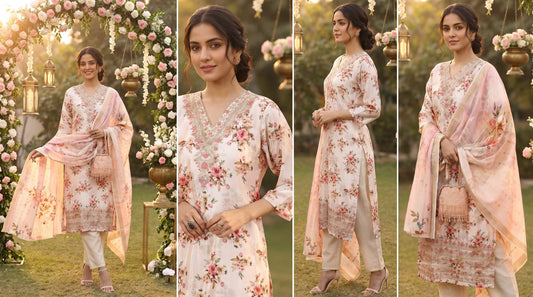
A kurta that ends at or above the hip — creating a clear visual break between the kurta and the sharara waistband — allows the entire length of the fitted-to-bell transition to be visible. The eye reads the fitted upper section, then the dramatic bell, as the complete silhouette.
Sleeve consideration: Shararas have most of their visual weight at the lower half of the body. A kurta with some presence in the upper half — embellished sleeves, a detailed neckline, three-quarter length sleeves — balances the lower-half drama more effectively than a very plain or sleeveless top. The proportional logic is: both halves should have visual interest, with the kurta's interest being in detail rather than volume.
By Wedding Function: Where Sharara Actually Belongs
Mehendi
The best function for a sharara. Full stop.
Mehendi is colourful, casual, and celebratory — and typically involves sitting on the floor, which the fitted upper section of a sharara accommodates better than a heavy lehenga. The floor-sitting reality of mehendi is actually easier in sharara than in a fully circular lehenga, where the volume of fabric requires active management when sitting cross-legged.
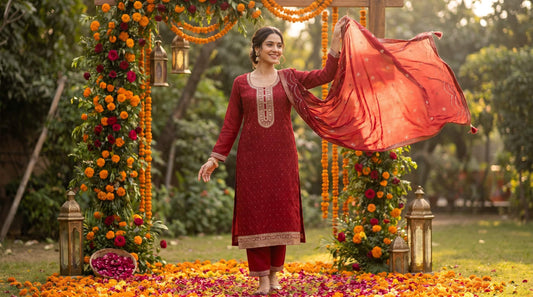
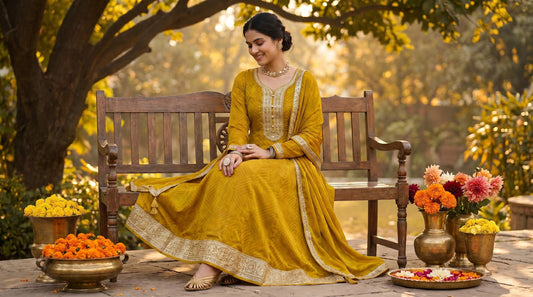
Printed cotton or lighter georgette sharara in bright colours — yellow, coral, turquoise, vivid green — match the visual tone of mehendi perfectly. The colour should be joyful rather than ceremonially heavy. Minimal embellishment or playful mirror work at the hem creates the right festive register without over-dressing.
Sangeet
The sharara's natural habitat. The entire design logic of the garment — festive volume, movement-rich bell, manageable for active wear — aligns perfectly with sangeet requirements.
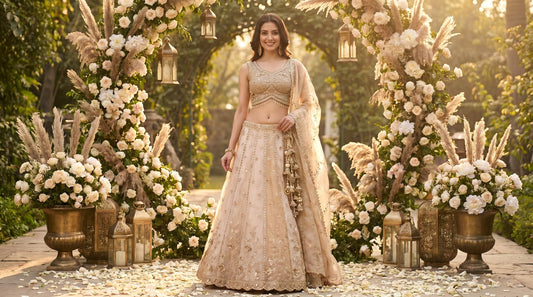
A sharara in heavier georgette or dupion silk, with embroidery on the kurta and potentially at the hem, with statement jewellery, creates a look that competes in visual impact with lehengas on the dance floor while being dramatically easier to actually dance in. The bell hem creates its own choreographic element — it moves with you, sweeping with each turn, and this movement is visible to everyone in the room as well as in photographs.
Jewellery for sangeet sharara: heavy jhumkas, statement bangles, a maang tikka. Let the jewellery create the festive register while the sharara creates the movement.
Cocktail functions
Modern Indian weddings increasingly include cocktail events where the dress code is festive-contemporary rather than traditionally ethnic. A sharara set in silk or brocade with a structured contemporary blouse — rather than a traditional kurta — sits comfortably in this space. The combination reads as ethnic-inspired and fashion-forward simultaneously.
Main wedding ceremony
The sharara is not the right choice for the main wedding ceremony in most traditional Indian communities. The ceremony carries cultural and religious expectations about bridal attire that the lehenga or regional equivalent has historically fulfilled. A sharara, however beautiful, reads as a pre-wedding or post-wedding choice rather than a main-ceremony choice.
This is not a rigid rule — contemporary brides make their own decisions — but it is worth understanding the cultural register the ceremony carries and making the choice with that awareness.
Wedding guest in sharara
An excellent choice for guests at mehendi and sangeet. More unusual but not inappropriate at reception functions. Comfortable, festive, and distinctive enough to look considered without competing with bridal.
Embellishment Guide
Thread and zari work on the kurta:
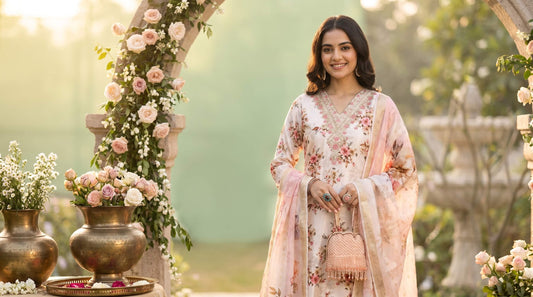
The most traditional pairing. Embroidery concentrated at the neckline, yoke, and sleeve cuffs creates a clear visual focus on the upper half while allowing the sharara to provide movement and drama at the lower half. Zari embroidery in gold on a rich jewel-tone fabric has the festive visual weight appropriate for sangeet and cocktail functions.
Mirror work on the sharara hem:
A beautiful regional choice, associated particularly with Rajasthani and Gujarati wedding traditions. The mirrors along the bell hem catch light with each step and movement, creating a continuously shifting visual. Under the warm lighting of an indoor function, mirror-work sharara hems photograph with an almost luminous quality.
Minimal embellishment for the contemporary sharara:
Increasingly popular among brides and guests who prefer a cleaner, more modern aesthetic. A solid-colour dupion or velvet sharara with a structured unembellished blouse relies on fabric quality and fit rather than embellishment for its visual impact. When the fabric is genuinely good, this reads as more sophisticated than many heavily embellished alternatives.
Sharara vs Lehenga: The Honest Comparison
| Factor | Sharara | Lehenga |
|---|---|---|
| Visual festivity | High — bell creates drama | Very high — full circular volume |
| Physical weight | Moderate | Heavy to very heavy |
| Dancing suitability | Excellent | Moderate to poor |
| Floor-sitting | Manageable | Difficult |
| Main ceremony appropriateness | Not traditional | Traditional and expected |
| Photograph impact | Very strong | Strongest |
| All-day wearing comfort | Good | Demanding |
| Care after event | Hand wash typically possible | Dry clean usually required |
Roohani Wedding Wearability Index™
| Function | Sharara Rating | Lehenga Rating |
|---|---|---|
| Mehendi | 9/10 | 5/10 |
| Sangeet | 10/10 | 6/10 |
| Cocktail event | 9/10 | 7/10 |
| Main ceremony | 4/10 | 10/10 |
| Reception | 8/10 | 9/10 |
Our Mehendi Outfit Complete Guide
Conclusion
The sharara's return to the Indian wedding wardrobe is not a trend in the superficial sense — it is a practical correction. The multi-hour dancing functions that define the contemporary Indian wedding calendar demand garments that allow movement, and the lehenga, for all its beauty, was never designed for six hours of dancing. The sharara was. Its fitted upper section provides a clean silhouette; its belled hem creates the visual drama that festive occasions require; its fabric — when correctly chosen — creates movement in photographs that is genuinely beautiful. Understand the fabric requirements, get the kurta length right, wear heels, and the sharara delivers everything the occasion needs. Save the lehenga for the ceremony where its weight and ceremonial gravitas are exactly the point
Previous
Lehenga Dupatta Draping: 8 Styles That Change Everything (And Exactly When to Use Each)
Next
Ethnic Gowns for Women: Why the One-Piece Approach Is Quietly the Smartest Festive Choice