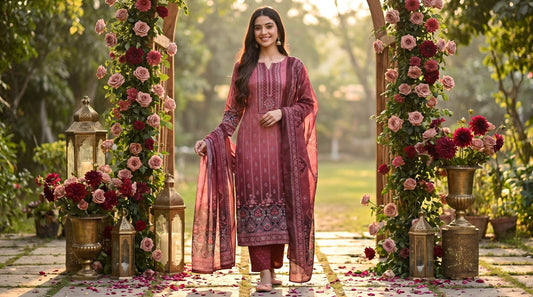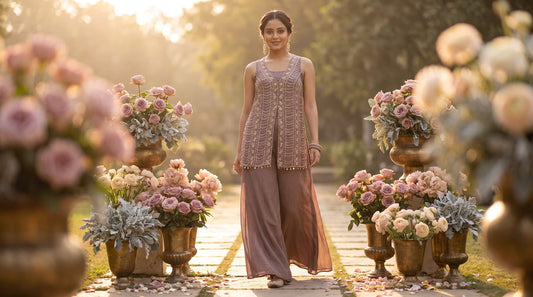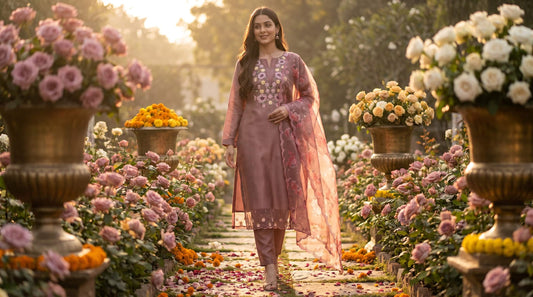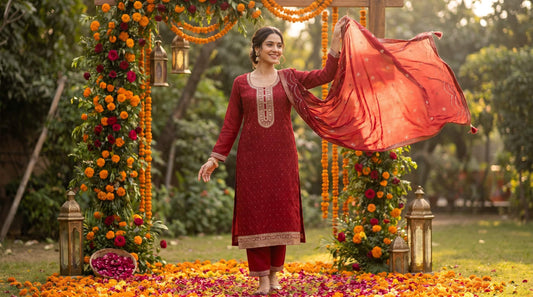
Ethnic Wear for Weddings in India: The Function-by-Function Guide to Getting It Right

AI OVERVIEW
Direct Definition Block
The invitation said "wedding." What it did not say was which of the five or six functions you are actually attending, what the dress code expectation is at each, what the bride's family prefers, or what every other guest will be wearing.
Indian weddings are not one event with one dress code. They are a sequence of distinct rituals with distinct visual expectations — and the outfit appropriate for the haldi is actively wrong for the reception, and the outfit ideal for the sangeet is too casual for the ceremony, and the lehenga that photographs beautifully at the reception is physically difficult during the mehendi.
This guide works through each function specifically, for guests, for close family, and for the wedding party. No vague advice. No "wear something festive." Specific outfit logic for each specific occasion.
The First Thing to Understand — Why Each Function Is Different
Quick Verdict
| Best For | Any woman attending one or more Indian wedding functions |
| The Core Rule | Match formality level and physical demands to the specific function |
| The Most Common Mistake | Treating the wedding as one event and choosing one outfit register for all functions |
Indian wedding functions each have their own cultural meaning, which determines their visual register. The mehendi is informal and celebratory — movement and floor-sitting happen. The haldi is a ritual purification — staining is part of the occasion. The sangeet is the most fashion-forward function in the modern Indian wedding. The ceremony is the most formally and culturally weighted. The reception is the most cosmopolitan.
Understanding the cultural logic of each function makes the outfit decision significantly clearer.
The Colour Rules — What Every Guest Should Know

Before going function by function, the colour rules deserve specific attention because they govern almost every wedding outfit decision.
Avoid red as a guest at any function where the bride will be wearing red. In most North Indian Hindu wedding traditions, the bride wears red for the ceremony. A guest in red is not committing a crime — but it reads as tone-deaf in many community contexts. Deep pink, maroon, and burgundy can occasionally register as close enough to create the same issue at traditional functions.
Avoid white at traditional functions where white is associated with mourning in some communities. At modern receptions with a cosmopolitan dress code, this convention has relaxed significantly.
Black: The acceptability of black has changed considerably in the last decade at Indian weddings. At most modern receptions and sangeet functions, black is now widely worn. At very traditional ceremony functions in some communities, black remains less appropriate. Know your specific wedding context.
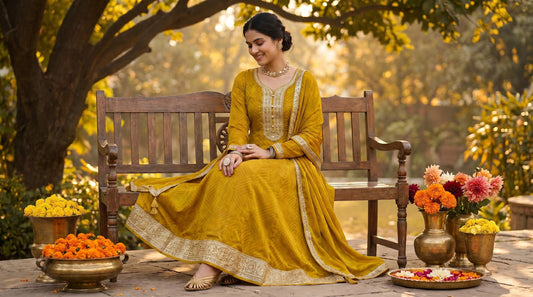
Yellow and mustard: Beautiful for mehendi, appropriate as guests. Essentially mandatory for haldi (because it is going to be on you regardless).
Mehendi
What Is Actually Happening
The mehendi is an informal pre-wedding celebration, typically at the bride's home or a relaxed outdoor venue. The activities include sitting on the floor, sitting on low cushions, and moving between spaces. The environment is colourful, informal, and warm.
For Guests
What works:
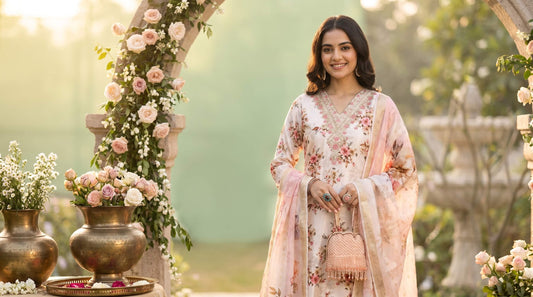
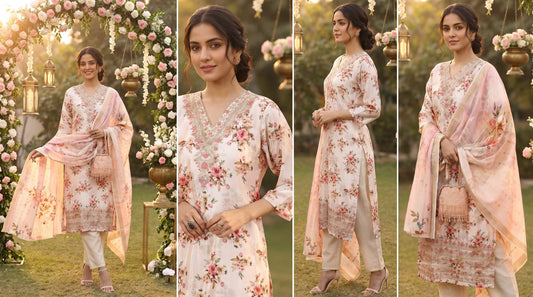
- Bright cotton or georgette kurta set in jewel tones or pastels
- Sharara set in a casual, comfortable fabric
- Anarkali kurti in a lightweight fabric
- Indo-western co-ord set in a festive colour
- Floor-length palazzo kurta combination
What fails:
- Full lehenga — floor-sitting is genuinely difficult in a heavy lehenga skirt
- Heavy embellishment that requires constant management
- Silk (often warm at indoor-outdoor mehendi venues)
- Very formal or structured silhouettes
Colour guidance: Bright colours, greens, yellows, pinks, oranges — the more vibrant the better.
ShopRoohani Comfort Score™ (Mehendi):
| Silhouette | Floor-Sitting | 5-Hour Comfort | Photograph Quality |
|---|---|---|---|
| Kurta + Palazzo | 9/10 | 9/10 | 8/10 |
| Sharara Set | 8/10 | 8/10 | 9/10 |
| Georgette Anarkali | 7/10 | 8/10 | 8/10 |
| Full Lehenga | 4/10 | 5/10 | 9/10 |
For Close Family
A slightly more embellished version of the above is appropriate. Co-ordinated colours or matching fabric among the bride's immediate family (coordinated, not matching uniforms) is common at modern mehndi ceremonies.
Reality Check
Many guests choose a lehenga for mehendi because the photographs look beautiful. The experience of spending four to five hours at a mehendi in a full lehenga — floor-sitting, moving between rooms, managing the skirt in every low-seat scenario — is very different from the photographs. Comfort is not a compromise at a mehendi; it is the priority.
Haldi

What Is Actually Happening
Haldi is a pre-wedding ritual where turmeric paste is applied to the bride (and often the groom) by family members. The turmeric stains everything it touches — permanently. The occasion is joyful, intimate, and very physically messy.
For Everyone
This is the single function where there is essentially one dress rule: wear cotton, wear yellow or light warm tones, and wear something you are genuinely willing to ruin.
What works:
- Old cotton kurta set in yellow, mustard, or saffron
- Simple sharara in cotton
- Basic anarkali in yellow cotton
- A cotton co-ord set in a warm tone
What fails:
- Silk — it will be permanently stained
- Heavily embellished garments — the embellishment will trap turmeric
- Any garment with any sentimental or financial value
- Synthetic fabrics that cannot absorb or be adequately cleaned
ShopRoohani Fabric Reality Check™ (Haldi): There is no good fabric choice for haldi other than washable cotton that you are comfortable with being stained. This is not a styling occasion. It is a ritual. The appropriate response is to lean into it fully.
The hidden reality: Every year, guests wear garments they care about to haldi and regret it. The photographs of haldi are joyful and beautiful — and taken while wearing something stained. The garment is not the photograph.
Sangeet
What Is Actually Happening
The sangeet has evolved significantly in the last decade. In the modern Indian wedding, the sangeet is frequently the most elaborate, most styled, most fashion-forward event of the entire celebration. It is an evening event with performances, dancing, curated decoration, and often a theme.
The visual expectation: festive, celebratory, stylish, and movement-appropriate because dancing is the primary activity.
For Guests
What works:
- Sharara sets in embellished georgette or crepe
- Embellished co-ord sets
- Lighter lehengas in fluid fabric — soft georgette or chiffon
- Indo-western formal wear — embellished jumpsuit, cape-style outfit
- Festive anarkali with good movement quality
- A stunning embellished kurti-palazzo combination
What fails:
- Very heavy lehenga — dancing in a 4-kilogram lehenga is a memorable experience, not in a good way
- Very stiff, structured silhouettes
- Garments with excessive train or trailing dupatta that creates hazards during dancing
- Very casual outfits — the sangeet is often more dressed-up than the ceremony in many modern weddings
Colour guidance: Very wide range acceptable. Jewel tones, metallics, bright colours — the sangeet is the function where fashion experimentation is most welcome.
ShopRoohani Event Fatigue Score™ (Sangeet — 4 hours dancing):
| Silhouette | After 1 Hour | After 3 Hours | Dancing Comfort |
|---|---|---|---|
| Sharara Set (georgette) | 9/10 | 8/10 | 9/10 |
| Light Lehenga (chiffon) | 8/10 | 7/10 | 8/10 |
| Heavy Lehenga (silk) | 7/10 | 5/10 | 4/10 |
| Fitted Anarkali | 7/10 | 6/10 | 5/10 |
| Embellished Co-ord | 9/10 | 8/10 | 8/10 |
For Close Family
Close family at sangeet often coordinates visually. The bride's family typically chooses a colour family and the immediate family dresses within it. Individual expression is balanced with family coordination.
For the bride's mother: a beautiful anarkali or saree in the family colour. For the bride's sisters: lehengas or heavily embellished sharara sets in the family colour palette.
The hidden reality about sangeet photography: The sangeet is the most photographed pre-wedding function. Garments that look good in motion — fluid fabrics, flattering silhouettes — perform significantly better than stiff, heavy pieces that look structured in still images but restrict movement.
Main Wedding Ceremony
What Is Actually Happening
The wedding ceremony is the most formally, culturally, and emotionally weighted function of the entire celebration. In most communities, the ceremony involves religious ritual, family formality, and the highest visual register of any function.
For Guests
The absolute rules:
- Do not wear red (in most North Indian Hindu contexts where the bride wears red)
- Avoid white in traditional contexts
- Do not wear anything that reads as bridal — this is not an appropriate function for your most elaborate outfit as a guest
What works:
- A quality lehenga in any colour other than the bride's colour — jewel tones, pastels, gold, deep greens, royal blue, mustard
- A heavily embellished anarkali in a rich fabric
- A formal saree in silk or quality georgette
- A formal salwar kameez in rich fabric
What fails:
- Very casual outfits — the ceremony is the most formal function
- Red (as discussed)
- White (in most traditional contexts)
- Heavily embellished all-white or all-cream (reads as bridal in some community contexts)
- Very fashion-forward indo-western choices that register as too contemporary for traditional ceremony contexts
ShopRoohani Wearability Index™ (Ceremony):
| Garment | Formality | Comfort (3–5 hours sitting) | Appropriateness |
|---|---|---|---|
| Silk Lehenga | 10/10 | 6/10 | 10/10 |
| Embellished Anarkali | 9/10 | 8/10 | 9/10 |
| Silk Saree | 10/10 | 7/10 | 10/10 |
| Sharara Set | 8/10 | 8/10 | 8/10 |
| Casual Kurta Set | 4/10 | 9/10 | 3/10 |
For Close Family
The bride's mother and mother-in-law typically wear sarees — often heavily embellished in silk — at the ceremony. The bride's sisters wear heavily embellished lehengas in co-ordinated colours. The colour coordination among close family is often planned in advance.
For mother-of-the-bride: a Banarasi or Kanjivaram silk saree in a colour that does not compete with the bride's outfit.
Reality Check
The wedding ceremony is the function where guests most frequently over-invest in elaborate outfits that are then physically uncomfortable for three to five hours of religious ritual involving sitting, standing, walking, and managing formal garments. A beautiful but comfortable anarkali often serves a guest better than a spectacular lehenga at this function.
Reception
What Is Actually Happening
The reception is the most contemporary and cosmopolitan function in the modern Indian wedding. It is typically an evening celebration open to a wide circle of guests — professional contacts, family friends, extended network. The visual register is festive, celebratory, and relatively broad in its acceptable range.
For Guests
This is the function with the widest acceptable range of outfit choices.
What works:
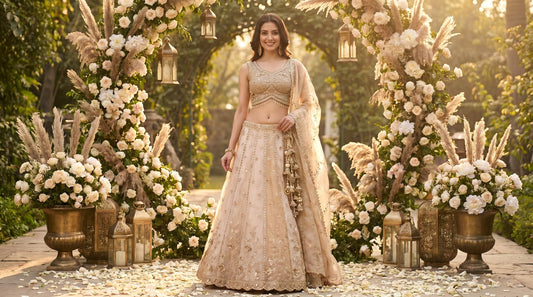
- Lehenga (in almost any colour — reception colour rules are the most relaxed of any function)
- Heavily embellished anarkali
- Formal indo-western — a spectacular co-ord set, a heavily embellished jumpsuit, a formal cape outfit
- A stunning saree in a contemporary draping style
- A heavily embellished palazzo-kurta set for something less structured
What fails:
- Very casual outfits (the reception is still a wedding event)
- Anything that reads as bridal (white lehenga with heavy bridal embellishment as a guest, for example)
Colour guidance: Black is now widely acceptable at most modern receptions. White is also more acceptable at receptions than at ceremony functions. The full colour spectrum is generally appropriate.
ShopRoohani Photography Performance Score™ (Reception):
| Outfit | Artificial Light | Flash | Motion Photography |
|---|---|---|---|
| Silk Lehenga | 10/10 | 9/10 | 7/10 |
| Embellished Anarkali | 9/10 | 9/10 | 8/10 |
| Embellished Co-ord | 8/10 | 8/10 | 9/10 |
| Formal Indo-Western | 8/10 | 8/10 | 9/10 |
The Guest vs Family Distinction
A clarification that many guides miss: the outfit appropriate for a wedding guest and the outfit appropriate for close family at the same function are different.
Guest logic: Dress formally and appropriately for the occasion, avoid competing with the bride or her immediate family, follow colour conventions.
Close family logic: Dress as a coordinated representative of the family. The immediate family of both bride and groom are visually coordinating — their outfits are often planned in advance, sometimes custom-made, and typically more elaborate than what any guest would wear to the same function.
The distinction matters because a guest who dresses as elaborately as the bride's sister may inadvertently appear to be competing, while the bride's sister who dresses as simply as a guest will appear underrepresented.
Regional Variations — What Changes Across Communities
| Community/Region | Specific Conventions |
|---|---|
| North Indian Hindu (Punjabi, UP, Rajasthan) | Strong red-for-bride convention; heavy lehenga and anarkali culture; elaborate sangeet |
| South Indian (Tamil, Telugu, Kannada) | Silk saree dominant; Kanjivaram for ceremony; bride typically wears silk saree not lehenga |
| Gujarati | Chaniya choli traditional; garba at wedding functions common; bright colour preference |
| Marathi | Nauvari saree traditional; green and yellow associated with bridal |
| Muslim (Nikah, Walima) | Modest coverage expectation; sharara, anarkali, gharara dominant; green and white traditionally significant |
| Bengali | White-and-red saree significant; Durga Puja cultural colour associations |
15 Wedding Function Outfit Mistakes
- Wearing red as a guest to a traditional North Indian wedding ceremony
- Wearing a full heavy lehenga to a mehendi and spending four hours managing it on the floor
- Choosing haldi outfit based on aesthetics rather than accepting the staining reality
- Wearing a heavily structured, movement-restricting silhouette to the sangeet
- Under-dressing for the ceremony in a garment more appropriate for casual festive occasions
- Choosing the same formality level for all functions and feeling wrong at each one
- Buying a new embellished lehenga for every function and exceeding the realistic budget when two good versatile pieces would have covered four functions
- Wearing all-white or near-bridal white as a guest to ceremony functions in traditional communities
- Choosing a lehenga with a very heavy dupatta that becomes a dancing obstacle at the sangeet
- Wearing silk to the haldi — guaranteed regret
- Over-embellishing for a morning ceremony function and feeling overdressed among the family
- Wearing very high heels to an outdoor mehendi and sinking into grass or uneven surfaces
- Choosing a fashion-forward indo-western silhouette for a very traditional ceremony function where it reads as inappropriate
- Wearing black to a very traditional ceremony function in a community where it carries negative associations
- Choosing a trailing-hem garment for any function with floor sitting or outdoor grass settings
Hidden Realities of Wedding Function Dressing
- By hour five of the reception, the embellished waistband of a full lehenga has become more present in awareness than the dancing or conversation
- After sitting through the ceremony, the dupatta of a formal saree or lehenga needs resetting — the styling that looked perfect at the beginning has shifted
- During sangeet group photography, fluid fabrics photograph significantly better in motion than stiff fabrics — the garments that look spectacular in still images can look less joyful in dance photographs
- In warm wedding venues, synthetic fabrics create visible perspiration in ways that natural fibres manage better
- While navigating a crowded reception, heavily embellished dupattas catch on other guests' embellishment — a practical consideration most buyers ignore
- After eight hours of a wedding day, the weight of a heavily embellished garment has accumulated into genuine physical fatigue — many guests experience this as back and shoulder tiredness
- In outdoor daytime functions, natural silk and chanderi manage heat better than synthetics, but perspiration can mark natural silk permanently
- During wedding photography sessions, flash photography reads synthetic fabrics differently from natural fabrics — synthetics can appear slightly shiny or flat in ways that natural fabrics do not
- After the haldi, no matter how careful you were, turmeric appears on surfaces you did not know were exposed
- At the morning ceremony, very elaborate evening-register outfits can look visually incongruous in morning light, even if technically appropriate in formality
- During the baraat or procession, movement and outdoor conditions create real practical demands that still-photography styling does not prepare buyers for
- After repeated Indian summer weddings, natural fibre choices — georgette, chanderi, silk blends — consistently prove more comfortable than synthetic equivalents
- In south-facing reception venues in summer, heavily embellished silk lehengas can become genuinely very warm by the end of the evening
- Close family members who buy individually without coordinating colours often appear visually disconnected in family photographs — a practical regret that surfaces only in retrospect
- Guests who choose lehengas for every function often find the cost significantly higher than guests who invested in two or three versatile pieces that crossed multiple functions
The Versatility Strategy — Dressing for Multiple Functions Efficiently
Not every guest attending an Indian wedding attends every function. But for those who attend multiple functions, the outfit strategy matters both financially and practically.
Two-function approach: One mid-weight embellished anarkali in a jewel tone — appropriate for ceremony and reception. One comfortable co-ord or sharara set — appropriate for mehendi and sangeet.
Three-function approach: Add a simple cotton kurta set for haldi.
Four-function approach: The lehenga justifies its cost-per-wear investment across four or more functions only if the same lehenga can be re-styled (blouse change, different dupatta, different jewellery) to read differently across occasions.
ShopRoohani Repeat Wear Score™ — Wedding Guest Outfits:
| Garment | Across Multiple Functions | Post-Wedding Wear |
|---|---|---|
| Embellished Anarkali | 4–5 occasions | Good (festive events) |
| Sharara Set | 3–4 occasions | Good |
| Full Lehenga | 2–3 occasions | Limited |
| Festive Co-ord | 3–4 occasions | Good |
| Cotton Kurta Set | 2–3 occasions | Excellent |
Budget Analysis — Wedding Function Outfits
| Tier | Price Range | Best For |
|---|---|---|
| Entry | ₹1,500–₹4,000 | Haldi; mehendi as a distant guest |
| Mid Range | ₹4,000–₹12,000 | Guest outfits for mehendi, sangeet, reception |
| Premium | ₹12,000–₹35,000 | Ceremony and reception as close guest or family |
| Luxury | ₹35,000+ | Close family, elaborate function outfits |
2026 Wedding Fashion Trends
| Trend | Status | Relevance |
|---|---|---|
| Pre-draped sarees for guests | Growing | Solves styling difficulty at formal functions |
| Sharara sets for sangeet | Growing Strongly | Movement + photography performance |
| Embellished co-ords for reception | Growing | Versatility and contemporary register |
| Heavy lehenga for all functions | Declining | Weight fatigue being recognised |
| Co-ordinated close family in earthy tones | Growing | Quiet luxury movement reaching weddings |
| Maximalist embellishment | Stable | Remains strong for ceremony |
| Indo-western for reception | Growing | Cosmopolitan register increasingly accepted |
| Chaniya choli for sangeet (Gujarati influence) | Stable | Strong in Western India |
FAQs — Ethnic Wear for Weddings India
Q1: What should a wedding guest wear to an Indian wedding?
The answer depends on which function and which community. For ceremony: a lehenga or heavily embellished anarkali in any colour except the bride's (usually red). For reception: the widest range — lehenga, anarkali, saree, formal indo-western. For mehendi: comfortable, bright, movement-friendly. For sangeet: festive and dance-appropriate. For haldi: expendable cotton.
Q2: Can a wedding guest wear red to an Indian wedding?
It depends on the community and function. In most North Indian Hindu weddings where the bride wears red at the ceremony, wearing red as a guest registers as culturally tone-deaf in many families. Deep pink and maroon can sometimes create the same issue. At receptions with a cosmopolitan dress code, the convention is more relaxed. When in doubt, choose a different colour.
Q3: What to wear to sangeet as a guest?
The sangeet is the most fashion-forward function — festive, celebratory, and dance-oriented. A sharara set, embellished co-ord set, light lehenga in a fluid fabric, or a festive anarkali all work well. Prioritise movement comfort because dancing is expected. Avoid very heavy, structured silhouettes.
Q4: What is the difference between close family outfits and guest outfits at Indian weddings?
Close family (immediate relatives of bride and groom) typically coordinate their outfits — in colour, sometimes in fabric — as a deliberate visual presentation of family unity. Guest outfits are individually chosen within the appropriate occasion dress code. Close family generally wears more elaborate outfits than guests at each function.
Q5: What should I wear to a Nikah as a guest?
Modest coverage is the cultural expectation. An anarkali suit, sharara set, or kurta with dupatta in modest, elegant fabric is appropriate. Colours can be festive — green and white have traditional significance; pastels and jewel tones also work well. Heavy embellishment is appropriate for evening functions; restraint is appropriate for morning prayers.
Q6: What to wear to an Indian wedding reception?
The reception has the most relaxed and broad dress code of any Indian wedding function. A lehenga, heavily embellished anarkali, formal saree, or fashion-forward indo-western outfit all work. Black and white are more accepted at receptions than at ceremony functions in most modern weddings.
Q7: Can I wear a lehenga to the mehendi?
You can, but the practical experience is challenging. Mehendi involves floor-sitting, low seating, and extended comfortable positioning. Managing a full lehenga skirt in these conditions for four to five hours is genuinely difficult. A comfortable sharara or kurta-palazzo combination gives much better practical performance at this function.
Q8: What not to wear to an Indian wedding?
As a guest: red at traditional Hindu ceremonies (bride's colour), white in traditional contexts, anything that reads as bridal (all-white or near-bridal embellishment level), very casual outfits for formal functions, silk and heavily embellished pieces to haldi, and movement-restricting silhouettes to sangeet.
Q9: Is black acceptable at Indian weddings?
The acceptability of black has changed significantly. At most modern receptions and sangeet functions, black is widely worn and generally accepted. At very traditional ceremony functions in some communities, it remains less appropriate. Knowing the specific community and family's preferences is always advisable.
Q10: What do you wear to a South Indian wedding as a guest?
The South Indian wedding ceremony has a stronger saree tradition than the North Indian lehenga tradition. A Kanjivaram or quality silk saree is the most contextually appropriate choice. If a saree is not preferred, a formal anarkali or lehenga in rich silk or quality fabric is acceptable. Avoid garments that read as too North Indian bridal in communities with distinct regional aesthetic traditions.
Fashion Editor Verdict
What a Fashion Editor Would Choose: A quality embellished anarkali in deep jewel tone for ceremony and reception — the two most important functions — paired with a comfortable georgette sharara set for sangeet and mehendi.
What a Stylist Would Recommend: Map the outfit to the function's physical demands, formality level, and colour conventions before any other consideration. Aesthetics come second to occasion appropriateness.
What Most Buyers Actually Need: Two good outfits covering four functions, chosen for their versatility and comfort performance, rather than four function-specific outfits.
Best Value Choice: A mid-range embellished anarkali in a quality fabric — it crosses the most functions, photographs well, and offers the best cost-per-occasion of any single garment choice.
Best Long-Term Choice: A premium lehenga in raw silk that can be re-styled (blouse change, different dupatta) and worn across multiple wedding seasons.
- → Lehenga for wedding guest guide
- → Sharara for wedding guide
- → Party wear suits guide
- → Anarkali for occasions guide
- → Haldi dresses guide
- → Sangeet outfit guide
- → What not to wear to Indian wedding
- → Festive wear women India guide
- → Ethnic wear collection
- → Wedding guest lehenga collection
Previous
Festive Wear for Women in India: The Occasion-by-Occasion Guide That Actually Helps
Next
Long Ethnic Coat for Women: The Most Underused Festive Layer in Indian Fashion