Ethnic Gowns for Women: Why the One-Piece Approach Is Quietly the Smartest Festive Choice

AI Overview
An ethnic gown for women is a floor-length, single-piece garment using Indian silhouettes — most commonly the anarkali flare — in Indian fabrics like georgette, chanderi, organza, and silk, with Indian embellishment including zari, mirror work, and thread embroidery. The ethnic gown's primary advantage over lehengas and salwar kameez sets is simplified management — one piece, no separate pants, typically no dupatta requirement, and proportional decisions already resolved by the designer. Anarkali gowns are the most versatile format, appropriate from casual family functions to wedding receptions depending on fabric and embellishment level. Cape-style and mermaid ethnic gowns are more occasion-specific. The ethnic gown is best sized by bust measurement; the anarkali flare accommodates hip variation generously.
Key Takeaways
- The management advantage is the real selling point: A well-fitted ethnic gown eliminates dupatta adjustment, skirt hem management, and layering coordination — allowing the wearer to be present at the function rather than perpetually managing the outfit.
- Anarkali gowns are the most occasion-versatile format: From a simply embellished chanderi version for casual family functions to a heavily embellished net version for wedding receptions — the fabric and embellishment level determine the occasion, not the silhouette.
- The hem slit is a practical feature, not just a style detail: Floor-length gowns without a front hem slit restrict stride and create fatigue across long events — look specifically for this feature when buying for full-day occasions.
- Size to the bust measurement: The anarkali flare accommodates significant hip variation generously — sizing to the bust and trusting the flare is the correct approach; mermaid and fitted gowns require precise measurement throughout.
- Jewellery carries more visual weight in an ethnic gown: Without dupatta and layering elements, the neckline and face are fully exposed — statement earrings or a necklace become the primary visual complement to the gown's embellishment.
There is a specific kind of relief that happens when you put on an ethnic gown before a function.
The lehenga skirt is not pulling at the waistband. The dupatta is not slipping. The blouse hooks are not digging in. The entire outfit is one piece, it fits, it is on, and you can stop thinking about it.
This relief is more valuable than most style guides acknowledge.
Indian festive wear is often described in terms of its visual impact — how it photographs, what statement it makes, what tradition it carries. Less discussed is the management load. A lehenga is three separate pieces that need to cooperate for the entire duration of an event. A salwar kameez is two or three pieces. Every piece is another variable, another thing that can shift, slip, or require adjustment at the moment a photograph is being taken.
An ethnic gown is one piece. It has already resolved its own proportional questions. It fits or it doesn't — and if it fits, it needs almost nothing from you except jewellery.
This is not a compromise. When the fabric is right and the silhouette is right, a well-chosen ethnic gown creates an equally strong photographic image as a lehenga, requires significantly less management, and allows the wearer to be present at the function rather than perpetually managing their outfit.
The Category: What an Ethnic Gown Actually Is
The ethnic gown sits at the intersection of Indian silhouette and single-piece construction.
What distinguishes it from a Western gown is the design vocabulary: Indian fabrics — georgette, chanderi, organza, silk, block-print cotton — and Indian embellishment — zari, mirror work, thread embroidery, gota patti. What distinguishes it from a traditional anarkali suit is the absence of a separate pant — the garment is self-contained, floor-length, and worn without additional trouser elements.
The category is broad, and the specific types within it serve different occasions and aesthetics.
The Types, Honestly Explained
Anarkali gown
The most commercially available and most occasion-versatile format.
An anarkali gown uses the anarkali silhouette — fitted at the bust, flaring progressively toward the floor — in a single floor-length piece. The silhouette is flattering across most body types because the progressive flare begins from the bust rather than the waist, accommodating a range of hip and thigh proportions without requiring precise sizing below the waist.
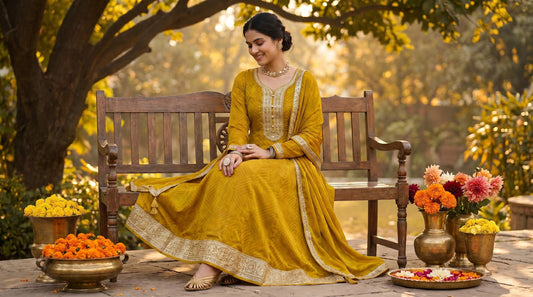
The visual range within anarkali gowns is enormous: a simply embellished chanderi anarkali gown is appropriate for a casual family function; a heavily embellished net or organza anarkali gown is appropriate for a wedding reception. The silhouette is the constant; the fabric and embellishment level determine the occasion.
Stride note: anarkali gowns with a very full, closed hem can restrict stride at the ankle. Look specifically for anarkali gowns with either a front slit at the hem or a panel count that allows the hem to open when walking. Without this, the gown forces a shortened stride that becomes tiring across a long event and can create a restricted-looking walk in videos.
Cape-style ethnic gown
A contemporary format with a strong photographic presence.
The cape-style ethnic gown has a fitted inner garment — typically to the knee or floor — with an attached or separate outer cape layer in a complementary fabric. The cape creates visual depth and movement that a single-layer gown cannot achieve. Organza capes over silk inner gowns, net capes over crepe inner gowns — the combination of a transparent or semi-transparent outer layer over a solid inner layer is the defining aesthetic.
The arms reality: the cape restricts upper-arm movement slightly more than a simple gown. For functions where you need to reach across tables, carry things, or move your arms freely for extended periods, this is worth knowing. For functions where you are largely being photographed and moving gracefully from one position to another, the cape's visual impact is worth the mild restriction.
Indo western ethnic gown
The most fashion-forward and the furthest from traditional ethnic in its aesthetic.
Empire-waist or dropped-waist gown construction in Indian fabrics — block-print cotton, ajrakh, Jaipur prints on lawn — creates a garment that reads as modern Indian rather than classically ethnic. The embellishment in this category is typically minimal — the fabric's pattern or print carries the visual work rather than applied embellishment.
Indo western ethnic gowns are the most appropriate for daytime outdoor functions, casual celebrations, and occasions where the dress code is festive-contemporary. They are not the right choice for high-formality events where traditional embellishment is expected.
They are also the most practical: block-print cotton and lawn fabric breathe in Indian heat, wash easily, and are appropriate for outdoor wedding functions where a georgette or net gown would accumulate hem damage.
Mermaid ethnic gown
Fashion-forward, striking, and the most tailoring-dependent.
A mermaid ethnic gown is fitted from shoulder to knee and flares from the knee, in Indian fabrics and with Indian embellishment. This is the most body-conscious silhouette in the ethnic gown category and the one that requires the most precise sizing — excess anywhere in the hip or thigh changes the silhouette from elegant to uncomfortable.
Ready-to-wear mermaid ethnic gowns are the highest-risk purchase in this category because of this. The silhouette is designed for a specific measurement range and significant deviation from it shows. If you are interested in a mermaid ethnic gown, having it custom-made or having a ready-to-wear version significantly altered produces better results.
The Practical Advantage, Specifically
No dupatta management: Most ethnic gowns come without a dupatta, and this is frequently a feature rather than an omission. The absence of a dupatta means one fewer piece to manage, drape, pin, and retrieve from chair backs throughout the evening. If you want a dupatta element, a simple drape over one arm or a very light dupatta pinned at the shoulder adds the element without the management.
Proportional certainty: The gown's silhouette is predetermined. The designer resolved the length-to-flare ratio, the waist placement, the neckline relationship to the body. Your fit decision is limited to whether the gown fits your body — specifically at the bust and at the overall length. Everything else has been decided.
This is liberating for women who find the three-piece outfit's multiple proportion decisions overwhelming. It can be limiting for women with very specific proportional requirements that don't match the garment's design.
Photography efficiency: A well-fitted ethnic gown creates a complete, clean visual in photographs without styling effort. There are no layering elements to fall out of alignment, no dupatta to repin between photographs, no skirt hem to lift and arrange. Particularly in candid photographs — which capture most guests at wedding functions — an ethnic gown consistently looks composed in a way that three-piece sets require more maintenance to achieve.
Fabric by Occasion
| Occasion | Best Ethnic Gown Fabric | Reason |
|---|---|---|
| Main wedding ceremony (guest) | Georgette or silk with embellishment | Festive weight appropriate for ceremony |
| Sangeet | Heavy georgette or net with embroidery | Movement-rich drape; festive visual |
| Mehendi | Cotton or chanderi in print or simple embellishment | Comfortable for sitting, informal tone |
| Reception | Organza or net with heavy embellishment | Maximum visual impact for evening |
| Cocktail event | Cape-style in silk or organza | Contemporary and striking |
| Family function (daytime) | Cotton or chanderi anarkali gown | Comfortable, breathable, appropriate |
| Outdoor garden function | Block-print cotton indo western gown | Practical, breathable, hem-friendly |
Jewellery for Ethnic Gowns
The absence of a dupatta in most ethnic gown styling means the neckline and neckline area are fully visible — which creates a clear opportunity for jewellery as the primary statement.
Statement necklace and earrings: the most natural choice for a gown with a plain or simply embellished neckline.
Statement earrings alone: the better choice for a gown with a heavily embellished neckline or yoke, where a necklace would compete directly with the embroidery.
Maang tikka and statement earrings: an extremely strong combination for festive functions. The maang tikka frames the face from above the hairline; the earrings frame from the jaw. The absence of a necklace allows the gown's neckline to be the central element.
Sizing for Ethnic Gowns: The Specific Concern
Ethnic gowns are typically sized on bust measurement. The flare of an anarkali silhouette means the lower body has generous ease — the progressive flare from the bust accommodates significant hip and thigh variation.
The exception: mermaid and fitted styles, which need precise sizing throughout. And the bust fitting: because the upper body of an ethnic gown is more structured than a lehenga blouse, the bust measurement is genuinely critical. A gown that is too small at the bust cannot be adjusted without structural alteration. A gown that is too large at the bust creates a shapeless upper body.
For online purchases: measure your bust at the fullest point, check against the brand's size chart rather than the size label, and size for the bust with confidence that the anarkali's flare will accommodate your hip.
Our Festive Wear Guide For Wedding Functions
Conclusion
The ethnic gown earns its place in the Indian festive wardrobe not because it compromises on visual impact — a heavily embellished georgette anarkali gown at a wedding reception is an unambiguously strong visual statement — but because it achieves that impact without the management complexity that multi-piece sets require. For women attending multiple functions across a wedding season, this matters practically and cumulatively. One well-chosen ethnic gown that fits correctly and suits the occasion requires nothing from you beyond jewellery and footwear. The outfit is resolved before you arrive. That resolution is worth more than most styling guides acknowledge, and it is the real reason the ethnic gown continues to grow in popularity alongside — not in place of — the lehenga.
Previous
Sharara Suits for Weddings: Why They Solve the Problem That Lehengas Create
Next
Frock Suits for Ladies: What Makes the Silhouette Work and Why Most Get This Wrong