Maroon Lehenga: The Bridal Colour That Works When Red Feels Like Too Much

AI Overview
Maroon lehengas occupy a specific position in Indian bridal dressing — they carry all the auspiciousness and cultural warmth of the red spectrum with a depth and sophistication that bright red does not always achieve. Maroon is one of the most universally flattering colours across Indian skin tones: it creates striking contrast against fair skin, harmonious warmth against medium and wheatish complexions, and a luxurious visual depth against darker skin tones. The two main maroon variants behave differently — maroon with purple undertones (leaning toward wine or burgundy) suits cooler complexion undertones; maroon with brown undertones suits warmer ones. Raw silk and velvet are the most appropriate fabrics for bridal maroon; georgette for all-day wearability. Heavy gold kundan or polki jewellery is the most classical and effective pairing.
Key Takeaways
- Maroon is one of the most universally flattering colours across Indian skin tones: It creates striking contrast against fair skin, warmth-enhancing harmony against medium and wheatish complexions, and deep luxurious visual depth against darker skin — there is almost no Indian skin tone that maroon does not serve.
- Purple-undertone maroon versus brown-undertone maroon behave differently on different complexions: Purple-maroon (wine, burgundy) suits cooler complexion undertones; brown-maroon (rust-maroon, deep terracotta-maroon) suits warmer undertones — worth identifying which your specific maroon shade is before buying.
- Velvet maroon traps heat and is genuinely inappropriate for summer functions: The visual luxury of velvet maroon is extraordinary; the physical experience of wearing it at a summer outdoor function is equally extraordinary in the wrong direction — reserve it for winter weddings and cool evening events.
- By hour six, georgette maroon is significantly more comfortable than raw silk or velvet: For full-day events involving movement and dancing, georgette is the most practically wearable maroon fabric despite being less visually dramatic.
- Silver against maroon is a contemporary departure that requires specific conditions: It works as a cool-against-warm contrast, particularly with purple-undertone maroon — but under warm amber event lighting, silver can look flat against maroon; always test together under your venue's lighting.
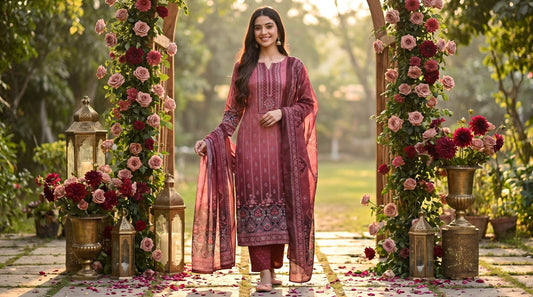
Maroon occupies a specific and interesting position in Indian bridal dressing: it has all the cultural warmth and auspiciousness of red, but the brown or purple undertones that darken and deepen the tone give it something bright red sometimes lacks. Gravitas. A visual seriousness. The quality that reads in photographs as "deliberate choice" rather than "traditional expectation."
For brides who want the emotional and cultural resonance of the red spectrum but find bright red too loud or too predictable, maroon is not a compromise. It is a different destination with its own specific beauty and its own styling logic. Understanding that logic is what separates a maroon lehenga that is merely beautiful from one that feels completely and unmistakably right.
Why Maroon Works Across Skin Tones
Maroon is one of the most universally flattering colours in the Indian skin tone range — which explains its sustained popularity not just in bridal contexts but across all festive occasions.
Against fair and light skin, maroon creates a striking, high-contrast visual that is unmistakably elegant. The contrast reads as intentional — the depth of the colour against the lightness of the complexion gives each more visual presence than either would have against a colour of similar lightness.
Against medium and wheatish skin — the most common complexion range across North India — maroon creates harmony. The warmth of maroon and the warmth of a wheatish complexion deepen and enrich each other rather than competing. The combination reads as though the colour was chosen specifically for this complexion, which is the highest compliment a colour-skin combination can receive.
Against deeper and darker skin tones, maroon creates a luxurious visual depth that is among the most beautiful colour-skin combinations in Indian ethnic wear. The contrast is not stark — it is rich and layered in a way that creates images with genuine visual complexity.
The undertone distinction: Maroon with purple undertones — the shades that lean toward wine or burgundy — suits cooler complexion undertones. Maroon with brown undertones — the shades that lean toward rust-maroon or deep terra — suits warmer ones. This is a fine distinction, but it becomes visible when you hold two similar maroon fabrics beside each other and notice that one flatters more naturally than the other. It is worth identifying which undertone your specific maroon shade carries before committing.
Fabric Guide: What Each Fabric Does to Maroon

Raw silk maroon
The most classically bridal fabric for maroon. Raw silk's textured surface absorbs maroon dye with a richness that smoother fabrics do not match — the slight irregularity of raw silk's weave creates dimensional depth in the colour. Gold embellishment — particularly zari work — reads with exceptional clarity against raw silk maroon because the fabric's texture provides visual contrast at multiple scales simultaneously.
The physical experience: raw silk has a body and weight that is appropriate for bridal wearing in cooler months. In summer or for very long events involving significant movement, raw silk's weight begins to feel demanding by hour six.
Velvet maroon
The most opulent option and the most situation-specific. Velvet maroon's depth is unmatched by any other fabric — the pile of velvet absorbs light and colour in a way that creates visual luxury that reads clearly even in photographs. Under warm event lighting, velvet maroon develops an almost luminous quality.
The physical experience in Indian conditions: velvet traps heat with exceptional efficiency. Velvet maroon at a winter wedding or evening reception in a cool, air-conditioned venue is extraordinary. Velvet maroon at a summer sangeet or outdoor daytime function is a genuine physical endurance challenge. The decision should be made with the season and venue conditions as the primary factors.
Roohani Comfort Score™: 9/10 for winter evenings. 3/10 for summer or outdoor functions.
Georgette maroon
The most practically wearable option for full-day events. Good drape, comfortable for extended wear, allows reasonable movement including dancing without the weight penalties of raw silk or velvet. Available across embellishment levels from minimal to heavily embroidered.
By hour six at a function involving dancing, a georgette maroon lehenga is significantly more comfortable than either raw silk or velvet at the same embellishment weight. For events that require you to be genuinely present and active — rather than primarily posed and photographed — georgette is the practical choice.
The trade-off: georgette does not photograph with the same visual richness as raw silk or velvet. It is comfortable; it is not the most dramatic choice.
Roohani Comfort Score™: 9/10 for all-day active events.
Jewellery Pairings: The Logic for Maroon
Heavy kundan or polki in gold: The most classical North Indian bridal combination and the one that has been refined to this level of visual effectiveness over centuries. The warmth and weight of heavy kundan against maroon's depth creates a combination that requires no stylistic justification — it is simply correct in the way that traditional things earn that description.
Antique gold: A more rustic and artisanal interpretation. Works particularly well with maroon lehengas that have less conspicuous embellishment — the antique quality of the jewellery and the depth of the maroon create a quiet luxury that is very different in register from the festive opulence of heavy kundan.
Silver and white stones — with conditions: The coolness of silver against maroon's warmth creates a contrast that is contemporary and less traditionally bridal. Works best with maroon shades that have purple-cool undertones (wine, burgundy) rather than warm brown ones. Under warm amber event lighting, silver can flatten against maroon — test together under your venue's actual lighting before committing.
Ruby or deep red coral accents in gold: For maroon shades with brown-warm undertones, a gold jewellery setting with warm stone accents creates a layered warmth that deepens the overall visual without creating competition. The stone colour does not fight the maroon — it amplifies it.
Roohani Comfort Score™ — Maroon by Fabric and Season
| Fabric | Summer Score | Winter Score | 8-Hour Wear | Photography | Embellishment Clarity |
|---|---|---|---|---|---|
| Raw silk | 6/10 | 8/10 | 7/10 | 10/10 | 10/10 |
| Velvet | 3/10 | 10/10 | 5/10 summer / 8/10 winter | 9/10 | 9/10 |
| Georgette | 8/10 | 6/10 | 9/10 | 8/10 | 8/10 |
FAQ
Is maroon a good bridal lehenga colour?
Yes — one of the most enduringly popular across generations, particularly in North India. It carries the auspiciousness and warmth of red with a depth and sophistication that makes it feel simultaneously traditional and contemporary. It photographs beautifully with gold jewellery and heavy embellishment across all lighting conditions.
Maroon vs. red lehenga — which should I choose?
If you want the most traditional visual statement and the clearest festive presence in a crowd, choose red. If you want depth, sophistication, and a colour that photographs with a more editorial quality, choose maroon. Red is brighter and more immediately visible; maroon is richer and more considered in its impression.
What jewellery suits a maroon lehenga?
Heavy gold — kundan, polki, or temple jewellery — is the most classical and effective pairing. Antique gold works beautifully for a more artisanal register. Silver works if the maroon shade has purple-cool undertones, but test under venue lighting before committing.
Which occasions suit a maroon lehenga?
Maroon works across the full festive spectrum — mehendi, sangeet, the wedding ceremony itself as a bridal choice, and as a wedding guest choice for major functions. It has the formality appropriate for ceremonies without being exclusively bridal in visual register.
Conclusion
Maroon's enduring popularity in Indian ethnic wear is not sentiment — it is the result of a colour that consistently delivers on multiple criteria simultaneously. It flatters the widest range of Indian skin tones of any single deep colour. It carries cultural warmth and auspiciousness without the expectation that bright red creates. It photographs with visual richness across all lighting conditions. And it rewards the surrounding styling choices — the right jewellery, the right fabric for the occasion's physical requirements — in a way that makes those choices feel consequential rather than arbitrary. Get the fabric right for your season, the jewellery right for the maroon's specific undertone, and maroon delivers something that very few other colours can: the sense that the outfit was inevitable.
- → bridal lehenga guide — understanding the full category
- → lehenga fabric guide — which fabric for which occasion
Previous
Yellow and Orange Lehenga: The Festival Colours That Work Harder Than You Think
Next
Lehenga Wearing Style: Everything That Goes Wrong and How to Prevent It Before the Event