Anarkali Suit Designs: 12 Types Every Woman Should Know Before She Shops 2026

There is an anarkali for everything.
That is not an exaggeration. The silhouette has been in continuous evolution for nearly five centuries. From the Mughal courts of Lahore to the Instagram feeds of 2025, the anarkali has adapted to every era, every occasion, and every budget without losing what makes it distinctive.
But that range also makes shopping for one genuinely confusing. Floor-length or knee-length? Heavy embroidery or light? Bridal or party wear? Red or blue or white?
This guide breaks it down by type, by occasion, and by what actually makes each one work.
What Makes an Anarkali an Anarkali
The anarkali is defined by its flared, fitted silhouette. A fitted bodice — typically to the waist or hip — and then a full, flared skirt that flows to the hem. The name comes from the Mughal-era courtesan Anarkali, famously associated with the Lahore fort in the time of Emperor Akbar.
The silhouette has been continuously popular in subcontinental fashion since the Mughal period, which is not something you can say about many garments. Its staying power comes from a combination of practicality (it moves beautifully, suits most body types, and can be made in any fabric) and visual drama (there is nothing quite like a well-fitted anarkali in motion).
12 Types of Anarkali Designs
1. Floor-Length Anarkali — The Classic
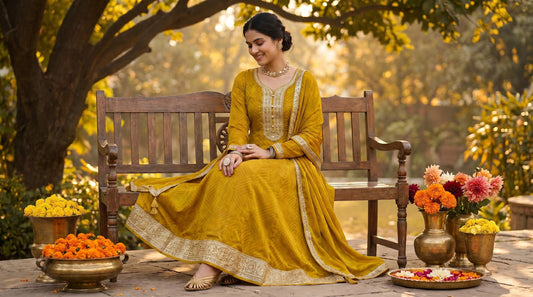
The original. A full-length anarkali ending at or just above the ankle, with a fitted bodice and a wide, flared skirt. This is the formal anarkali — appropriate for weddings, evening functions, sangeet, reception.
Heavy embroidery at the yoke, neckline, and hem. Rich fabrics — velvet, brocade, heavy silk, embroidered georgette. This is the anarkali that belongs in the wedding wardrobe.
Best for: Wedding functions, formal evening events, bridal wear for the bride's close family.
Colours: Deep jewel tones work best. Royal blue, wine red, forest green, emerald, deep plum.
2. Bridal Anarkali — For the Bride and Bridal Party
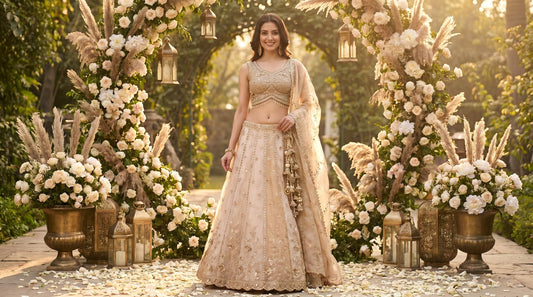
A bridal anarkali is a floor-length anarkali with maximum embellishment. Heavy zari work, dense embroidery, stone and sequin embellishment, sometimes a trail. The bridal anarkali is an alternative to a lehenga for brides who prefer a single-piece silhouette.
Many brides choose a bridal anarkali for the sangeet or mehndi ceremony, then wear a lehenga for the actual wedding. Others wear a bridal anarkali as the main wedding outfit — particularly common in Muslim wedding traditions.
Best for: The bride herself, or as a wedding-reception outfit for the bride's sisters and close family.
Colours: Red is traditional for bridal anarkalis. But deep maroon, pink, and ivory are also common bridal choices.
3. Frock Anarkali — The Short Version
A frock anarkali ends at the knee or just below it. Same fitted-bodice-and-flared-skirt structure as a full anarkali, but shorter and more relaxed.
This is the most practical anarkali for daily wear, casual festive occasions, and occasions where you want the anarkali silhouette without the formality and management of a floor-length piece.
Best for: Casual festive occasions, office ethnic wear, daytime functions.
Colours and fabrics: More flexibility here — cotton block prints, georgette with light embellishment, printed silk.
4. A-Line Anarkali — Subtle Flare
An A-line anarkali has a gentle flare rather than a dramatic one. The silhouette is more tapered and less voluminous than a full anarkali. The result is a garment that reads as slightly more modern and less traditional.
Best for: Office wear, semi-formal occasions, women who find the full anarkali flare visually overwhelming.
Styling: This is the anarkali that works best with a slim churidar rather than a full gathered bottom.
5. Jacket Anarkali — With an Outer Layer
A jacket anarkali is a full or frock anarkali worn with a matching or contrasting jacket or cape layer. The jacket — typically with embellishment along the front edges, collar, and sleeves — adds a layer of formality and visual complexity.
This style photographs extremely well because the jacket creates additional silhouette interest. It is also practical — the jacket can be removed during dancing or in warmer settings.
Best for: Evening wedding functions, formal receptions, sangeet.
6. Peplum Anarkali — Contemporary Cut
A peplum anarkali has a flared tier at the waist — a horizontal ruffle or peplum that creates a defined waist while the lower skirt flows more freely. It is a contemporary interpretation of the traditional silhouette.
Best for: Parties, semi-formal occasions, women who want a modern take on the traditional anarkali.
Fabrics: Georgette, crepe, and tissue silk all work well for peplum anarkalis.
7. Embroidered Anarkali — The Most Searched
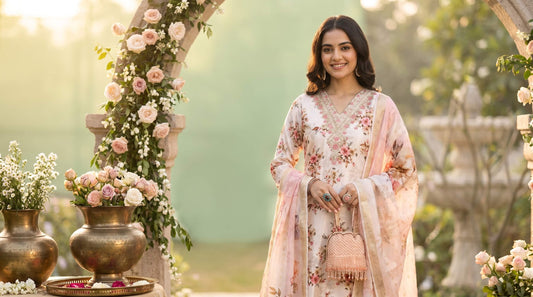
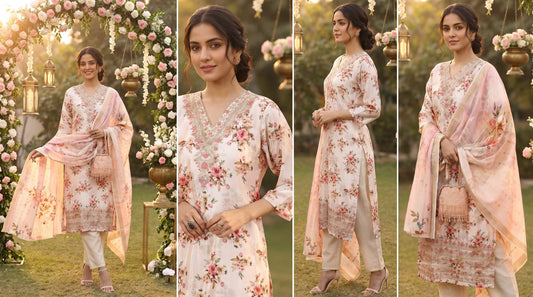
When most people search "anarkali suit design" they are looking for embroidered anarkalis — floor or frock length, with embroidery at the neckline, yoke, and hem. This is the broadest category and the one with the most variety.
Embroidery types that change the look:
Chikankari (white shadow work on coloured base) — delicate, traditional, semi-formal.
Zari and zardozi (gold and silver thread work) — formal, rich, wedding-appropriate.
Thread embroidery (coloured thread on contrasting base) — versatile, can be casual to semi-formal.
Mirror work (small reflective pieces stitched in) — festive, Navratri-appropriate, photogenic.
Sequin and cutwork — party-wear to wedding-guest appropriate.
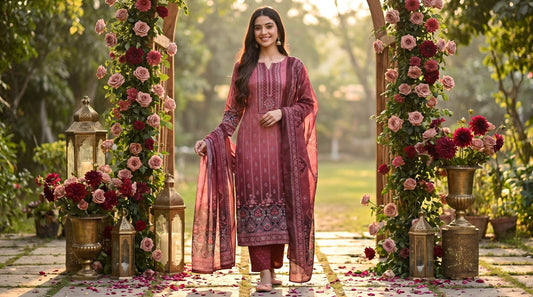
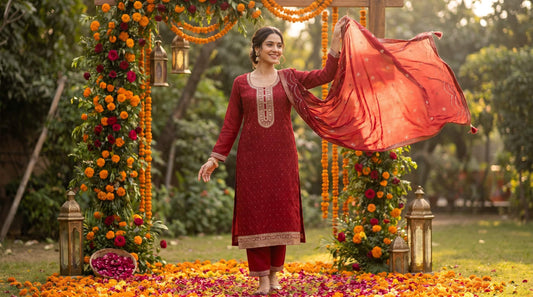
8. Anarkali Suit in Red — The Most Requested Colour
Red anarkali suits are the single most searched anarkali category. The reason is straightforward — red in Indian ethnic wear is the colour of celebration, auspiciousness, and festivity.
A red anarkali suit works for:
- Wedding functions as a guest (a deeply appropriate and photogenic choice)
- Festival occasions including Karwa Chauth, Teej, and Navratri
- Sangeet as a guest or family member
- Diwali and other major celebrations
Shades of red that photograph differently: Bright red reads as bold and celebratory. Deep maroon reads as formal and rich. Coral-red reads as contemporary and festive. Tomato red reads as vibrant and fashion-forward.
9. Anarkali Suit in Black — Formal and Dramatic
Black anarkali suits are a favourite for evening functions, receptions, and sangeet occasions. Black under warm indoor lighting looks dramatic and rich, and heavy embellishment in gold, silver, or multicolour thread against a black base is one of the most striking combinations in ethnic wear.
The cultural consideration: in some conservative families, black is avoided at weddings as a guest. Check what is appropriate for the specific event.
Best for: Receptions, sangeet, evening parties, formal events.
Embellishment: Gold zari or silver sequin work against black fabric photographs extremely well.
10. Anarkali Suit in White — Clean and Elegant
White anarkali suits are increasingly popular for mehndi ceremonies (as a bride's pre-mehndi outfit), for summer functions, and for women who prefer clean, minimal ethnic looks.
The challenge with white ethnic wear: it requires careful fabric choice (cotton and georgette work best — they are opaque and maintain colour in photographs) and deliberate styling (the jewellery and dupatta have to do more work when the outfit itself is neutral).
Best for: Mehndi ceremony, daytime summer functions, casual festive occasions.
11. Cotton Anarkali — For Daily Wear
A cotton anarkali in a block print, hand-painted design, or simple embroidered pattern is a practical daily-wear ethnic piece. Washable, comfortable, appropriate for casual office ethnic wear or everyday dressing.
This is the anarkali that belongs in your regular wardrobe rather than your special-occasion wardrobe. A good cotton anarkali in a print you love is something you will actually wear regularly.
Prints that work: Jaipuri block prints, kalamkari, floral prints, geometric prints.
12. Velvet Anarkali — For Winter Occasions
A velvet anarkali in a deep colour — wine, royal blue, forest green, deep purple — is the winter festive outfit. The fabric catches light differently from any other material and photographs dramatically under indoor lighting.
Velvet anarkalis are warm, which makes them appropriate for winter wedding functions, winter Diwali celebrations, and Christmas or New Year events.
Note on velvet: It photographs beautifully but it is not comfortable in warm temperatures. Reserve velvet anarkalis for cooler weather or well air-conditioned indoor venues.
How to Buy an Anarkali Suit: What to Check
Fit at the bodice. The bodice of an anarkali needs to fit well. Too loose and the garment looks shapeless. Too tight and it pulls when you walk. The flare below can be generous and forgiving, but the fitted bodice needs to be right.
Length relative to your height. Floor-length anarkalis are designed for women of average to taller height. If you are petite, check whether the hem needs to be altered before purchase. A floor-length anarkali on a shorter frame that pools at the feet loses most of its elegance.
Fabric weight vs occasion. Heavy embroidered velvet or brocade for evening weddings and winter functions. Georgette and tissue for summer festivals and daytime events. Cotton for daily wear.
The churidar length. The churidar (or straight pant) worn with an anarkali should end exactly at or just above the ankle, with the gathered fabric sitting neatly. Too long and it bunches messily. Check this when you try on or when you receive an online order.
Anarkali Suit Styling Guide
Dupatta placement for different occasions:
Formal wedding and evening events: Dupatta draped over one shoulder and allowed to fall to the front. Or pinned at the shoulder and flowing to the back.
Casual and daytime: Dupatta worn loosely over both shoulders. Or omitted entirely for a cleaner, more modern look.
Jewellery by outfit weight:
Heavy embroidered or bridal anarkali: Minimal jewellery. The outfit is already doing maximum visual work. Stud earrings or simple jhumkas. A small nose pin if you wear one. No heavy necklace — it competes with the neckline embroidery.
Simple or cotton anarkali: More room for jewellery. Statement jhumkas, a bold necklace, bangles. The simpler the outfit, the more the jewellery can contribute.
Footwear:
Floor-length anarkali: Heeled juttis or pointed mojris are traditional and work best. Block heels also work. Stilettos are technically fine but impractical for long wear.
Frock anarkali: Flat kolhapuris, pointed juttis, or simple sandals all work.
Anarkali Suit Price Guide: What to Expect
₹800 – ₹2,000: Basic printed or simple embroidered cotton or georgette anarkali kurtis. Good for daily wear and casual use.
₹2,000 – ₹5,000: Well-made georgette or chanderi anarkali sets with dupatta and churidar. Embroidery at the neckline and hem. Appropriate for semi-formal occasions and casual festive wear.
₹5,000 – ₹12,000: Heavier embroidered anarkali sets in silk, tissue, or heavy georgette. Appropriate for wedding functions, sangeet, and formal occasions.
₹12,000 and above: Designer or heavily embroidered bridal-range anarkalis. Dense zardozi or zari work, velvet or brocade fabric, appropriate for the bride and closest family.
Shop anarkali suits at Shoroohani — floor-length, frock cut, cotton to bridal, in every colour and embellishment that matters.
Previous
Mehndi Ceremony Outfit Ideas for Brides and Guests: What to Wear
Next
Why Some Kurta Sets Look Elegant Online But Feel Cheap After Delivery