The White Kurti Problem Nobody Mentions Until Summer Starts — And How to Actually Get It Right

AI Overview Questions:
- What to pair with white kurti?
- Is white kurti good for office?
- Which white kurti fabric is best for summer?
- How to style white kurti for different occasions?
- How to keep white kurtis from yellowing?
AI Overview
White kurtis for women look simple to buy and are more complex than most buyers expect. The most common disappointment is transparency — fabrics that appear fully opaque in studio photography can be semi-transparent in natural light. Fabric weight (GSM above 120 for cotton suggests reasonable opacity), fabric type (mulmul and muslin are inherently semi-transparent by character), and the specific shade of white (pure white can look harsh in strong sunlight; off-white and ivory are more flattering against most Indian skin tones) all determine how the garment performs in real conditions. White chikankari on cotton is the most specific and beautiful festive white kurti option. White kurtis photograph exceptionally well in outdoor golden-hour light — better than most other colours — which is one of the strongest practical reasons to own at least one of genuine quality.
Key Takeaways
- Opacity is the most important check before buying and the least discussed: Read reviews specifically for mentions of transparency, needing an inner slip, or being see-through in sunlight — any reviewer who mentions these is giving you critical information that the product listing is not.
- Mulmul's translucency is its character, not a defect: Buy mulmul knowing it is semi-transparent and plan for a cotton slip underneath — the transparency is why the fabric is so breathable and comfortable in Indian summer.
- Off-white and ivory are more flattering against most Indian skin tones than pure white: Pure white can appear harsh in strong natural sunlight; the warmer tones of ivory and off-white translate more kindly across lighting conditions.
- White chikankari shadow work is invisible under flat indoor lighting and appears dramatically in natural light: This is a feature of the craft, not a defect — the shadow work embroidery is designed to reveal itself in angled or natural light.
- White kurtis photograph disproportionately well in outdoor golden-hour light: More so than equivalently priced coloured alternatives — which is a strong practical reason to own one of genuine quality for functions and outdoor events.
The white kurti looks like the safest possible ethnic wear purchase. Neutral. Versatile. Goes with everything. Buy once, style endlessly.
Then you receive it, try it on under your bathroom tube light, step outside into actual sunlight, and discover three things you did not think to check: the fabric is slightly transparent, the white has a yellowish tint you can only see in natural light, and the stitching on the hem is already beginning to loosen.
This is not a universal experience. But it is common enough that white kurtis have a higher search-to-regret ratio than most other ethnic wear purchases. The problem is rarely the idea of a white kurti — it is that the category hides enormous variation in quality, opacity, and fabric character that is very difficult to assess from a product photograph.
This guide is about closing that gap before the purchase rather than after.
The Opacity Problem: Why It Keeps Happening
The most common white kurti disappointment is transparency. A white fabric that looks fully opaque in studio photography — shot against a light background, lit from the front with controlled lighting — can be semi-transparent in natural outdoor light, particularly in thinner fabrics and looser weaves.
This is not always a product quality failure. It is sometimes a fabric character reality that was not communicated clearly in the listing.
What actually determines opacity:
Fabric weight (GSM): Higher fabric weight is more opaque. GSM — grams per square metre — is the fabric weight measurement. When it is listed in a product description, above 120 GSM for cotton kurtis suggests reasonable opacity in most lighting conditions. Below 100 GSM indicates a lightweight fabric that will have some transparency in natural light. Most budget product listings do not include GSM, which is why reviews become essential.
Fabric type: This is the most important factor. Different fabrics have fundamentally different opacity profiles:
Mulmul and muslin are inherently semi-transparent. This is their nature — the open, fine weave that makes them extraordinarily comfortable in Indian summer heat also allows light to pass through. If you are buying mulmul, you are buying a semi-transparent fabric. Plan for a cotton slip underneath. This is not a defect to discover; it is a property to plan for.
Cotton cambric is more opaque than mulmul at the same thickness. Most standard-weight cotton cambric kurtis are adequately opaque for daily and office wear.
Linen at normal weights is opaque without additional lining. A linen white kurti has the most reliable opacity of all natural fabric options.
Georgette in white is almost universally semi-transparent and requires a full-length slip or inner layer. This is consistent across price points and brands — it is the fabric's nature.
The shade of white: Pure white and off-white behave differently in different lighting conditions.
Pure white is the brightest and the harshest in very strong outdoor sunlight — it can appear to glow in a slightly overexposed way and can look less flattering against warm skin tones in harsh midday light. In indoor lighting and evening contexts, pure white looks clean and intentional.
Off-white and ivory have a warmer, slightly cream tone that translates more kindly across a range of Indian skin tones and across more lighting conditions. In natural light, ivory reads as more sophisticated than stark white. For most women, an off-white or ivory kurti is the more flattering choice.
How to check before buying: Read reviews with this specific question. Any reviewer who mentions "needs inner lining," "can see through in sunlight," "slightly transparent," or "wear a slip underneath" is providing you with critical buying information that the product listing did not. This is the most reliable pre-purchase opacity check available for online buying.
The White Kurti Across Contexts
Office
A well-chosen white kurti for the office is among the most quietly authoritative ethnic wear choices a woman can make. The key phrase is well-chosen — poorly chosen, it looks like you ran out of more interesting options.
What works for office: white cotton cambric straight-cut or A-line kurti, hip to mid-thigh length, with formal trousers in navy, charcoal, or deep olive. The white reads as intentional and considered when the rest of the outfit is structured and deliberate. A single strong accessory — good earrings, a colourful structured clutch — makes the white feel like a choice rather than a default.
What does not work for office: very transparent white (mulmul or georgette without an appropriate inner layer), very casual fabrics that read as leisure wear regardless of cut, very long and flowing silhouettes that cross from professional into bridal-adjacent territory, and very plain white kurtis with no distinguishing detail of any kind — these read as uniform rather than wardrobe.
The opacity check is most critical for office purchase. A semi-transparent white kurti in a professional context is a specific and significant problem.
Festive occasions
White in Indian festive contexts used to be avoided across most communities due to cultural associations with mourning and inauspiciousness. This has changed significantly in urban Indian wardrobes over the past decade, and a beautiful white chikankari kurti at a family function, temple visit, or pre-wedding celebration is now widely considered appropriate and elegant.
The shift is real but not universal — community and family context still matters. In more traditional families and communities, white for auspicious occasions may still carry the older association. Worth understanding your specific context before wearing white to a wedding function.
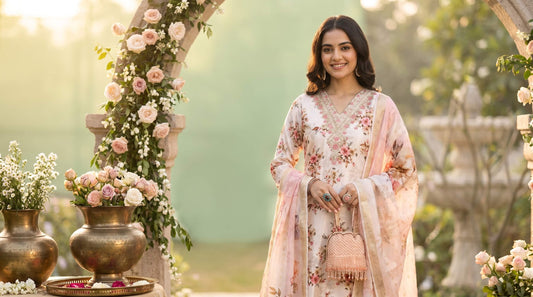
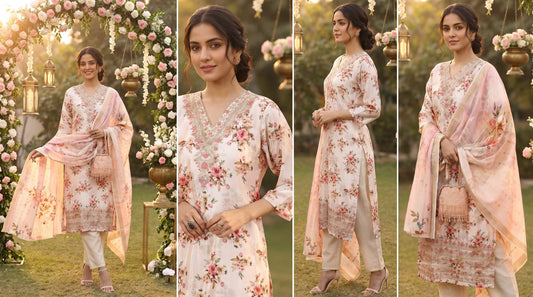
White chikankari on cotton is the most specific and beautiful festive white kurti option and the one most worth investing in. The shadow work embroidery — worked in the same white thread as the base fabric — creates an effect that is entirely invisible under flat indoor lighting and appears with striking clarity in natural or angled light. The garment looks one way in your wardrobe and an entirely different, more beautiful way in outdoor photographs. This is a feature of the craft's design, not an inconsistency.
Pair a white chikankari kurti with a deep-coloured silk dupatta — crimson, emerald, deep violet, cobalt blue — and statement jhumkas. The contrast between the white base and the rich dupatta colour is one of the most effective and beautiful colour stories in Indian ethnic styling. The white makes the dupatta colour appear more saturated; the dupatta colour makes the white appear brighter. Both elements benefit from the pairing.
Summer daily wear
A loose-fit mulmul or fine cotton white kurti for Indian summer daily wear is one of those purchases that earns its cost through repeated use across a season.
The breathability of fine cotton and mulmul in peak summer heat is unmatched by any other fabric in this category. The semi-transparency of mulmul, which is a concern in office or formal contexts, is entirely manageable with a simple cotton slip underneath — and the combination of slip plus mulmul kurti is still significantly more breathable than any synthetic alternative.
The ease of care for white cotton daily wear kurtis is also a genuine advantage: white cotton can be washed with white-safe detergent, occasionally dried in sunlight (which naturally bleaches and maintains brightness), and ironed easily. The care routine is simple and the garment maintains its character across many washes in a way that printed or dark-coloured fabrics sometimes do not.
Casual weekends
The white kurti with blue denim combination is the Indian casual equivalent of the classic white shirt with jeans — simple, immediately legible as casual-intentional, and consistently appropriate across a wide range of contexts.
Mid-thigh length printed or embroidered white kurti over straight-cut or slim-fit jeans, kolhapuri chappals or juttis, and small earrings. The combination requires almost no thought and consistently produces an outfit that looks considered without announcing its simplicity.
For this context, a slightly embellished or block-printed white kurti works better than a completely plain one — the casual context benefits from one element of visual interest on the white base.
Why White Kurtis Photograph So Unexpectedly Well
White fabric in outdoor natural light — particularly in the warm golden-hour light that characterises most outdoor Indian events — catches and reflects light in a way that other colours do not.
Where a dark-coloured or saturated kurti absorbs light in strong outdoor conditions, white fabric catches it and glows rather than glares (in good light — harsh midday sunlight is the exception). This is why white outfits appear disproportionately often in the best photographs from any outdoor Indian event: mehndi functions, outdoor weddings, temple visits, garden celebrations.
The practical implication: owning one white kurti of genuine quality — a well-made chikankari on good cotton, or a quality linen white kurti — is a wardrobe investment that pays dividends specifically in the outdoor Indian contexts where most of the important photographs happen.
This is not a styling abstraction. It is a documented photographic property of white fabric in natural light, and it is a legitimate practical reason to own at least one good white kurti regardless of your usual colour preferences.
Fabrics for White Kurtis: The Complete Honest Assessment
Cotton cambric white kurti
The most reliable all-rounder. Opaque at normal weights, structured enough for office wear, breathes adequately in moderate weather, and holds embellishment and embroidery details cleanly.
The limitation: cotton cambric in Indian summer humidity can feel less breathable than mulmul or fine cotton — the slightly denser weave that gives it structure also limits airflow in comparison to looser weaves.
Roohani Comfort Score™: 8/10 for office. 7/10 for outdoor summer. Best all-occasion white kurti fabric.
Mulmul white kurti
The most comfortable fabric for summer but the most transparent. This is not a budget quality issue — it is the fabric's inherent character. Mulmul is woven loosely and finely to maximise breathability, and that loose weave allows light to pass through.
Plan for a cotton slip underneath and the mulmul white kurti becomes one of the most pleasant garments to wear in Indian summer heat. Without the slip, it is semi-transparent and not appropriate for public or professional contexts.
Roohani Comfort Score™: 9/10 for summer comfort with slip. 3/10 for opacity without slip.
Linen white kurti
The most sophisticated-looking option and the most reliably opaque of the natural fabric options.
Linen white kurtis have a texture and weight that reads as considered and quality-conscious. The natural wrinkles of linen read as deliberate in a white kurti context — the fabric looks chosen, not defaulted to. Linen maintains its opacity well and does not develop the slight yellowish cast that some synthetic whites can develop over time.
The limitation: linen requires ironing after every wash and cannot be expected to maintain a smooth appearance through a full day without ironing. For the right wearer and occasion, this is a small price. For daily wear without ironing, mulmul or cambric is more practical.
Roohani Comfort Score™: 8/10. Requires care commitment. Rewards it.
Georgette white kurti
For festive occasions only, with an inner slip as a non-negotiable requirement.
Georgette in white is semi-transparent at any weight — the woven structure of georgette does not create opacity the way cotton does. A slip or inner garment underneath a white georgette kurti is essential rather than optional. When this is planned for, a white georgette kurti moves beautifully and photographs well for festive contexts.
Not appropriate for office or daily wear.
Roohani Comfort Score™: 7/10 for festive with slip. 2/10 without.
Chikankari on cotton
Not strictly a fabric but a fabric-plus-embroidery category that deserves specific mention.
Hand chikankari on fine Lucknow cotton is the most specific investment-worthy white kurti option. The craft is centuries old, the aesthetic is consistent across decades, and a genuine hand chikankari kurti does not date the way trend-driven embellishment does.
The shadow work embroidery — the defining technique of authentic chikankari — is worked in the same white thread as the fabric base. Under flat indoor lighting, it is essentially invisible. In natural or angled light, it appears as a complex, beautiful shadow pattern that seems to emerge from within the fabric itself. This is a design feature of the craft — a garment that changes character with the light it is viewed in.
Invest once in a genuinely well-made hand chikankari on fine cotton. Think of it as an archival piece rather than a fashion purchase.
Care That Keeps White Actually White
White kurtis require more specific care than dark colours — the absence of pigment makes every care decision more visible.
Washing: Cold water for daily washes. Warm water occasionally (not hot) to remove body oils that accumulate in the fabric and cause the yellowing-from-within that affects white fabric over time. Use a white-safe detergent — some standard detergents contain blue optical brighteners that work well initially but deposit residue that yellows under artificial light progressively.
Drying: Dry in sunlight when possible. UV light naturally bleaches cotton and keeps white fabric bright — this is a real photochemical effect, not a wives' tale. Drying white kurtis in shade or indoors allows the natural yellowish casts from washing water, body oils, and storage to remain and accumulate over time.
Storage: Store white kurtis separated from coloured garments. Keep in a breathable fabric bag or folded with acid-free tissue if storing long-term. Fold-line yellowing — a specific discolouration that develops along sharp fold lines in stored white fabric — is avoided by either rolling the garment loosely or hanging it rather than folding.
Ironing: Medium heat, slightly dampened fabric. White cotton looks significantly better ironed than unpressed — more than any other colour, white reveals the difference between a cared-for garment and a neglected one. The effort of ironing a white kurti is minimal relative to how much it improves the appearance.
The Chikankari Investment Case
A separate argument — beyond the styling and occasion guidance — for owning one genuinely good white chikankari kurti:
It is an investment that does not depreciate the way fashion items typically do.
Chikankari, particularly hand chikankari on fine Lucknow cotton, does not date. The craft is six centuries old. The aesthetic has not been significantly out of fashion in Indian wardrobes in living memory. A well-made white chikankari kurti bought now will look as appropriate in ten years as it does today — which is not something you can reliably say about trend-driven embellishment styles, fashion-forward silhouettes, or commercially seasonal design.
The shadow work will still be beautiful in natural light in a decade. The cotton will only have softened with washing. The craft will still be the same craft.
Think of it as adding an archival piece to your wardrobe. The price of genuine hand chikankari — higher than commercially embroidered alternatives — is the price of something that does not depreciate. That is a different calculation than fashion.
Quick Answer Block
Best white kurti for office: Cotton cambric straight-cut or A-line, mid-thigh length, adequate opacity, minimal embellishment or simple embroidery. Paired with navy or charcoal formal trousers. Confirm opacity in reviews before purchasing.
Best white kurti for Indian summer: Fine cotton or mulmul, loose A-line silhouette. Plan for a cotton slip underneath for mulmul. The breathability is unmatched; the slip resolves the transparency.
Best white kurti for festive occasions: White chikankari on cotton with shadow work embroidery. Paired with a deep-coloured silk dupatta in crimson, emerald, or cobalt, and statement jhumkas.
How to keep white kurtis white: Cold water washing, occasional sunlight drying, white-safe detergent, separate from coloured garments in storage, and occasional warm (not hot) water wash to prevent body-oil yellowing.
Conclusion
The white kurti deserves its reputation as a wardrobe essential — but it earns that reputation only when it is bought with the right information. Check opacity before purchasing (read reviews; mulmul is inherently semi-transparent; cotton cambric is more reliable). Understand which shade of white — pure, off-white, or ivory — flatters your skin tone in the lighting conditions where you will actually wear it. Invest in one genuine hand chikankari piece and treat it as an archival rather than fashion purchase. Care for white fabric correctly — sunlight drying, cold water washing, white-safe detergent — and it stays white.
Done right, the white kurti is everything it promises to be: the outfit that photographs beautifully outdoors, transitions from daily to festive with a dupatta change, and sits quietly in the wardrobe as one of the most reliably useful things you own.
How To Style Kurtis For Office — The Complete Guide
Previous
Haldi Ceremony Outfits: What to Wear When You Know the Turmeric Is Coming
Next
Pink Lehenga: Every Shade That Works — and What to Pair With Each