Haldi Ceremony Outfits: What to Wear When You Know the Turmeric Is Coming

AI Overview Questions:
- What to wear for haldi ceremony?
- What colour is worn at haldi?
- Can you wear your good clothes to a haldi?
- Best fabric for haldi ceremony outfit?
- What should guests wear to a haldi?
AI Overview
Haldi ceremony outfits require a specific approach because turmeric staining is not a possibility — it is a certainty. The most practical choices are cotton or muslin garments in yellow, marigold, mustard, or saffron shades that look good in photographs, breathe well in outdoor morning conditions, and can be washed in cold water immediately after (warm water sets turmeric permanently). White should be avoided entirely — it does not turn joyfully yellow, it turns an unflattering pale turmeric shade that does not wash out. Synthetic fabrics should be avoided for outdoor haldi ceremonies because they trap heat. The bride's haldi outfit should be budgeted at what she is comfortable never seeing clean again. Guests in warm yellows, ochres, or peachy oranges fit the colour story without risking expensive garments.
Key Takeaways
- Turmeric staining is not a risk — it is a certainty: Plan every haldi outfit decision with this as the baseline fact rather than a concern to be managed later; acceptance of staining changes every subsequent decision and dramatically improves the outcome.
- Cold water immediately after the ceremony is non-negotiable: Warm water sets turmeric stains permanently — a cold water soak within thirty minutes of the ceremony dramatically improves the chances of partial or full colour recovery.
- White is the most damaging colour choice for any haldi attendee: It does not turn joyfully yellow — it turns an unflattering pale turmeric that is permanent; this applies to all-white garments and to white details or embellishments on otherwise coloured garments.
- Synthetic fabrics and outdoor haldi ceremonies do not work together: Polyester and synthetic blends trap heat in outdoor morning conditions and combine badly with the physical warmth of paste application — cotton breathes; synthetics do not.
- The bride needs a change of outfit planned before the ceremony begins: One beautiful yellow cotton outfit for the ceremony photographs, one clean comfortable outfit for the rest of the function day — this is the most practical haldi dressing strategy and the one most brides wish they had planned in advance.
Here is something nobody says clearly enough about haldi ceremonies: you will get stained.
It is not a maybe. It is not a risk to be managed. It is a certainty with a timetable. Turmeric paste applied with enthusiasm by family members who have been waiting for exactly this moment does not respect your outfit choices. It goes on the hem. It goes on the sleeve. It reaches the back somehow. Accepting this reality before you choose your outfit changes every decision that follows.
The good news is that accepting the staining does not mean looking bad. It means choosing strategically — outfits that look genuinely beautiful in the ceremony photographs, feel comfortable across a morning of sitting and standing and hugging relatives, and survive the turmeric without requiring a ceremony of their own afterward.
The Three People Who Need Different Answers
The bride
This is the person most photographed at the haldi — every relative with a phone will be focused on her — which means the visual quality of the outfit matters most, and the stain tolerance needs to be the highest of all attendees.
The traditional guidance — wear yellow, wear something you don't mind ruining — is correct but incomplete.
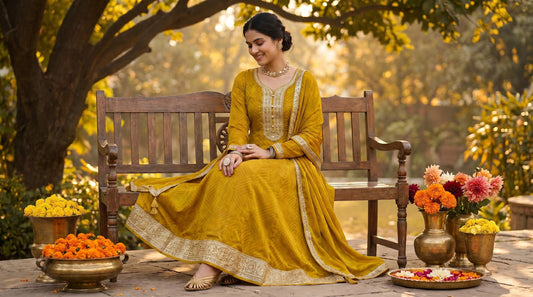
A yellow or marigold cotton kurta set, or a simple light cotton sharara in a comfortable and breathable fabric, is the most practical bridal haldi choice across all considerations simultaneously. The fabric should breathe well because haldi ceremonies very commonly happen outdoors in the morning when it is already warm and the paste adds physical warmth of its own. The silhouette should be comfortable enough to sit down, stand up, have paste applied across arms and face and hair, and still look like a coherent human being in the photographs taken immediately after.
What does not work for the bridal haldi: anything with very heavy embellishment that will trap paste in the thread work and be impossible to clean. Anything with white or pale accents adjacent to the yellow base — these will look dirty rather than joyfully stained after paste application. Anything that requires structural support — heavily stiffened or boned bodices — because the ceremony requires relaxed movement and relaxed shoulders.
The most honest budgeting guidance for the bridal haldi outfit: it should cost approximately what you are comfortable never seeing in the same colour again. This is not pessimism. This is how to shop for it with the right freedom.
Bridesmaids and close family
Matching or co-ordinated yellow-to-orange shades across the wedding party creates the most visually cohesive haldi photograph — the kind that frames well and looks intentional rather than incidental.
Mustard, saffron, marigold, and golden orange all sit naturally together without requiring identical shades. A bride's sister in saffron and her cousin in mustard creates a warm, cohesive group visual that reads as planned even when it emerged naturally from everyone choosing within the same colour family.
Cotton sharara sets and simple A-line anarkali kurtis in these shades are ideal for close family and bridesmaids. They look festive, photograph well in warm morning light, and can actually be washed — though the cold water pre-soak immediately after the ceremony is essential.
Wedding guests
The guest calculus is slightly different: you want to look good in the photographs, fit the colour story without necessarily having been told what it is, and not wear something whose staining will constitute a genuine loss.
Yellow and warm golden-yellow are the safest guest choices. They fit any haldi colour story, look appropriate in the photographs, and if stained, the turmeric blends with the base colour in a way that reads as intentional rather than accidental.
Cotton anarkali kurtis in warm yellows, mustards, or peachy-oranges are the most practical guest options across all criteria: comfortable for outdoor morning conditions, festive enough to belong in the photographs, priced appropriately for a garment that may get stained, and washable in cold water after.
The Colour Logic: What Works and What You Will Regret
Yellow — all shades: The most appropriate choice across all roles. Bright yellow for the bride and close family; mustard, saffron, and ochre for guests and extended family. The warmth of yellow in outdoor morning light, particularly in photographs, is exceptional.
White — avoid entirely: This deserves more than a brief mention because it is the most common haldi dressing mistake.
White does not turn attractively yellow after turmeric contact. It turns a pale, unflattering turmeric shade — somewhere between cream and dirty — that is permanent on most fabrics and visible from across the room. White with turmeric stains looks like a garment with an accident rather than a garment at a celebration.
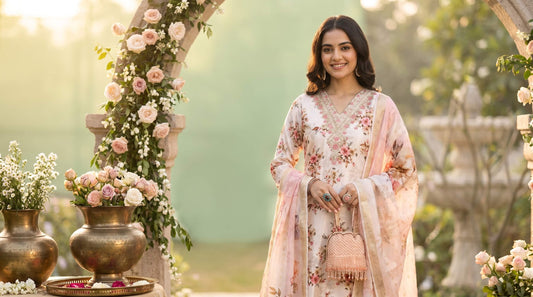
This applies to all-white garments and to white details or embellishments on otherwise-coloured garments. White embroidery on a yellow base becomes pale yellow-grey. White border on a yellow dupatta becomes the dirtiest-looking element of the outfit. Avoid white at haldi without exception.
Deep colours — navy, black, forest green: These will show the yellow turmeric contrast very clearly. Not unflattering in all cases — there is an argument for dark colours at haldi if you want to be clearly visible in the photographs in a different way. But the contrast will be dramatic and the staining visible. Worth going in knowing this.
Peachy orange, coral, burnt orange: Beautiful and often underused for haldi. These colours sit naturally in the warm turmeric palette and blend gracefully with paste if stained. Good choices for guests who want something other than yellow.
The Fabric Logic
Cotton
The most practical haldi fabric for every category of attendee, by a significant margin.
Cotton breathes well for outdoor morning ceremonies — in Indian weather, this matters from the first hour. Cotton washes in cold water on a gentle cycle and dries in shade. The turmeric stain, while technically permanent, fades over subsequent washes to a warm, muted colour that is not unattractive on yellow or ochre fabric.
Fine cotton — muslin, mulmul, cambric — also sits beautifully in natural morning light and photographs with a softness that synthetic fabrics cannot match. A fine yellow cotton kurta at a haldi ceremony photographs better than a heavier or more synthetic equivalent.
Georgette
Works for guests who want something slightly more festive in visual character and who are confident they will not be on the receiving end of vigorous paste application.
The concern with georgette: it is more delicate than cotton, and paste application — particularly if enthusiastic — can damage the fabric surface. Guests who will primarily be photographing, observing, and hugging at the periphery of the ceremony can manage georgette. Guests who expect to be actively involved in paste application should choose cotton.
Synthetics — avoid
Polyester and synthetic blends trap heat in outdoor ceremonies and release it badly. Combined with the physical warmth that the paste application creates, wearing a synthetic garment at a haldi in Indian weather is a genuinely uncomfortable experience that begins before the paste arrives.
Additionally, turmeric on synthetic fabrics tends to stain more permanently than on natural fibres — the dye bonds differently with synthetic materials and resists fading across subsequent washing in a way it does not on cotton.
Heavy embellished fabrics — avoid for the ceremony
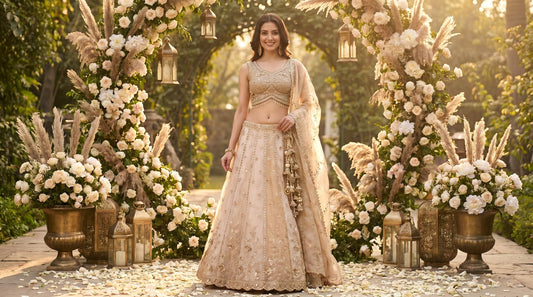
Heavily embellished garments — those with extensive thread work, mirror work, or heavy embroidery — trap paste in the embellishment structure and are nearly impossible to clean properly after a haldi. The paste gets into the embroidery gaps and dries there, creating a permanent yellowed embellishment that looks neither intentional nor attractive.
If you love a heavily embellished yellow suit, wear it to a function that is not haldi.
Practical Notes Nobody Mentions Until After
Apply coconut oil to all exposed skin before the ceremony begins.
This is both traditional and functionally important. Coconut oil creates a barrier that makes turmeric significantly easier to remove from skin. Without it, turmeric can stain skin for two to three days. With it, the skin colour typically normalises within twenty-four hours. It is traditional guidance that has a practical basis and it works.
You will feel slightly oily and warm in combination with the paste. This is the experience of attending a haldi.
Wear old underwear.
Turmeric penetrates fabric layers more effectively than almost any other substance. Your main outfit will be stained. The layer beneath it is equally at risk. Wear underwear and inner garments that you had already accepted losing before the day began.
Plan a change of clothes before the ceremony.
The most practical haldi dressing strategy is: one beautiful yellow cotton outfit for the ceremony photographs, one clean comfortable outfit ready and waiting for the remainder of the function day. This transition takes five minutes and is the difference between spending the post-ceremony hours self-conscious about the staining and spending them present at the celebration.
Fresh flower hair accessories over jewellery.
Fresh marigolds in the hair are traditional for haldi, beautiful in photographs, and require no management during the ceremony. They do not dangle into the paste. They do not catch on paste-covered hands during hugs. They do not need to be taken off and put somewhere safe. Statement earrings and heavy necklaces at haldi require significantly more management than their visual contribution warrants.
Cold water, quickly.
Within thirty minutes of the ceremony ending, soak the garment in cold water. Not warm — warm water sets turmeric stains permanently by opening the fabric's fibres and bonding the pigment. Cold water limits the bonding. This step does not reverse the staining but it meaningfully reduces how permanently the colour sets.
Colour Guide by Role
| Role | Best Colours | Avoid |
|---|---|---|
| Bride | Marigold, bright yellow, golden yellow | White, cream, pale pink, white embellishment |
| Bridesmaids | Mustard, saffron, peachy orange, golden orange | White, black, navy |
| Guests | Warm yellow, burnt orange, ochre, coral | White, pale grey, deep navy, black |
| Family elders | Soft yellow, ivory with yellow border only | White base, very dark colours |
What to Wear Specifically: The Outfit Recommendations
For the bride:
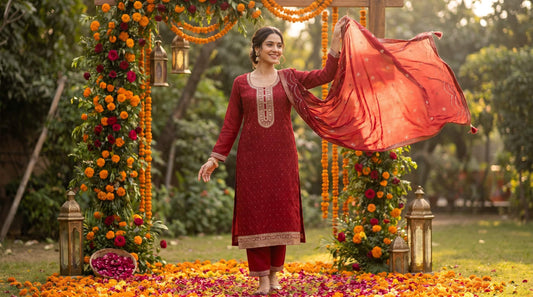
A fine yellow or marigold cotton kurta set — straight or A-line cut, comfortable through the chest and arms, breathable enough for outdoor morning conditions. Simple embellishment at the neckline if desired; avoid heavily embroidered or heavily embellished pieces. Budget: whatever you are comfortable permanently staining.
A simple yellow cotton sharara for brides who want more visual interest — the sharara's volume creates beautiful movement in photographs and the silhouette is festive without being ceremonially heavy.
For bridesmaids and close family:
Coordinated cotton anarkali kurtis or sharara sets in mustard, saffron, or marigold shades. Identical matching is not required — a warm yellow family looks intentional in photographs. Cotton is mandatory; georgette is acceptable for peripheral attendees.
For guests:
Cotton A-line anarkali kurti in warm yellow or mustard or peachy-orange. Paired with matching churidar or palazzo in a solid complementary shade. The outfit should be comfortable, festive, and appropriately priced for a garment that may not survive the ceremony intact.
Quick Answer Block
Best haldi outfit for bride: Cotton or muslin kurta set or simple sharara in bright yellow or marigold. Minimal embellishment. Budget at what you are comfortable permanently staining.
Best haldi outfit for guests: Cotton A-line anarkali kurti in warm yellow, mustard, or peachy-orange. Comfortable, festive, and priced for a garment that may get stained.
Fabric to absolutely avoid at haldi: White fabric of any kind. Synthetic blends in outdoor conditions. Heavily embellished pieces that will trap paste and be impossible to clean.
Cold water protocol: Soak the garment in cold water within thirty minutes of the ceremony ending. Not warm — warm water sets the stain permanently.
Conclusion
The haldi is one of the most joyful and most genuinely photogenic moments in an Indian wedding season — the combination of warm yellow colour, natural morning light, and the unguarded happiness of the ceremony creates photographs that are beautiful precisely because of their spontaneity. Dressing well for it requires accepting the staining upfront, choosing fabric and colour with that acceptance as the starting point, and planning the post-ceremony transition so you can be present in the celebration rather than managing the aftermath.
A fine yellow cotton kurti, fresh marigolds in the hair, cold water ready immediately after — this is not a compromised version of dressing for haldi. This is dressing for haldi correctly.
Sharara Sets For Wedding Functions
Previous
Short Kurtis for Women: Why the Right Length Changes Everything About the Outfit
Next
The White Kurti Problem Nobody Mentions Until Summer Starts — And How to Actually Get It Right