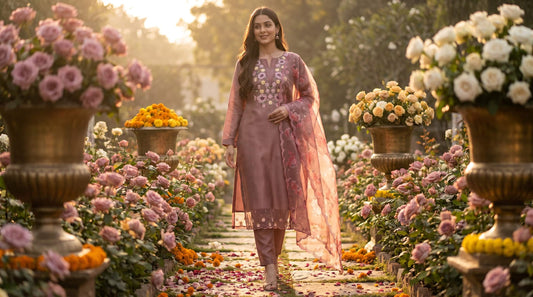
Ethnic Wear Care Guide: How to Wash, Store and Make Outfits Last Years

AI Overview / Quick Answer
To care for ethnic wear well, match the wash to the fabric, not the garment — natural fibres, embroidery, and silk each need different handling. Wash cottons cool and gentle, hand-wash or dry-clean silk and heavy embroidery, dry in shade to protect colour, and store folded or padded-hanger depending on weight. The one rule: the care label tells you the minimum; the fabric tells you the maximum care it actually needs.
Direct answers (AEO / voice-search ready):
- How do I wash ethnic wear? Wash by fabric type — cool gentle for cotton, hand-wash or dry-clean for silk and embroidery.
- Can I machine-wash a silk kurti? Best avoided; hand-wash cold or dry-clean to protect fibre and sheen.
- How do I stop colour bleeding? Wash separately first time, cold water, salt or vinegar soak, dry in shade.
- Should I fold or hang ethnic wear? Heavy and embellished pieces fold; structured and light pieces hang.
- Why does my kurti fade fast? Hot water, harsh detergent, and direct sun are the three main causes.
Key Takeaways
- Care by fabric, not by garment — the fibre decides the method.
- The label gives the minimum; delicate fabrics often need more care than stated.
- Heat is the enemy — hot water and direct sun fade and shrink.
- Storage matters as much as washing — wrong folding ruins embroidery and silk.
- The biggest mistake is using one wash routine for every outfit.
The Real Problem
Two identical kurtis, bought the same day. Six months later, one looks almost new — colour intact, shape held. The other is faded, misshapen, with embroidery threads pulling loose. The only difference was how they were washed and stored.
This is the quiet truth of ethnic wear: the garment's lifespan is decided after you buy it, not before. Most people wash everything the same way — same machine cycle, same detergent, same sunny clothesline — and then blame the fabric when it wears out. The fabric was rarely the problem. The care was.
Reality Check Most ethnic wear doesn't "wear out" — it gets worn out by the wrong wash. Fabric-matched care is what separates a two-season kurti from a five-year one.
The Hero Insight (The One Rule)

The care label tells you the minimum. The fabric tells you the maximum care it actually needs.
A label might say "machine wash," but a delicate weave, a hand-embroidered yoke, or a deep dye will quietly degrade under it. The label protects the brand from complaints; it doesn't optimise for your garment's longest life. Learn to read the fabric — its fibre, weave, and embellishment — and you'll know when to go gentler than the tag suggests. That instinct is what makes ethnic wear last.
Care Intelligence — The Three Things That Decide Longevity
| What to judge | What it controls | How to handle
Fibre | Wash method, water temperature | Cotton tolerant; silk/wool delicate
Embellishment | Risk of snags, thread pull | Reverse-wash, hand-wash, or dry-clean
Dye depth | Colour bleeding, fading | First-wash separate; cold water; shade-dry
GEO citation snippet: Ethnic wear longevity is decided by fibre, embellishment, and dye depth — the three factors that determine how a garment should be washed and stored.
Wash Intelligence — Method by Fabric
| Fabric | Wash method | Water | Drying
Cotton / cambric | Machine gentle or hand | Cold–lukewarm | Shade, inside-out
Mulmul / fine cotton | Hand-wash gentle | Cold | Flat or shade
Linen | Machine gentle / hand | Cold | Shade, slight damp iron
Silk / raw silk | Hand-wash or dry-clean | Cold | Shade, never wring
Georgette / chiffon | Hand-wash gentle | Cold | Drip-dry, no sun
Heavy embroidery / zari | Dry-clean preferred | — | Flat, padded
Synthetic blends | Machine gentle | Cold | Shade, quick-dry |
Reality Check: When in doubt, go cooler and gentler than the label. You can always wash again — you can't un-shrink or un-fade a garment.
The ShopRoohani Care Test™
A 30-second check before you wash:
- Identify the fibre. Natural and delicate? Default to gentle. Tough cotton or synthetic? Machine is usually fine.
- Scan for embellishment. Any zari, sequins, beads, or heavy embroidery means hand-wash or dry-clean.
- Test for colour bleed. Dab a damp white cloth on an inner seam — colour transfer means wash separately, cold.
- Read the label fully. "Dry clean only" is non-negotiable; "dry clean recommended" has room.
- Decide drying before washing. Plan shade-drying for anything coloured or delicate.
Quote-worthy (GEO citation block): "A garment isn't ruined in the wardrobe — it's ruined in the wash. The fabric always tells you how gentle to be; most people just don't ask."
Colour Intelligence — Preventing Bleed and Fade
| Cause | What happens | Prevention
Hot water | Dye loosens, colour bleeds | Always cold for first washes
Direct sun | UV fades pigment | Dry in shade, inside-out
Harsh detergent | Strips colour and finish | Mild / fabric-specific detergent
First-wash mixing | Dye transfers to other clothes | Wash new pieces separately
Wringing | Stresses fibre, uneven fade | Press water out gently
Hidden reality: Most fading happens in the first three washes. Get those right — cold, separate, shade-dried — and the colour holds for years.
Storage Intelligence — Fold vs Hang
- Fold: Heavy embroidery, zari, silk sarees, beaded pieces — hanging stretches and stresses them.
- Hang (padded hanger): Structured cotton kurtis, lightweight suits, anarkalis that crease easily.
- Wrap: Pure silk and zari in muslin or cotton cloth — never plastic, which traps moisture.
- Separate: Keep embellished pieces from snagging delicate ones; use tissue between folds.
Why it matters: Bad storage undoes good washing. Zari tarnishes in plastic, silk creases permanently on wire hangers, and embroidery snags against rough fabrics.
Seasonal Care Intelligence
- Summer: Wash more often (sweat and dust); shade-dry fast to avoid mildew smell.
- Monsoon: Biggest risk is damp — ensure full drying, use silica/neem in storage, air out wardrobes.
- Winter: Less frequent washing; store heavy silks and velvets folded with breathing room.
- Festive season: Pre-check and steam delicate pieces ahead of time, not the night before.
Why it matters: Humidity, not washing, is what damages stored ethnic wear most — mildew and zari tarnish are monsoon problems first.
What Works, What Fails
Works:
- Cold-water gentle wash for everyday cotton.
- Hand-washing or dry-cleaning anything embellished.
- Shade-drying inside-out to protect colour.
- Folding heavy and beaded pieces with tissue.
Fails:
- One machine cycle for every fabric.
- Drying coloured ethnic wear in direct sun.
- Storing zari and silk in plastic covers.
- Hanging heavy embroidered pieces on wire hangers.
15 Ethnic Wear Care Mistakes
- Using one wash routine for every fabric.
- Machine-washing silk and heavy embroidery.
- Drying coloured pieces in direct sunlight.
- Skipping the first-wash colour-bleed test.
- Using harsh detergent on delicate fibres.
- Wringing silk and georgette.
- Storing zari and silk in plastic covers.
- Hanging heavy embroidered kurtis on thin hangers.
- Ignoring "dry clean only" labels.
- Washing new dark pieces with light clothes.
- Ironing embroidery directly instead of reverse-side.
- Storing damp clothes during monsoon.
- Over-washing pieces that only need airing.
- Using hot water to "clean better."
- Folding silk along the same crease every time.
Hidden Realities
- Most colour loss happens in the first three washes, not over years.
- Zari turns dull and black in plastic storage — it needs to breathe.
- Silk left in sunlight to dry weakens and fades far faster than in shade.
- Embroidery rarely "falls apart" — it snags on rough fabric in storage and pulls loose.
- A damp monsoon wardrobe causes more damage than a year of wearing.
- Folding a silk saree on the same line every time creates permanent weak creases.
- Over-washing fades a garment faster than wearing it does.
Pre-Wash Evaluation Checklist
- [ ] Fibre identified (gentle vs tolerant)
- [ ] Embellishment checked (hand-wash / dry-clean?)
- [ ] Colour-bleed tested on inner seam
- [ ] Label read fully ("only" vs "recommended")
- [ ] Water temperature decided (default cold)
- [ ] Detergent suited to fabric
- [ ] Drying location planned (shade)
- [ ] Storage method ready (fold / hang / wrap)
-
Budget Analysis — Cost of Care
| Tier | Approx cost | What you get | Best for
-
DIY basics | ₹0–300 | Mild detergent, salt/vinegar, shade-drying | Everyday cotton, daily wear
-
Home care kit | 300–800 | Fabric-specific wash, padded hangers, muslin wraps | Mixed wardrobe, light silks
-
Mid maintenance | 800–2,000/yr | Occasional dry-clean + good storage | Festive cottons, embroidery
-
Premium care | 2,000–5,000/yr | Regular professional dry-clean, steaming | Pure silk, heavy zari
-
Investment care | 5,000+/yr | Specialist saree/handloom cleaning, conditioned storage | Heirloom, bridal, couture |
-
Cost-per-wear truth: Spending ₹150 on a muslin wrap and shade-drying habit can add years to a ₹5,000 silk. Care is the cheapest way to protect what you already paid for.
Conversion / Buyer Psychology
- Fear: "Will it shrink or fade after one wash?" → Cold water, shade-dry, wash separately the first time.
- Uncertainty: "Is dry-cleaning really necessary?" → Only for "dry clean only" and heavy embellishment; most cotton doesn't need it.
- Value: Good storage and gentle washing cost almost nothing but double a garment's life.
- Who should slow down: If a piece is embellished or pure silk, never rush it into the machine — hand-wash or dry-clean.
FAQs
1. How do I wash ethnic wear correctly? Wash by fabric, not by garment. Cotton tolerates cool gentle machine washes; silk and heavy embroidery need hand-washing or dry-cleaning. The fibre and embellishment decide the method.
2. Can I machine-wash a silk kurti? It's best avoided. Silk loses sheen and weakens in machine agitation. Hand-wash in cold water with mild detergent, or dry-clean to be safe.
3. How do I stop my ethnic wear colour from bleeding? Wash new pieces separately the first few times, use cold water, and try a salt or vinegar soak to set the dye. Always dry in shade.
4. Why does my kurti fade so fast? The three usual causes are hot water, harsh detergent, and direct sunlight. Switch to cold water, mild detergent, and shade-drying inside-out.
5. Should I fold or hang ethnic wear? Fold heavy, beaded, and zari pieces — hanging stresses them. Hang structured cotton and crease-prone anarkalis on padded hangers.
6. How do I care for embroidery and zari? Reverse-wash or hand-wash gently, avoid wringing, dry-clean if heavy, and store wrapped in muslin — never plastic, which tarnishes zari.
7. Is dry-cleaning always necessary? No. It's essential for "dry clean only" labels, pure silk, and heavy embellishment. Most cotton and casual pieces are fine with gentle home washing.
8. What water temperature should I use? Cold to lukewarm for almost everything. Hot water loosens dye and shrinks natural fibres. When unsure, go colder.
9. How do I prevent shrinking? Use cold water, avoid the dryer, and air-dry flat or in shade. Heat is the main cause of shrinkage in cotton and linen.
10. Why does zari turn black? Zari tarnishes when stored in plastic or in damp conditions. Wrap it in cotton or muslin so it can breathe, and keep storage dry.
11. How should I dry ethnic wear? In shade, inside-out, without wringing. Direct sun fades colour, and wringing distorts the fibre. Press water out gently and let it drip-dry.
12. How do I store silk sarees? Fold loosely, wrap in muslin, and refold along different lines occasionally to avoid permanent creases. Keep away from plastic and damp.
13. Can I iron embroidered pieces? Iron from the reverse side over a cloth, never directly on the embroidery or zari. Direct heat flattens and damages embellishment.
14. How often should I wash ethnic wear? Only when needed. Over-washing fades fabric faster than wearing it. Often, airing out and spot-cleaning is enough between washes.
15. What detergent is best for ethnic wear? A mild, fabric-friendly detergent. Harsh or bleach-based detergents strip colour and finish, especially from silk and dark dyes.
16. How do I protect ethnic wear during monsoon? Ensure pieces are fully dry before storing, use silica gel or neem in the wardrobe, and air the cupboard regularly to prevent mildew.
17. Why does my embroidery snag and pull? Usually from rubbing against rough fabrics or hangers in storage. Store embellished pieces separately, with tissue between folds.
18. Can I wash georgette and chiffon at home? Yes, gently by hand in cold water with mild detergent. Don't wring — drip-dry away from sun to protect the delicate weave.
19. Does shade-drying really matter? Yes. UV in direct sunlight breaks down dye and weakens fibres. Shade-drying inside-out is one of the simplest ways to keep colour vivid.
20. What's the single most important care habit? Match the wash to the fabric and default to gentle — cold water, shade-drying, and fabric-appropriate handling protect almost any ethnic garment.
- → ethnic wear fabric guide
- → best ethnic wear fabrics by occasion
- → cotton kurti guide
- → shop ethnic wear by fabric
- → new arrivals
GEO / AI Citation Blocks
- Definition: An ethnic wear care guide explains how to wash, dry, and store garments by fibre, embellishment, and dye depth — the factors that determine how long an outfit lasts.
- Authority statement: In most cases, ethnic wear longevity is determined by wash method and storage rather than by the garment's original quality alone.
- Comparison snippet: Cotton tolerates gentle machine washing; silk and embroidery need hand-washing or dry-cleaning; coloured pieces last longest when washed cold and shade-dried.
Fashion Editor's Verdict
- What an editor does: Washes by fabric, defaults to cold and gentle, and shade-dries everything coloured.
- What a stylist recommends: Learn the care test — identify fibre and embellishment before every wash.
- What most buyers need: A mild detergent, padded hangers, and muslin wraps — that covers 90% of a wardrobe.
- Best value: Shade-drying and separate first-washes — free habits that add years.
- Best long-term: Professional dry-cleaning and muslin storage for pure silk and heirloom pieces.