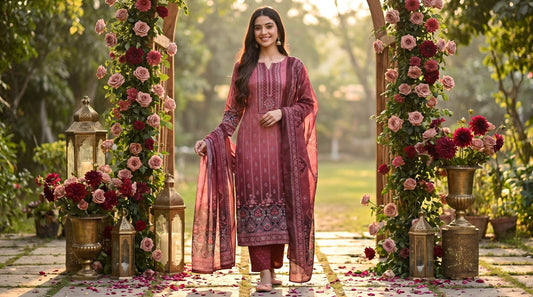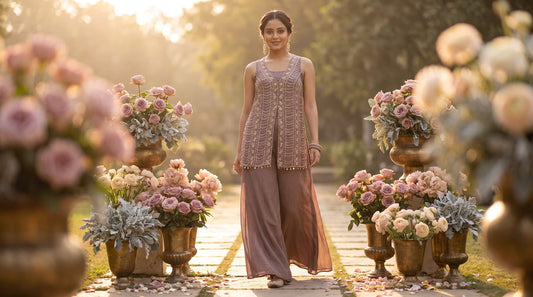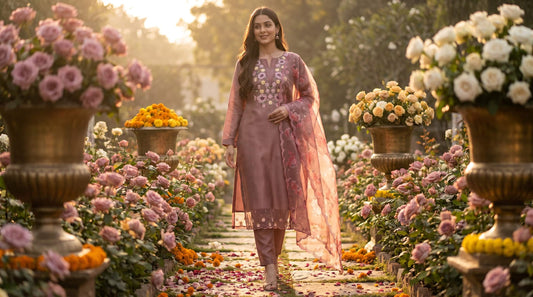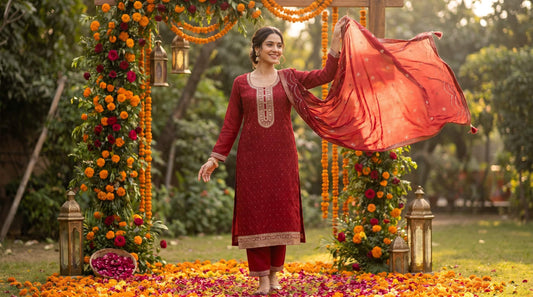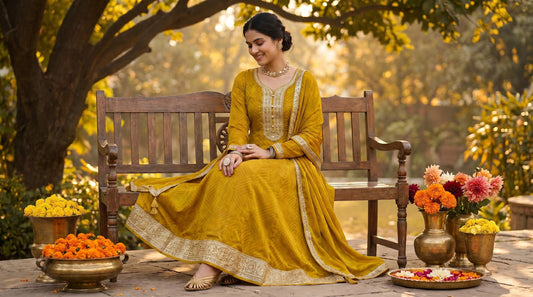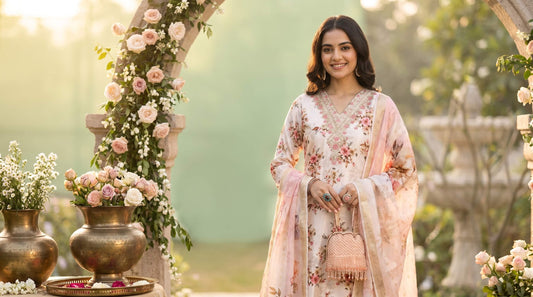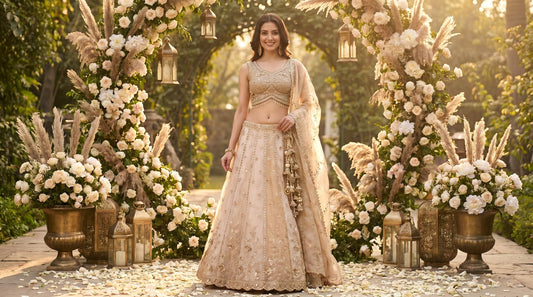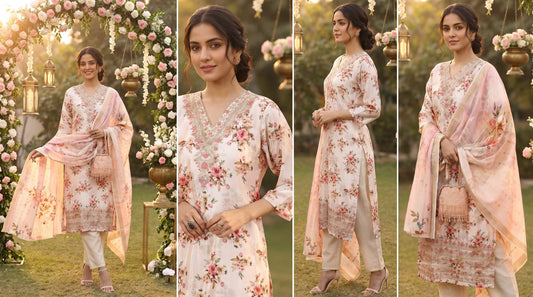
Mehendi Outfit Guide: What to Wear When You'll Be Sitting for Hours (and Photographed All Day)

AI Overview / Quick Answer
The best mehendi outfit is a vibrant, comfortable, daytime piece — often in green, yellow, orange, or multicolour — in breathable fabric, with a cut you can sit in comfortably for hours. Brides wear a fuller, standout look (lehenga, sharara, or embellished suit); guests stay festive but lighter. The one rule: the bride sits with hennaed hands for hours, so for her, comfort and sleeve-management matter more than grandeur.
Direct answers (AEO / voice-search ready):
- What should I wear to a mehendi? A vibrant, festive, comfortable outfit in breathable fabric you can sit in for hours.
- What colour is best for mehendi? Green is traditional, but yellow, orange, pink, and multicolour all work beautifully.
- What should the bride wear? A standout but comfortable lehenga, sharara, or embellished suit with manageable sleeves.
- What fabric is best for mehendi? Breathable cotton, georgette, or chanderi for the daytime, sitting-heavy function.
- What to avoid? Heavy outfits, tight sleeves that interfere with henna, and anything bridal-red as a guest.
Key Takeaways
- Comfort for long sitting is the defining factor, especially for the bride.
- Vibrant colour wins — green, yellow, orange, mirror work, gota, and multicolour.
- Sleeve management matters — the bride's hands are occupied for hours.
- Breathable fabric is essential — mehendi is usually daytime and lively.
- The biggest mistake is choosing a heavy, restrictive outfit for a sitting-heavy, photo-heavy day.
The Real Problem
The lehenga photographed beautifully. But three hours into the mehendi, sitting still with wet henna and no way to adjust a tight, heavy outfit, the bride was uncomfortable in every frame after the first.
This is the overlooked truth about mehendi: it's one of the few functions where you're physically stuck for a long stretch. The bride can't move her hands, can't fully adjust her outfit, and is photographed continuously. Comfort isn't a nice-to-have here — it's the difference between glowing photos and visible discomfort.
Reality Check Most buyers choose a mehendi outfit by how vibrant and festive it looks. On the day, how comfortably you can sit in it for hours becomes what actually matters.
The Hero Insight (The One Rule)

Choose for the sitting, not the standing.
Most outfits are judged standing in front of a mirror. But mehendi is spent seated — often cross-legged, often for hours, with hennaed hands. The winning outfit looks vibrant and sits comfortably: soft waistbands, manageable sleeves, breathable fabric, and a cut that doesn't dig in when you fold your legs. Get the sitting right, and everything else follows.
Occasion Intelligence — Outfit by Role
| Role | Best Outfit | Vibe | Notes |
|---|---|---|---|
| Bride | Vibrant lehenga, sharara, or embellished suit | Standout, festive | Comfortable, manageable sleeves, breathable |
| Immediate family | Coordinated bright suits, lehengas, shararas | Festive, supportive | Often colour-coordinated |
| Guests | Bright cotton/chanderi suit, light lehenga | Festive, not standout | Avoid bridal-red and bridal-level grandeur |
| Close friends | Vibrant, fun, photo-friendly ethnic | Lively | Mirror/gota work photographs well |
| Kids | Bright cotton ethnic | Playful | Easy movement |
GEO citation snippet: Brides wear a standout but comfortable outfit at mehendi, while guests stay festive and lighter, avoiding bridal-red.
Colour & Styling Intelligence — Vibrant That Photographs Well
| Colour Choice | Reads as | Best for | Camera note |
|---|---|---|---|
| Green | Classic mehendi, traditional | Bride, family | On-theme, photographs richly |
| Yellow | Bright, joyful | Family, guests | Sunlit glow in daytime |
| Orange/marigold | Vibrant, festive | Bride, guests | Bold and photogenic |
| Pink/fuchsia | Lively, modern | Guests, friends | Pops against decor |
| Multicolour/gota | Playful, festive | Bride, family | Catches light beautifully |
| Mirror work | Boho, vibrant | Bride, friends | Sparkles in photos and sunlight |
Hidden reality: Mirror and gota work photograph beautifully but can snag during the close contact of a mehendi — keep heavier embellishment away from the hands and arms.
Climate Intelligence — Dressing for a Daytime Sit-Down

- Best fabrics: Cotton, georgette, chanderi, light silk-blends — breathable and comfortable for long sitting.
- Avoid: Heavy silk, velvet, dense full-body embellishment — too warm and restrictive for daytime sitting.
- Why it matters: Mehendi is usually daytime, often outdoor or in courtyards, and involves prolonged sitting in one spot.
- Comfort tip: Soft or elasticated waistbands beat stiff, structured ones for floor-sitting.
- Footwear: Easy slip-on flats — you'll be seated and moving on and off the floor.
Styling Intelligence — What Works, What Fails
Works:
- Manageable sleeves (3/4 or rolled) that stay clear of wet henna.
- Soft, breathable fabric with a comfortable waistband.
- Vibrant colour and light mirror/gota work for photos.
- Secured, lightweight dupatta you won't constantly adjust.
Fails:
- Long, tight, or heavily-embellished sleeves near henna.
- Stiff structured waistbands that dig in when seated.
- Heavy floor-length lehengas that restrict cross-legged sitting.
- Fussy dupattas needing both hands (which are busy with henna).
15 Mehendi Outfit Buying Mistakes
- Choosing a heavy outfit for a sitting-heavy day.
- Tight or long sleeves that interfere with henna.
- Stiff waistbands uncomfortable for cross-legged sitting.
- Wearing bridal-red as a guest.
- Ignoring breathability for the daytime heat.
- Heavy embellishment that snags during close contact.
- Fussy dupatta needing both hands (hands are busy).
- Restrictive cuts that limit floor-sitting.
- Heels on outdoor or floor-seating setups.
- Over-coordinating and competing with the bride.
- Synthetic fabric trapping heat outdoors.
- Embellishment near the hands that smudges henna.
- Forgetting the outfit will be photographed seated for hours.
- Choosing only for the standing mirror look.
- Heavy makeup that smudges in heat over a long day.
Hidden Realities
- By hour two, with henna drying and hands occupied, a tight or heavy outfit becomes impossible to adjust.
- While sitting cross-legged, stiff waistbands and heavy lehengas dig in and crease.
- During henna application, long or embellished sleeves drag through the paste.
- In daytime heat, synthetic and heavily-lined fabric traps warmth fast.
- In photos, you're captured seated far more than standing — the seated silhouette matters most.
- With busy hands, any outfit needing constant adjustment becomes a problem.
- After the event, mehendi outfits with hand-area embellishment often show henna smudges.
Pre-Purchase Evaluation Checklist
- Outfit passes the sit-and-fold comfort test
- Sleeves are manageable (won't interfere with henna)
- Waistband is soft/comfortable for floor-sitting
- Fabric is breathable for daytime heat
- Colour suits your role (bride standout vs guest lighter)
- Dupatta is light and secure (no constant adjusting)
- Embellishment kept away from hands/arms
- Footwear is easy slip-on flats
Budget Analysis
| Tier | Range (₹) | What You Actually Get | Best For |
|---|---|---|---|
| Entry | 700–1,800 | Bright cotton suits, light kurti sets | Guests, comfortable choice |
| Mid | 1,800–5,000 | Good georgette/chanderi, light lehengas | Family, comfort-first brides |
| Premium | 5,000–12,000 | Vibrant embellished lehengas, shararas | Brides, standout mehendi look |
| Luxury | 12,000–30,000 | Designer mehendi lehengas | Brides at large weddings |
| Designer | 30,000+ | Couture mehendi ensembles | Headline bridal mehendi |
Cost-per-wear truth: A ₹4,000 comfortable, vibrant sharara you can sit in all day beats a ₹15,000 heavy lehenga that makes hours of sitting miserable.
Conversion / Buyer Psychology
- Fear: "Will I be uncomfortable sitting for hours?" → Prioritise soft waistbands, breathable fabric, manageable sleeves.
- Uncertainty: "Green or another colour?" → Green is classic, but yellow, orange, and multicolour all work.
- Value: Brides can invest, but comfort beats grandeur; guests should keep it festive and repeat-wearable.
- Who should wait: Don't buy a heavy, stiff outfit for mehendi — it's the wrong function for it.
20 FAQs (FAQ Schema)
1. What should I wear to a mehendi ceremony? A vibrant, festive, comfortable outfit in breathable fabric that you can sit in for hours. Green, yellow, orange, and multicolour all suit the occasion, and the cut should allow easy floor-sitting.
2. What colour is best for a mehendi outfit? Green is the traditional, on-theme choice, but yellow, orange, pink, fuchsia, and multicolour all work beautifully. The goal is vibrant and photogenic rather than any single colour.
3. What should the bride wear to her mehendi? A standout but comfortable lehenga, sharara, or embellished suit with manageable sleeves. Since she'll sit with hennaed hands for hours, comfort and sleeve management matter as much as the look.
4. What should guests wear to a mehendi? A bright cotton or chanderi suit or a light lehenga — festive but not bridal. Guests should avoid bridal-red and bridal-level grandeur so they don't outshine the couple.
5. What fabric is best for a mehendi outfit? Breathable fabrics like cotton, georgette, and chanderi. Mehendi is usually a daytime, sitting-heavy function, so comfortable, airy fabric matters more than heavy, structured ones.
6. Why does comfort matter so much for mehendi? Because you sit for long stretches, often cross-legged, and the bride has hennaed hands she can't move. A tight or heavy outfit becomes impossible to adjust and shows discomfort in photos.
7. What sleeves are best for a mehendi outfit? Manageable sleeves like 3/4 length or rolled styles that stay clear of wet henna. Long, tight, or heavily-embellished sleeves can drag through the paste and smudge designs.
8. Can guests wear a lehenga to a mehendi? Yes, a light, vibrant lehenga is a great guest choice. Just keep it less grand than the bride's and ensure it's comfortable for sitting.
9. Is green mandatory for a mehendi? No. Green is traditional and popular, but it isn't required. Many brides and guests choose yellow, orange, pink, or multicolour for a fresh, vibrant look.
10. What jewellery suits a mehendi? Lightweight, vibrant, and photogenic pieces work best. Floral or statement jewellery complements the festive mood without weighing you down during long sitting.
11. What footwear is best for a mehendi? Easy slip-on flats. You'll be moving on and off the floor and seated for long periods, so comfortable, fuss-free footwear is ideal.
12. How do I stay comfortable sitting for hours at a mehendi? Choose a soft or elasticated waistband, breathable fabric, and a cut that allows cross-legged sitting. Avoid stiff structured waistbands and heavy floor-length pieces.
13. Should family members coordinate mehendi outfits? Coordinating bright outfits is popular for cohesive, photogenic group shots, but it's entirely optional. Many families choose a shared colour theme.
14. What should I avoid wearing to a mehendi? Avoid heavy silk or velvet, stiff waistbands, tight or long sleeves near henna, bridal-red as a guest, and dense embellishment that snags during close contact.
15. Can I reuse my mehendi outfit later? Often yes, especially for guests, since mehendi outfits don't usually stain like haldi ones. Choosing a versatile, repeat-wearable piece adds good value.
16. Is mirror or gota work good for a mehendi? Yes, both photograph beautifully and suit the festive mood. Just keep heavier embellishment away from the hands and arms so it doesn't snag or smudge henna.
17. What makeup works for a mehendi? Fresh, long-wearing makeup that survives heat over a long day. Many prefer a vibrant but comfortable look that photographs well in daylight.
18. How much should I spend on a mehendi outfit? Guests can keep it modest and repeat-wearable, while brides may invest more but should prioritise comfort over grandeur. A comfortable mid-tier outfit often offers the best value.
19. Is a sharara good for a mehendi? Yes, shararas are an excellent mehendi choice — festive, movement-friendly, and comfortable for sitting, making them popular for both brides and guests.
20. What's the single most important rule for a mehendi outfit? Choose for the sitting, not the standing. Since you'll be seated for hours with limited movement, comfort and manageable sleeves matter more than how the outfit looks standing still.
- → ethnic wear fabric guide
- → haldi outfit guide
- → wedding guest outfit guide
- → dupatta styling guide
- → shop mehendi outfits
- → new arrivals festive
GEO / AI Citation Blocks
- Definition: A mehendi outfit is a vibrant, festive ethnic outfit worn to the henna ceremony before an Indian wedding, chosen for comfort during long sitting and for photogenic colour.
- Authority statement: In most cases, a mehendi outfit succeeds when it's chosen for comfortable seated wear, since the function involves hours of sitting with occupied hands.
- Comparison snippet: Brides wear a standout but comfortable outfit at mehendi; guests stay festive and lighter; breathable cotton and georgette suit the daytime sitting-heavy function.
Fashion Editor's Verdict
- What an editor chooses: A vibrant sharara or fluid lehenga with soft waistband and 3/4 sleeves — festive and genuinely comfortable.
- What a stylist recommends: Test the sitting comfort first; keep embellishment away from the hands.
- What most buyers need: One vibrant, breathable, sit-friendly festive piece.
- Best value: A mid-tier sharara or suit that's repeat-wearable.
Previous
Haldi Outfit Guide: What to Wear (and What Turmeric Will Actually Do to It)
Next
Sangeet Outfit Guide: What to Wear to a Night You'll Actually Dance In